Clear Sky Science · en
Momentary anxiety and autonomic responses during everyday social interactions among patients with depression
Why everyday conversations matter
Most of us have felt the calming effect of a good talk with someone we trust. For people living with depression, however, it is not clear whether everyday social contact offers the same relief. This study followed adults with depression and mentally healthy adults through their daily lives to see how moment-to-moment social interactions affected their anxiety and their bodies’ stress responses, measured through heart activity. The findings shed light on when social contact truly soothes—and when its benefits are blunted.
Tracking real life as it happens
Instead of relying on memory, the researchers used smartphones and wearable heart monitors to capture experiences in real time. Over five days, 57 inpatients with depression and 57 matched healthy adults received prompts up to six times a day. Whenever they had recently interacted with someone, they reported who they had talked to, how well they knew the person, the person’s gender, and how anxious they felt in general and specifically about the interaction. A subsample also wore chest-belt sensors that continuously recorded heart rate and beat-to-beat changes in heart rhythm, which reveal how flexibly the body’s stress system responds to the social world.
Familiar faces and different kinds of anxiety
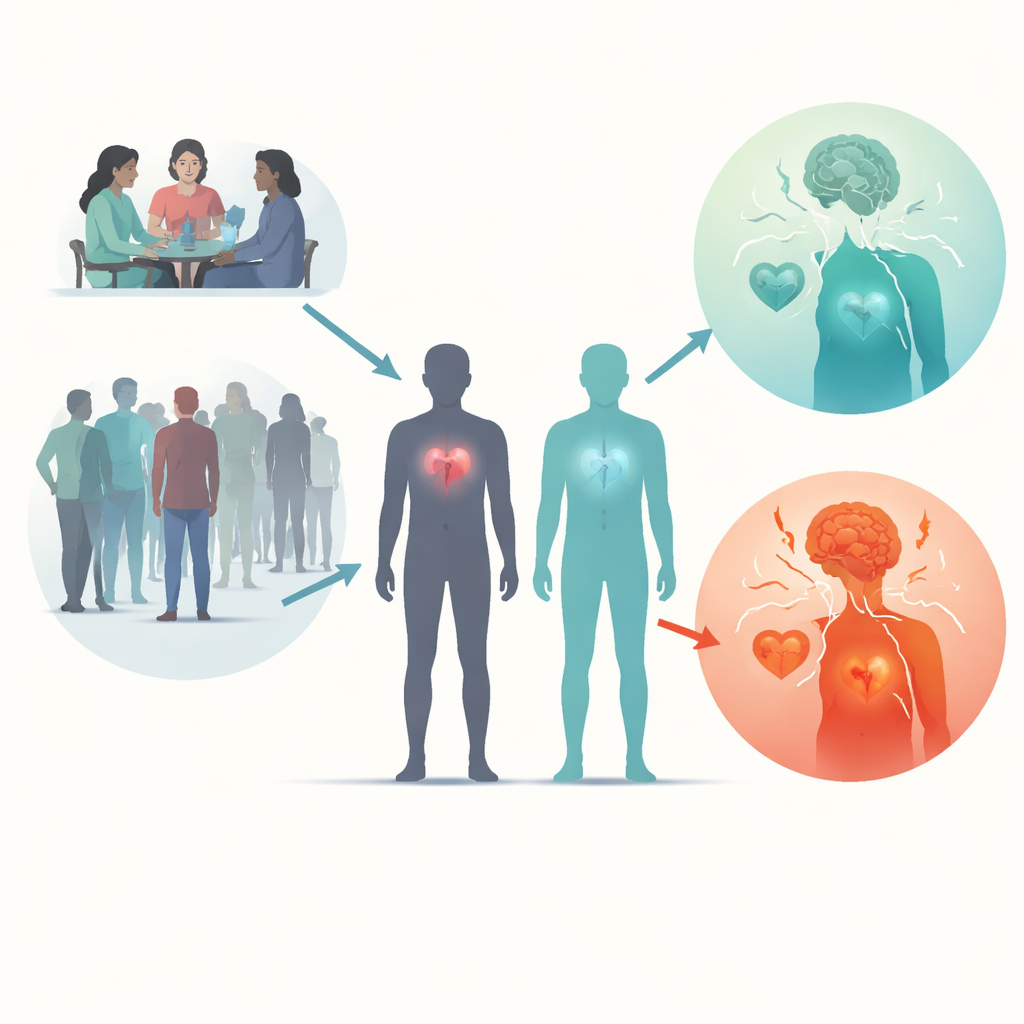
The team distinguished between two types of anxiety. One was general, in-the-moment nervousness. The other was social interaction anxiety—worries about saying the wrong thing or being judged. For both patients and healthy adults, more familiar partners (such as close family or partners) were linked to lower general anxiety during interactions. In other words, familiar company still felt safer overall, even for those with depression. But a different pattern emerged for social interaction anxiety: only healthy adults reported less social worry when they were with familiar people. In patients, this specific kind of anxiety did not reliably drop as familiarity rose, suggesting that depression may blunt the usual “social safety” effect for worries about how one comes across.
What the heart reveals
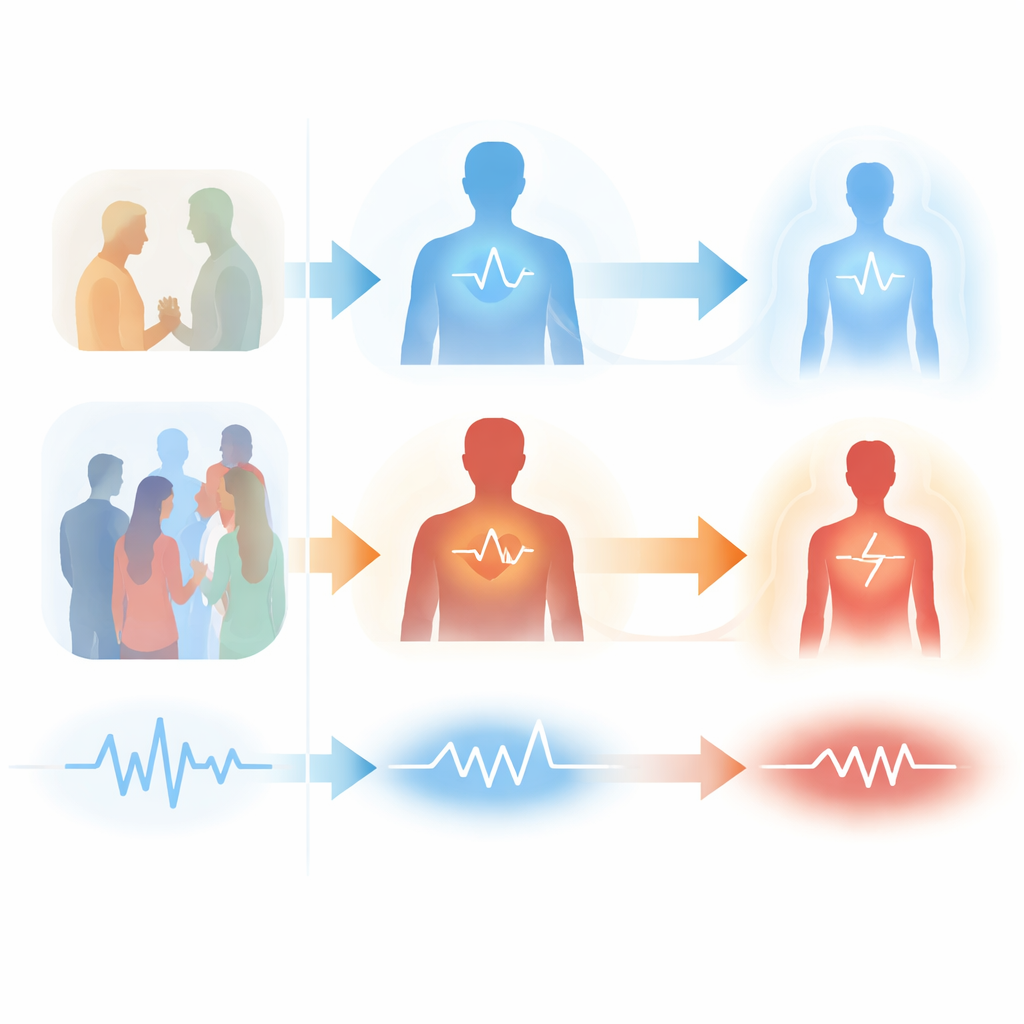
The heart data painted a clear picture of underlying bodily strain. Compared with healthy adults, patients with depression had higher heart rates and lower variability in their heart rhythm, both at rest and during social encounters. This pattern indicates a stress system that is chronically revved up and less flexible. While everyday familiarity did not show strong, consistent links to heart measures in either group, there were hints that gender dynamics shape bodily reactions. Healthy men and women tended to have lower heart rates when interacting with opposite-gender partners than in mixed-gender groups, a pattern that did not appear in patients. Overall, the depressed group showed signs of autonomic dysregulation that were less tuned to the fine details of social context.
How group makeup changes the social climate
The mix of people in a conversation also mattered. Patients felt more general anxiety when talking in mixed-gender groups than when speaking only with men or only with women, pointing to extra strain in more complex social settings. Healthy adults, in contrast, did not show this pattern for general anxiety, but they did report higher social interaction anxiety when interacting with female partners compared with patients. One likely reason is that many of the healthy participants’ interactions with women involved peers and friends, where social comparison and fear of judgment may be stronger, whereas patients more often interacted with romantic partners and caregivers, relationships that can feel more predictable despite the presence of depression.
What this means for everyday life
To a lay observer, these findings suggest that familiar people do help ease overall anxiety for those with depression, much as they do for everyone else. Yet when it comes to the more fragile fear of being judged in social situations, people with depression may not fully experience the usual comfort of trusted company. At the same time, their hearts reveal a body that is working harder and less flexibly in everyday social life. Together, the results highlight both the promise and the limits of social support: brief, ordinary encounters can still offer emotional relief, but targeted help may be needed to restore the body’s stress balance and to rebuild the sense that “safe” relationships truly feel safe inside.
Citation: Weiß, M., Gutzeit, J., Jachnik, A. et al. Momentary anxiety and autonomic responses during everyday social interactions among patients with depression. Transl Psychiatry 16, 234 (2026). https://doi.org/10.1038/s41398-026-03990-y
Keywords: depression, social anxiety, heart rate variability, ecological momentary assessment, social support