Clear Sky Science · en
Preventing traumatic stress–induced behavioral abnormalities in rats with blue light phototherapy
Blue Light as a Gentle Shield After Trauma
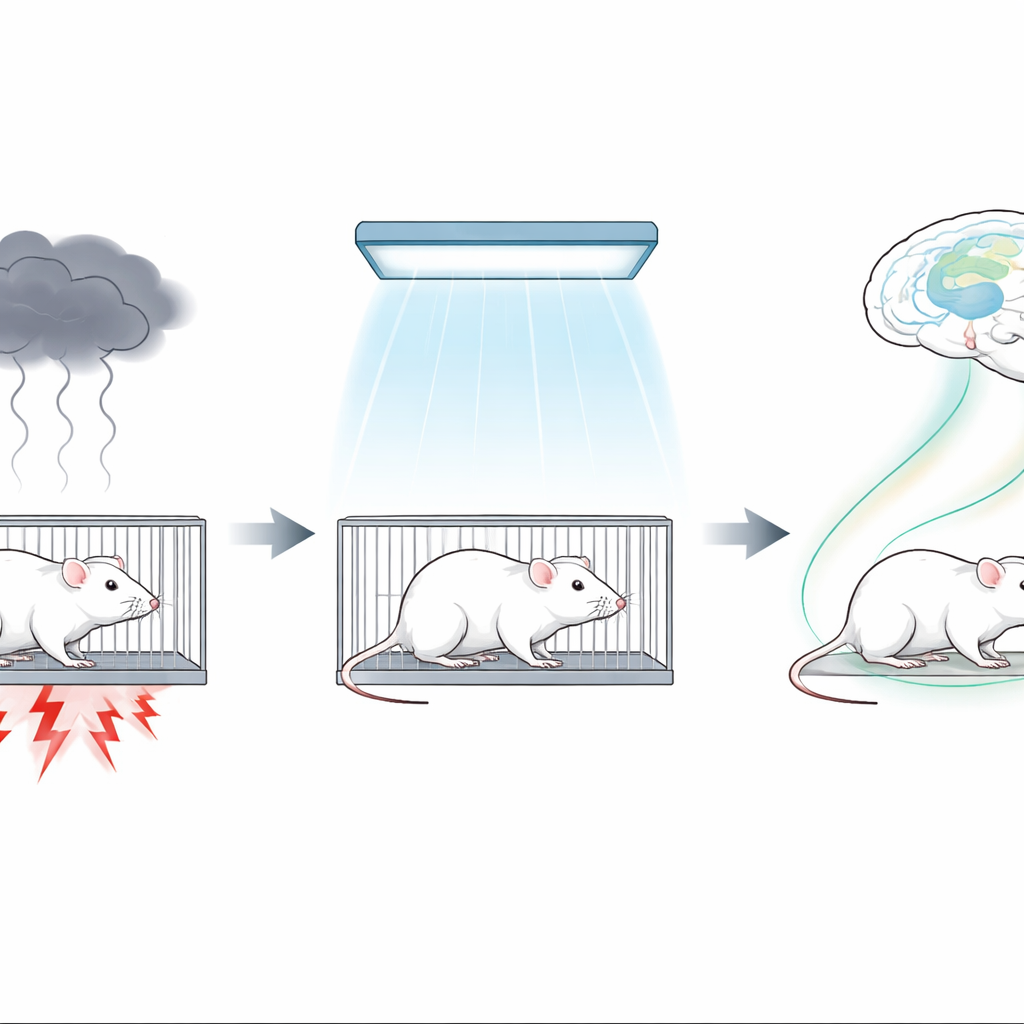
Most people will face at least one deeply frightening event in their lives, but only some go on to develop post-traumatic stress disorder (PTSD). Doctors have medicines and talk therapies, yet these treatments do not work for everyone and often begin long after the trauma has occurred. This study explores a surprisingly simple idea: could carefully timed exposure to blue light, delivered through the eyes, help prevent PTSD-like problems before they become locked into the brain?
Why Trauma Leaves a Lasting Mark
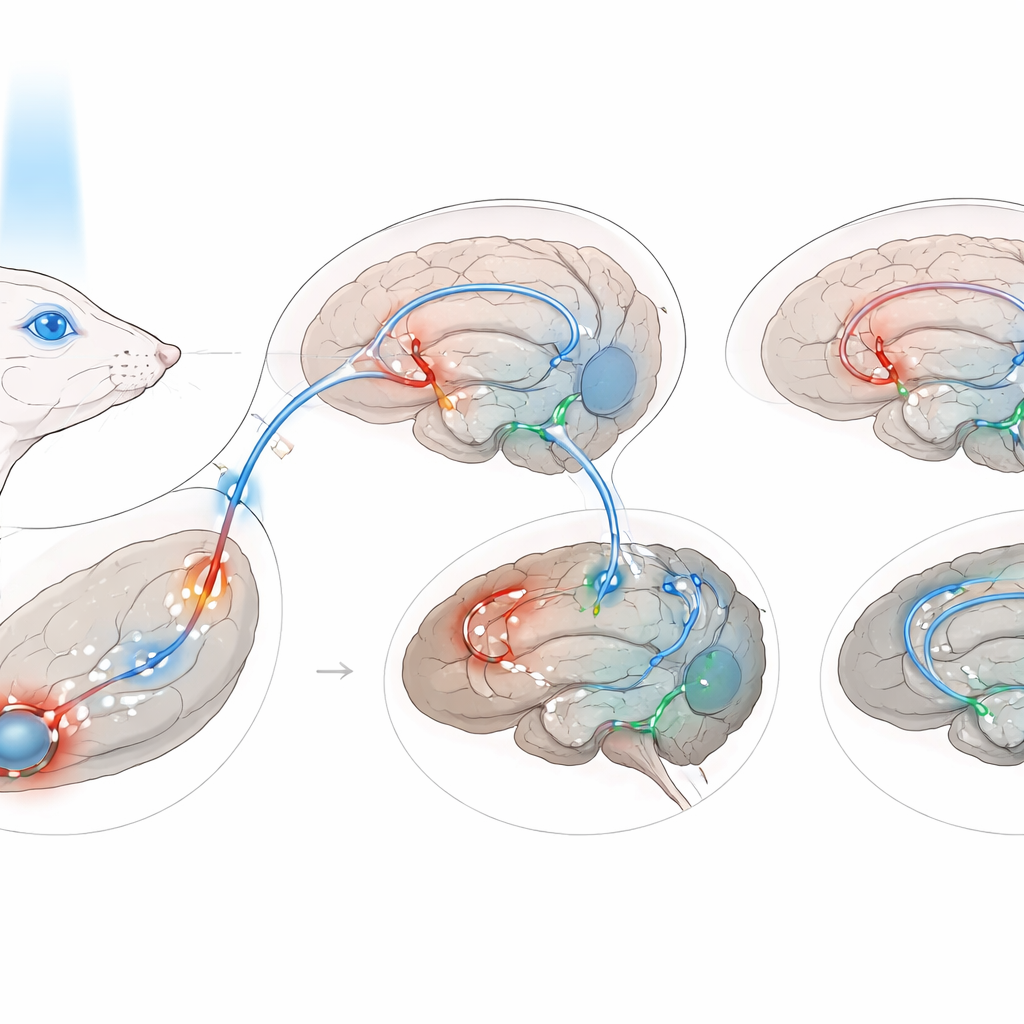
PTSD is more than a bad memory. It can cause unrelenting anxiety, disturbed sleep, and powerful flashback-like fear responses. Research shows that trauma can disrupt the brain’s internal clock and overstimulate circuits that manage emotions, especially in a region at the front of the brain called the medial prefrontal cortex, which communicates with the fear centers deeper inside. Blue light is already used safely to lift mood and improve sleep in people with seasonal depression. Because light entering the eye can influence both body clocks and emotion circuits, the authors wondered whether blue light given shortly after trauma might nudge the brain back toward balance before harmful patterns become entrenched.
Testing Light Therapy in Stressed Rats
To mimic severe trauma, the researchers exposed rats to a series of intense stressors, including restraint, forced swimming, and unavoidable mild electric shocks. This procedure reliably produces long-lasting anxiety and strong fear responses that resemble core features of PTSD. The animals were then split into groups: some received no light therapy, some got blue light almost immediately after the traumatic event, some received it only later, and some had both early and delayed sessions. The blue light came from a panel above the cage, shining at an intensity similar to a bright indoor light but carefully designed to avoid heating or eye damage.
Calmer Behavior and Softer Fear
The team tracked how the rats behaved in open spaces and elevated mazes, which are standard ways to measure rodent anxiety. Stressed rats without light therapy avoided open areas and open arms of the maze, signs of high anxiety. Rats given immediate blue light, or a combination of immediate and delayed light, behaved much more like normal animals: they ventured into the open and explored more freely, both one week and three weeks after trauma. Delayed light alone took longer to work but still eased anxiety by week three. When the researchers tested fear by putting rats back into the shock chamber and measuring how long they froze in place, only the animals that had received immediate blue light (with or without later sessions) showed a strong reduction in freezing. Delayed light by itself did not reliably soften these fear memories, underscoring the importance of acting soon after trauma.
Peeking Inside the Brain’s Control Center
Behavioral changes were matched by shifts in brain activity and gene use. In untreated stressed rats, cells in a key prefrontal area called the infralimbic cortex showed higher levels of c-Fos, a marker of recent neuronal firing, suggesting this control hub was overactive. Immediate blue light—again, alone or combined with delayed light—brought this signal back down toward normal, while delayed light on its own did not. When the authors examined which genes were turned up or down in this region, trauma disrupted sets of genes involved in how nerve cells communicate at their junctions, or synapses. Immediate light therapy tended to reverse these changes, dialing back stress-related synaptic pathways and adjusting others tied to the brain’s supportive scaffolding between cells. Eye exams confirmed that the blue light levels used were below known safety limits and did not damage the retina.
What This Could Mean for People
Put simply, the study suggests that blue light delivered through the eyes soon after a traumatic event can help rats stay less anxious and gradually loosen the grip of fearful memories, while also calming overactive brain circuits and reshaping stress-affected genes. Although rats are not humans and the work does not test a ready-made clinic protocol, it points to a low-risk, drug-free approach that might one day complement emergency care after accidents, disasters, or combat. If similar timing and safety principles hold in people, an accessible light-based treatment could become part of an early “first aid” toolkit to reduce the chances that trauma hardens into chronic PTSD.
Citation: Li, Y., Wang, W., Tan, Y. et al. Preventing traumatic stress–induced behavioral abnormalities in rats with blue light phototherapy. Transl Psychiatry 16, 211 (2026). https://doi.org/10.1038/s41398-026-03981-z
Keywords: PTSD prevention, blue light therapy, traumatic stress, anxiety and fear, brain circuits