Clear Sky Science · en
Psychiatric predictors of first-onset suicidal thoughts and behaviors throughout preadolescence: longitudinal associations in a US population-based study
Why this research matters to families
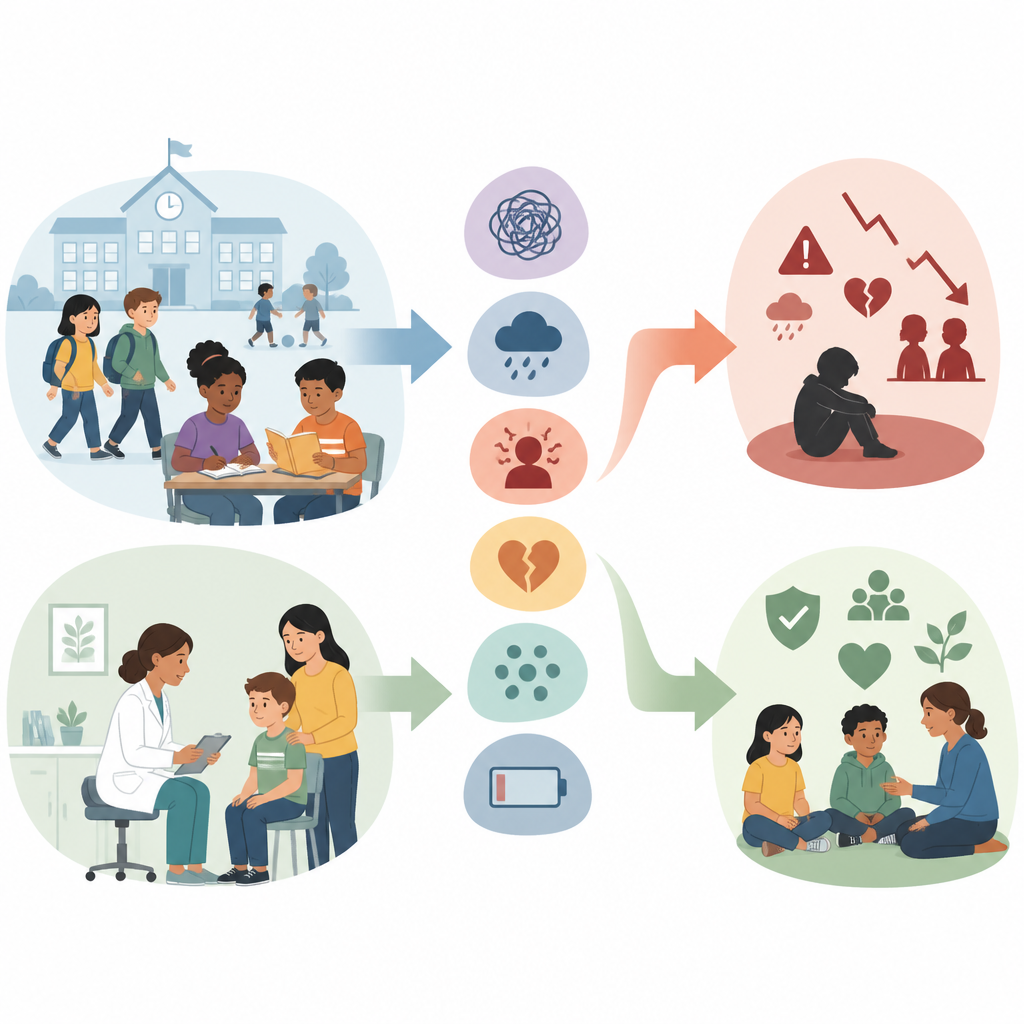
Suicidal thoughts and actions are often seen as problems of the teenage years, but growing evidence shows that some children think about or attempt suicide before they even reach their teens. This study follows nearly ten thousand U.S. children from ages 9 to 12 to ask a pressing question: which mental health conditions, if any, help us spot kids who may first begin to think about suicide or try to harm themselves, and how many of these children actually receive mental health care?
Looking closely at children before the teen years
The researchers used data from the Adolescent Brain Cognitive Development (ABCD) Study, which tracks children across the United States. They focused on 9 to 10 year olds and followed them for two years, including only those who were still under 13 at the last check in. Parents and children were separately asked about suicidal thoughts and suicide attempts, and about a range of mental health diagnoses such as depression, anxiety, attention problems, obsessive thoughts, and eating problems. A child was counted as having suicidal thoughts or attempts if either the parent or the child reported them, reflecting the reality that adults do not always know what a child is thinking or doing.
Which conditions were linked to first suicidal thoughts
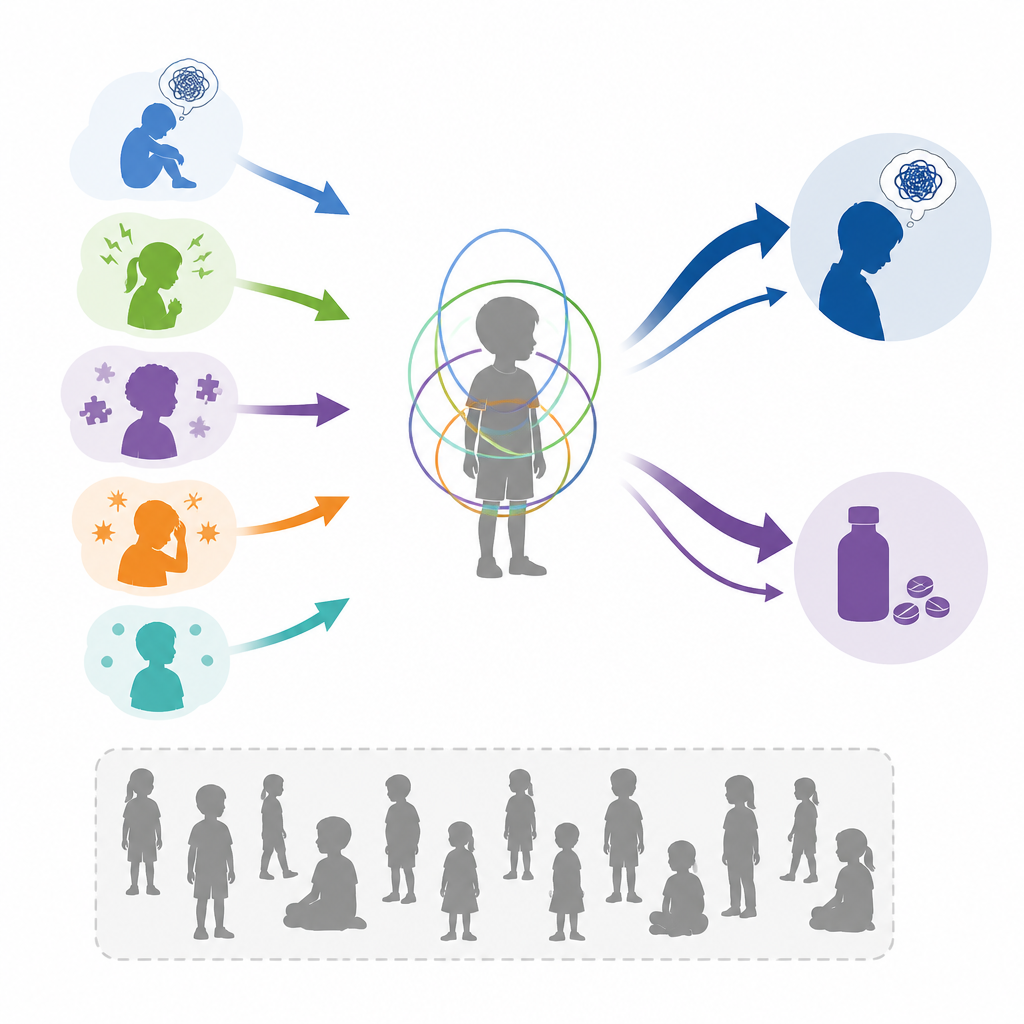
Among children who had never before reported suicidal thoughts or attempts, about 12 percent developed suicidal thoughts for the first time before age 13. Several mental health diagnoses were tied to this first appearance of suicidal thinking. When all conditions were considered together, current major depression, obsessive compulsive symptoms, attention deficit and hyperactivity, and binge eating problems were the most consistent predictors of new suicidal thoughts. The links were statistically reliable but modest in size, meaning that many children with these diagnoses never developed suicidal thoughts, and some children without any diagnosis did. The number of co occurring conditions also mattered: the more diagnoses a child had, the higher the chance that suicidal thinking would emerge.
When thoughts turned into actions
First suicide attempts were less common than first suicidal thoughts, but still occurred in about 1.5 percent of children who had not previously attempted suicide. Nearly all attempts were preceded by suicidal thoughts at some point, either earlier in life or during the study period. However, mental health diagnoses were not especially helpful in predicting which children with or without suicidal thoughts would go on to attempt suicide. After taking other conditions into account, only a past history of depression stood out as a risk factor for a first suicide attempt, and even that link was moderate. No specific disorder clearly predicted the step from thinking about suicide to acting on it, suggesting that other influences, such as life events or access to help, may play a large role.
The treatment gap for struggling children
The study also examined how many children who developed suicidal thoughts or made a first attempt received mental health care in the same year. Fewer than one in three children with new suicidal thoughts, and only about half of those with a first suicide attempt, were reported to have received any formal treatment. Most of the care that did occur took place in regular outpatient settings, and intensive services such as hospital stays were rare. These findings, together with earlier work showing that many parents are unaware of their child’s suicidal thoughts, paint a picture in which large numbers of distressed children are neither recognized nor connected with professional help.
What the findings mean for parents and providers
For families and clinicians, this research offers both guidance and caution. Certain mental health problems in late childhood, especially depression, attention difficulties, obsessive thinking, and binge eating, are linked to a higher chance that suicidal thoughts will first appear, and heavy clusters of problems signal greater concern. Yet these diagnoses alone do a poor job of telling us which children will try to act on these thoughts. The results argue for paying attention not just to labels, but also to current distress, changes in behavior, and access to support. They also suggest that suicide risk checks should extend beyond mental health clinics into places most children already visit, such as primary care offices and schools, to help close the large gap between need and treatment.
Citation: Walsh, R.F.L., Sheehan, A.E., Burke, T.A. et al. Psychiatric predictors of first-onset suicidal thoughts and behaviors throughout preadolescence: longitudinal associations in a US population-based study. Transl Psychiatry 16, 265 (2026). https://doi.org/10.1038/s41398-026-03980-0
Keywords: preadolescent suicide risk, child depression, suicidal ideation, mental health screening, ABCD study