Clear Sky Science · en
White matter microstructure differences between 15q11.2 copy number variation carriers and non-carriers in mid-to-late life
Why tiny DNA changes can shape brain wiring
Most of us carry small genetic quirks that we never notice. Yet some of these subtle changes can quietly influence how the brain is wired and how it works over a lifetime. This study looks at one such change—called a 15q11.2 copy number variant—and asks a simple but important question: do people who carry this variant show lasting differences in the brain’s inner wiring, even in their 60s and 70s?
A small stretch of DNA with big consequences
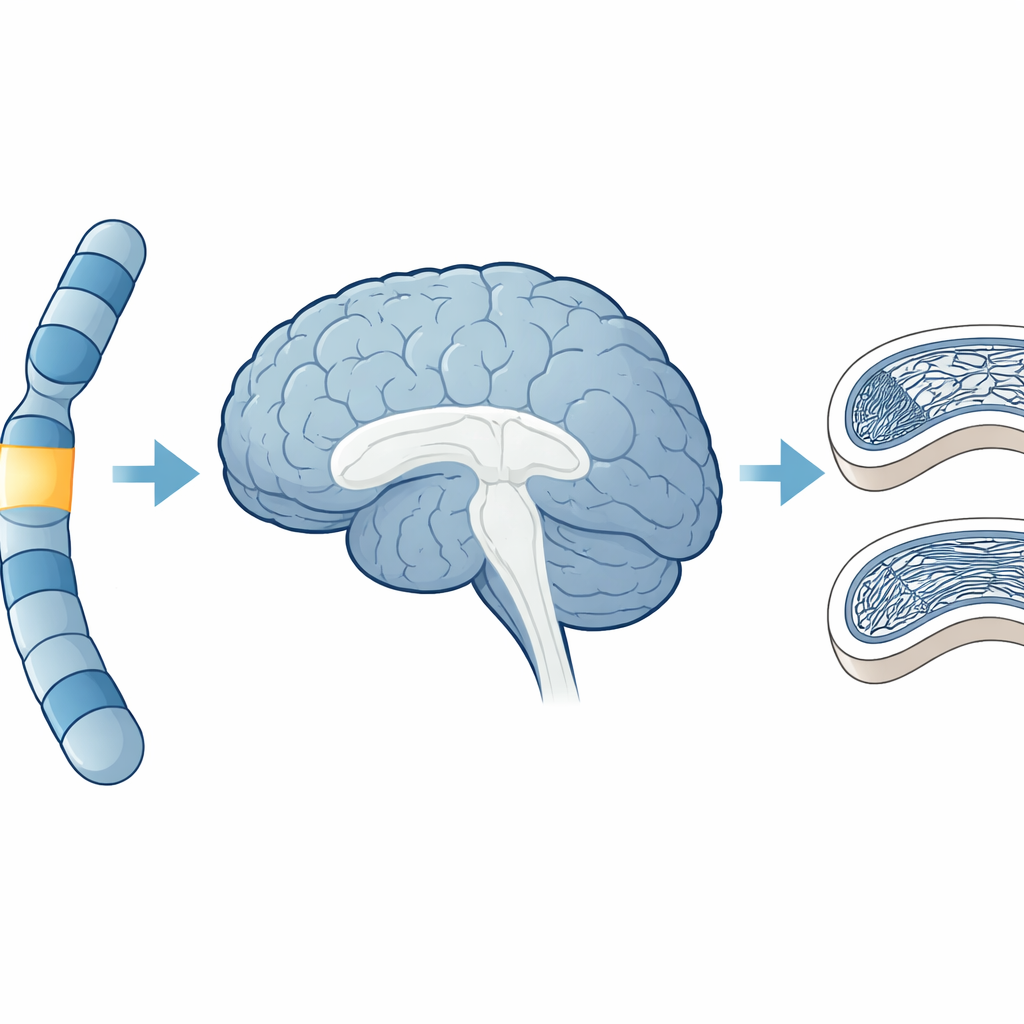
The 15q11.2 region is a short segment on chromosome 15 that can be missing (a deletion) or duplicated in some people. About 1 in 200 individuals carry one of these changes. Previous work has linked the deletion form to conditions like learning difficulties, dyslexia, attention problems, and a higher risk of psychiatric disorders. Researchers also know that this DNA segment includes genes that help guide the growth and insulation of nerve fibers in the brain. That makes it a prime suspect for influencing the brain’s white matter—the network of long, cable-like fibers that connect different brain regions.
Peering into brain wiring with advanced scans
To explore this, the team used brain scans from the UK Biobank, a huge health study of tens of thousands of adults. They focused on more than 250 middle-aged and older adults who carried either the 15q11.2 deletion or duplication, each matched with ten people of similar age and sex who did not carry the variant. Instead of relying on simple measures of brain structure, the researchers used several advanced forms of diffusion MRI. These methods track how water moves through brain tissue, which reveals fine-grained details about how densely nerve fibers are packed and how they are organized on a microscopic scale.
Where the differences show up in the brain
When they looked at very broad averages across the whole brain or entire fiber bundles, the researchers did not see clear differences between carriers and non-carriers. But when they zoomed in on smaller regions, a striking pattern emerged in people with the 15q11.2 deletion. The biggest changes appeared in the corpus callosum—the thick band of fibers that links the left and right halves of the brain. There were also signals in pathways that link the frontal lobes with memory and emotion centers, such as the uncinate fasciculus and parahippocampal cingulum. Across several independent MRI models, deletion carriers tended to show signs of tighter, more directionally aligned fibers and reduced apparent water movement, a combination that points to altered packing or structure of the nerve cables.
Not simply “stronger” wiring
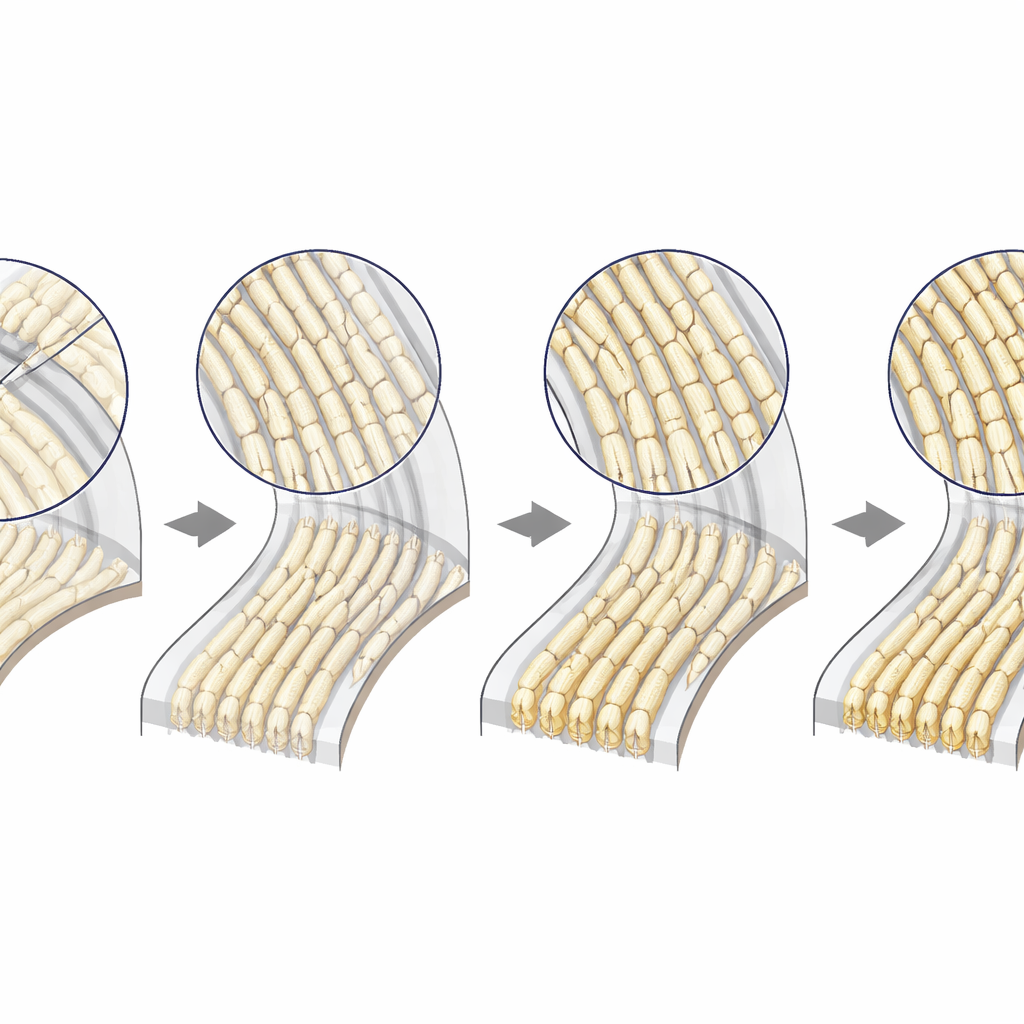
At first glance, the pattern in deletion carriers might look like “stronger” white matter, because some of the same scan features also show up in healthy young brains. But in the context of a known genetic risk factor, the authors caution against this interpretation. Instead, they argue that the findings likely reflect atypical development: fibers that may be overly dense, pruned differently, or coated with abnormal insulating layers. Animal studies of genes in this DNA segment support this idea, pointing to both excessive fiber growth and thinner insulation. Together, these changes could disturb how efficiently signals travel between brain regions that support reading, arithmetic, emotion control, and attention.
What this means for people who carry the variant
One of the most striking results was what the researchers did not find: people with a duplication—extra copies—of the same DNA region did not show robust, consistent changes in their brain wiring, at least with current methods and sample size. This fits a broader pattern seen with many genetic variants where losing copies tends to have a stronger impact than gaining them. Overall, the study shows that a tiny stretch of DNA can leave a lasting fingerprint on the brain’s central communication highways well into mid-to-late life. For a layperson, the key message is that common genetic changes can subtly reshape the brain’s wiring in ways that may help explain why some people are more vulnerable to learning and mental health challenges—even if they appear outwardly healthy.
Citation: Korbmacher, M., Boen, R., Andreassen, O.A. et al. White matter microstructure differences between 15q11.2 copy number variation carriers and non-carriers in mid-to-late life. Transl Psychiatry 16, 190 (2026). https://doi.org/10.1038/s41398-026-03962-2
Keywords: white matter, copy number variant, brain connectivity, diffusion MRI, neurodevelopment