Clear Sky Science · en
Long-term social isolation during adolescence exacerbated cardiac dysfunction after myocardial infarction
Why Feeling Alone Can Hurt the Heart
Many people know that loneliness can make us feel sad or anxious, but fewer realize that it can also harm the heart. This study used mice to explore a simple but powerful question: when young animals are kept alone for long stretches of time, does that emotional stress make a later heart attack more dangerous? By tracking behavior, heart damage, and brain and hormone changes, the researchers uncovered a tight link between prolonged social isolation in adolescence and worse heart health in adulthood.
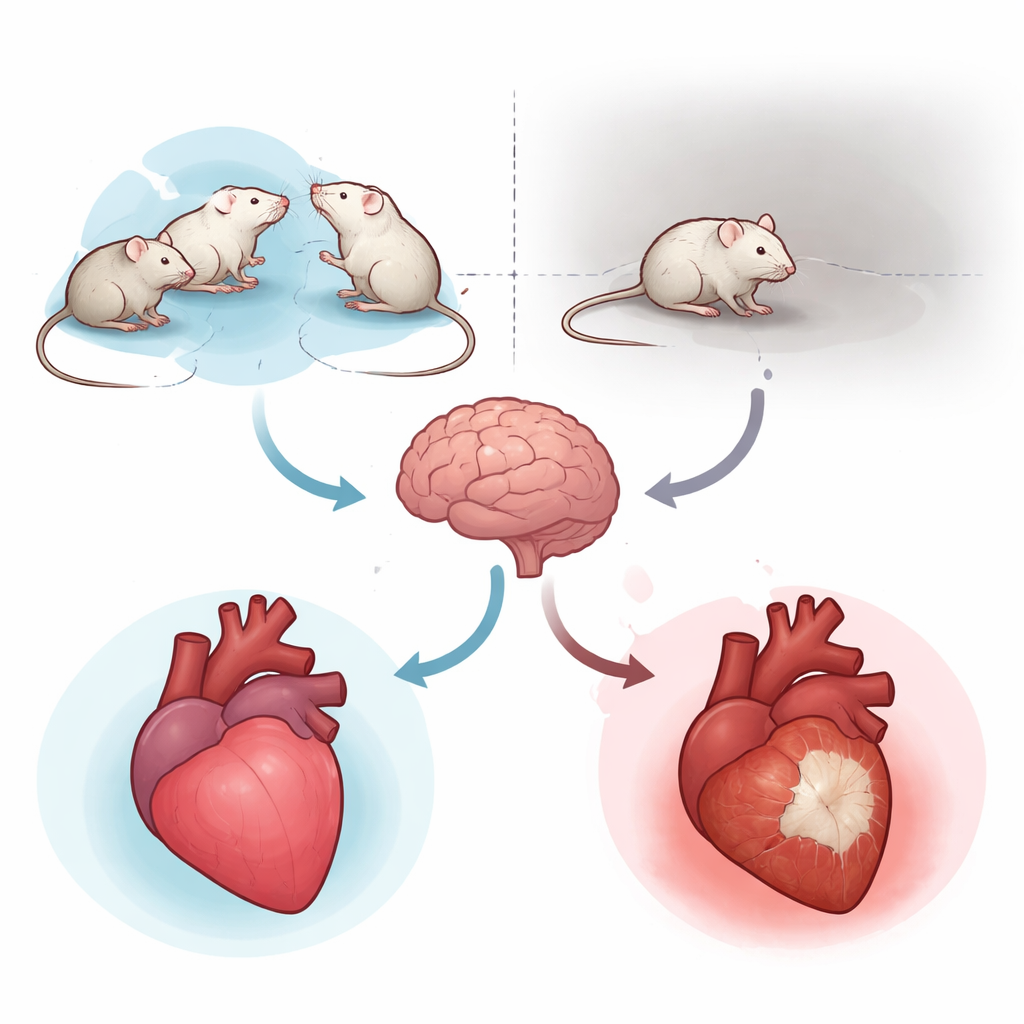
Growing Up Together or Growing Up Alone
The scientists raised young male mice either in small groups or alone. Some mice stayed isolated for six weeks, covering much of their adolescent period, while others were isolated for only two weeks and then returned to group living for a month. The team then tested how anxious or despairing the animals seemed using standard maze and swimming tasks that reveal whether a mouse avoids open spaces, hesitates to eat in a new place, or becomes immobile in stressful water or hanging tests. After these behavioral exams, many of the mice underwent a controlled blockage of a heart artery, a well-established method to mimic a heart attack.
Long Isolation, Dark Mood, and Weak Hearts
Mice that spent six weeks alone behaved very differently from their group-housed peers. They avoided the center of an open arena, preferred closed arms on an elevated maze, delayed eating in a strange setting, and spent more time immobile in despair-like tests. In other words, they showed both anxiety-like and depression-like patterns without being physically sluggish overall. When these long-isolated mice later suffered a heart attack, their survival dropped sharply: about half had died within ten days. Heart scans revealed weaker pumping function and enlarged, poorly contracting heart chambers. Tissue staining showed larger dead areas soon after the heart attack and more scar tissue weeks later, along with higher levels of inflammatory molecules in the heart and blood. The worse the animals’ anxious and depressive behaviors, the poorer their heart’s ability to pump.
Short Isolation, Milder Worry, and Limited Heart Effects
The story was noticeably different for mice that experienced only two weeks of isolation followed by four weeks of resocialization. These animals still showed some signs of nervousness, such as avoiding the center of the open field and taking longer to start eating in a new place, but they did not display clear depression-like behavior. Most importantly, when they later had a heart attack, their heart function, scar size, and inflammatory signals were not worse than those of mice that had always lived with companions. This suggests that brief social stress can nudge mood toward anxiety, but the combination of long-lasting isolation and lingering low mood is especially harmful for the heart.
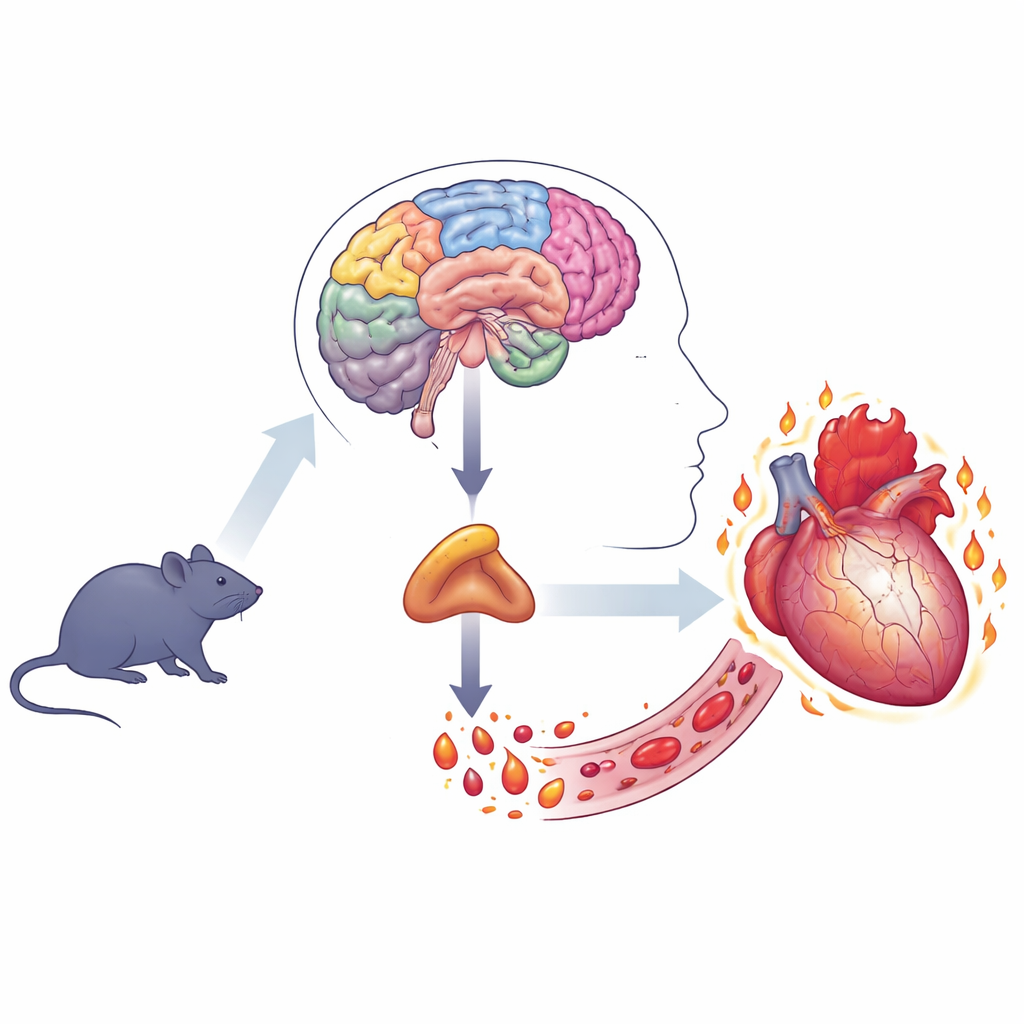
Signals Between Brain, Stress Hormones, and Heart
To understand how isolation might reach the heart, the researchers looked inside the brain and blood. Long-term isolation changed activity in several brain regions that help process emotion, reward, and automatic body functions, including parts of the prefrontal cortex, the nucleus accumbens, the bed nucleus of the stria terminalis, the hypothalamus, and key brainstem centers. At the same time, levels of corticosterone—the main stress hormone in mice—were elevated, and the spleen was enlarged, pointing to a chronically activated stress system and heightened immune activity. Higher corticosterone and inflammatory markers, such as the molecule interleukin-1β, were closely tied to poorer heart pumping. Together, these findings suggest that feeling socially cut off for a long time can rewire brain circuits, over-activate stress hormones, and fan the flames of inflammation that deepen heart injury.
What This Means for People and Their Hearts
This mouse work cannot capture all the complexity of human lives, but it offers a clear message: extended loneliness during sensitive periods of development can leave a lasting imprint on the brain and body that makes the heart more vulnerable to damage. In contrast, shorter isolation followed by renewed social contact seems far less harmful. The results support the idea that treating negative mood and rebuilding social connections after a heart attack may be as important as traditional drugs and procedures. By revealing a chain from isolation to mood changes, brain shifts, stress hormones, and heart scarring, this study strengthens the case that caring for emotional and social well-being is an essential part of protecting cardiovascular health.
Citation: Yao, Y., Wang, A., Di, C. et al. Long-term social isolation during adolescence exacerbated cardiac dysfunction after myocardial infarction. Transl Psychiatry 16, 193 (2026). https://doi.org/10.1038/s41398-026-03959-x
Keywords: social isolation, adolescent stress, myocardial infarction, heart-brain axis, inflammation