Clear Sky Science · en
Neurostructural alterations, trait impulsivity, and genetic architecture in individuals with methamphetamine dependence: a multimodal imaging-genetics study
Why this matters for health and society
Methamphetamine addiction is often portrayed as a problem of willpower, but many people struggle to quit despite devastating consequences. This study looks inside the brain and our genes to understand why some individuals become especially vulnerable. By uncovering how methamphetamine reshapes a key brain hub involved in self-control, and how inherited factors influence that damage, the research points toward more precise ways to identify risk and tailor treatments.
A closer look at the people studied
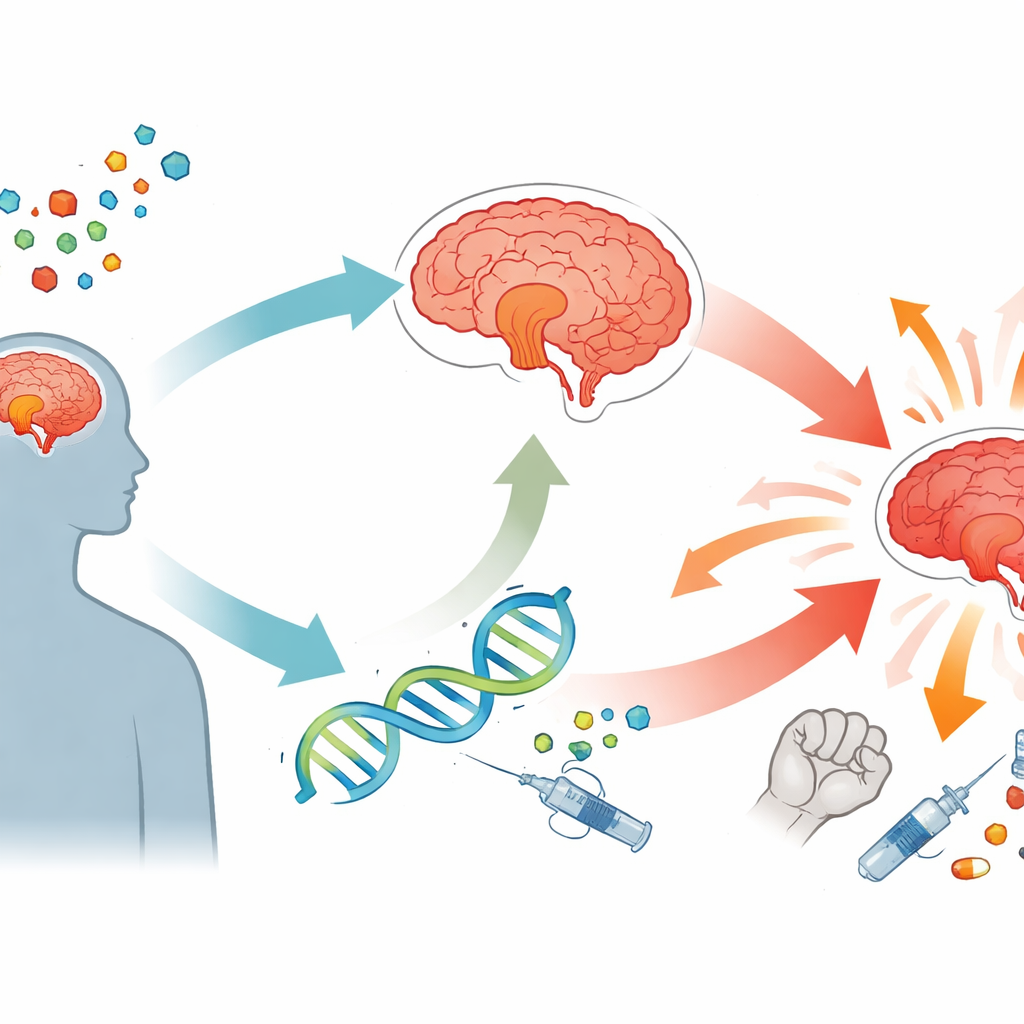
The researchers compared 91 men with methamphetamine use disorder to 51 healthy men of similar age. All participants underwent brain scans that measure the volume of different brain regions, and they completed a questionnaire that assesses impulsivity—how likely someone is to act quickly without thinking through consequences. The team also sequenced the protein-coding regions of each person’s DNA, allowing them to search for rare and common gene variants that might be linked to brain changes in addiction.
The brain’s relay hub under strain
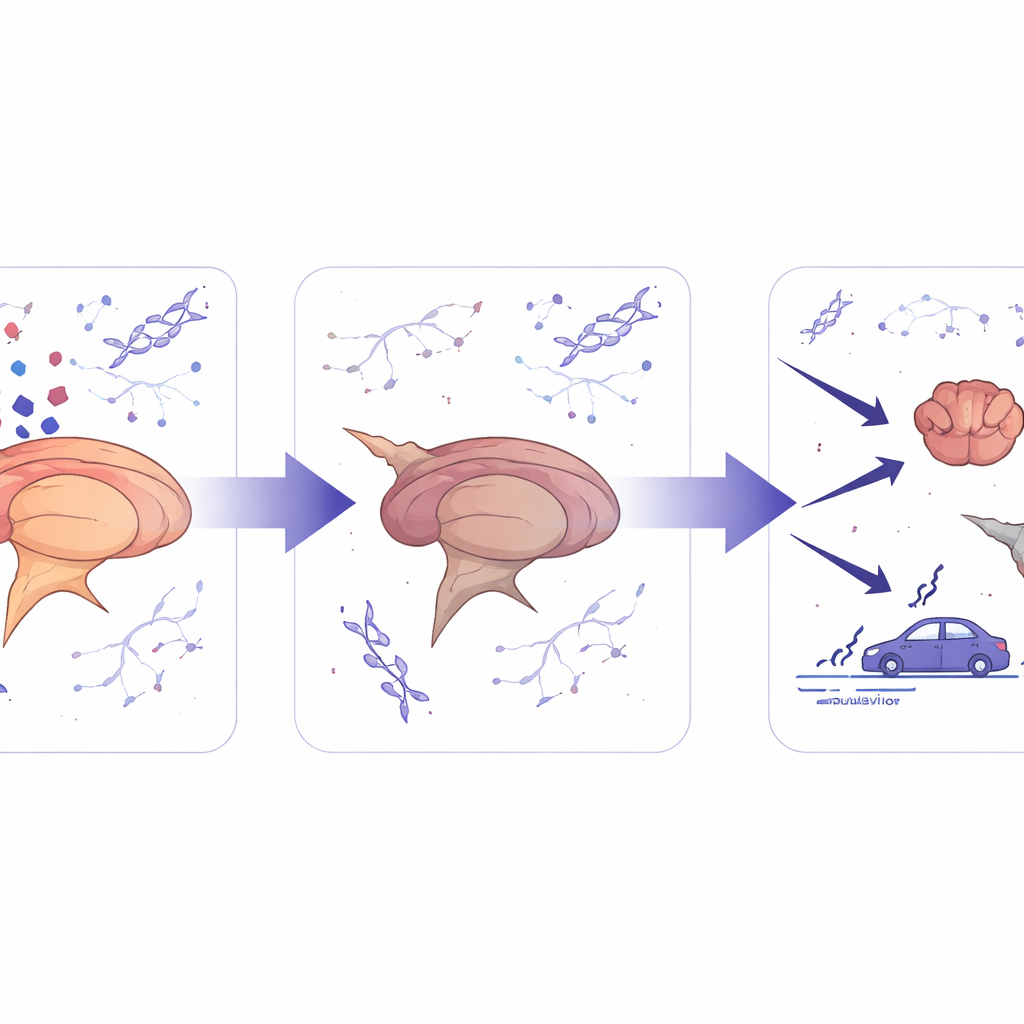
When the scientists scanned the whole brain, only one region consistently stood out: the left thalamus, a deep structure that serves as a relay station between the cortex and subcortical regions. People with methamphetamine use disorder had less gray matter in this area than healthy volunteers, indicating a form of structural thinning or atrophy. No other brain regions showed differences that survived strict statistical correction, suggesting that the thalamus may be a particularly sensitive target of long-term methamphetamine exposure.
From brain changes to impulsive actions
Brain structure alone does not explain behavior, so the team examined how thalamic volume related to impulsivity and drug use patterns. Within the addicted group, those with smaller left thalamus volume reported higher levels of motor impulsivity—the tendency to act on urges without pause. Motor impulsivity, in turn, was linked to more severe addiction and longer histories of methamphetamine use. Using mediation analysis, the researchers showed that impulsivity helped bridge the gap between thalamic damage and clinical severity: smaller thalamic volume was associated with worse addiction partly because it was tied to more impulsive behavior. This suggests that damage to the brain’s relay hub may weaken self-control circuits and feed a vicious cycle of continued drug use.
Genes that shape brain vulnerability
The genetic analyses asked why some individuals’ thalami might be more vulnerable than others. By aggregating rare variants across genes, the team identified 72 genes whose variation was significantly linked to thalamic volume. These genes clustered into several biological themes, including how cells respond to certain toxic molecules, how structural components of cells are built, and how genetic messages are processed inside the nucleus. When the researchers turned to more common gene variants associated with methamphetamine use, they again found an overrepresentation of pathways involved in tiny cellular structures called cilia and the internal scaffolding known as the cytoskeleton. These systems are crucial for moving materials within neurons, maintaining their shape, and supporting connections between brain regions.
When genes and drug exposure collide
Importantly, the study did not view genes and environment in isolation. Instead, the authors tested how specific genetic variants interacted with drug use to influence thalamic volume. For two particular genetic sites, people carrying certain versions showed especially pronounced thalamic shrinkage when they used methamphetamine, compared with non-users or with users who had other versions of the same sites. This pattern suggests that some individuals are biologically primed to sustain more brain damage from the same level of drug exposure, bringing us closer to understanding person-to-person differences in addiction risk.
What this means for future care
Put together, the findings portray methamphetamine addiction not just as a behavioral problem, but as a condition rooted in measurable changes to a central brain relay and shaped by inherited biology. Damage to the thalamus appears to undermine self-control and heighten impulsive actions, helping explain why quitting can be so difficult. At the same time, gene variants that affect the cell’s internal scaffolding and signaling systems may determine how fragile this brain region is in the face of drug exposure. In the long run, such insights could support screening tools to identify people at high risk, guide the development of medications that protect or repair thalamic circuits, and inform more personalized approaches to treating stimulant addiction.
Citation: Luo, D., Shen, D., Ran, J. et al. Neurostructural alterations, trait impulsivity, and genetic architecture in individuals with methamphetamine dependence: a multimodal imaging-genetics study. Transl Psychiatry 16, 182 (2026). https://doi.org/10.1038/s41398-026-03958-y
Keywords: methamphetamine addiction, impulsivity, thalamus, brain imaging, genetic risk