Clear Sky Science · en
Metabotropic glutamate receptor 5 in the anterior cingulate cortex predicts individual differences in motor impulsivity but not in risky decision-making
Why Some People Act Before They Think
We all know someone who tends to jump the gun—blurting things out, clicking too fast, or moving before the signal. Psychologists call this motor impulsivity. It shows up in many mental health conditions, yet we still don’t fully understand what in the brain makes some individuals more impulsive than others. This study in rats pinpoints a specific brain region and a particular type of receptor that together seem to shape how strongly we can hold back an action once we feel the urge to move.
Two Kinds of Impulsivity
Impulsivity is not just one thing. On the one hand, there is motor impulsivity: acting too quickly or failing to stop an action. On the other, there is choice impulsivity: taking high-risk or short-term rewards even when they are not the smartest options in the long run. The researchers wanted to know whether the same brain chemistry governs both. They focused on a receptor called mGluR5, which responds to the brain’s main excitatory messenger, glutamate, and helps keep brain circuits balanced. Because many psychiatric disorders linked to poor impulse control also show changes in mGluR5, the team asked whether natural differences in this receptor could predict how impulsive an individual is.
Rats That Differ in Self-Control
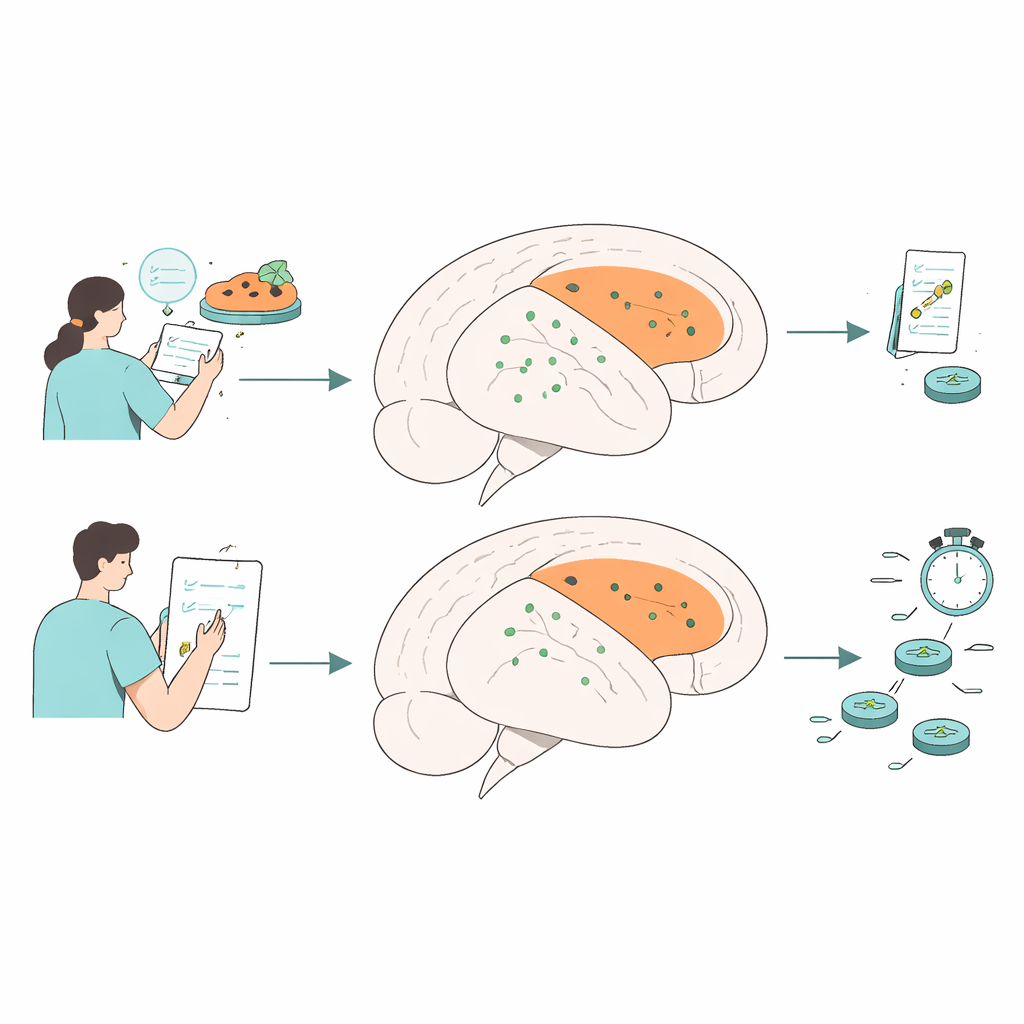
The scientists used two well-studied rat strains that reliably differ in impulsive tendencies. One strain, called Roman high-avoidance rats, is naturally more motor-impulsive; the other, Roman low-avoidance rats, is less so. To measure behavior, the animals played a rat version of a gambling task. In each round, the rats could choose among options that varied in reward size, waiting time, and the chance of a “penalty” time-out. Pressing during the brief waiting period before choices became available counted as a premature response—a sign of motor impulsivity. Choosing options that offered big but unlikely payoffs reflected riskier decision-making. As expected, the high-impulsive rats made far more premature responses than the low-impulsive rats, but the two groups did not differ in their willingness to choose risky options, allowing the researchers to separate action control from risk taking.
Looking Inside the Brain for a Chemical Signature
After testing behavior, the team scanned the rats’ brains using positron emission tomography (PET), a method that can visualize tiny amounts of radioactive tracers binding to specific receptors. They used a tracer that sticks to mGluR5, letting them estimate how many of these receptors were available in different brain areas. Overall, the more impulsive rats showed lower mGluR5 availability across several regions, including parts of the prefrontal cortex, the striatum, the thalamus, the hippocampus, and the amygdala. But a more detailed, voxel-by-voxel analysis highlighted a smaller network where differences were most pronounced: the motor cortex, a relay hub called the thalamus, and especially a frontal region known as the anterior cingulate cortex (ACC), which is involved in monitoring actions and adjusting behavior.
A Frontal Hotspot for Impulsive Actions
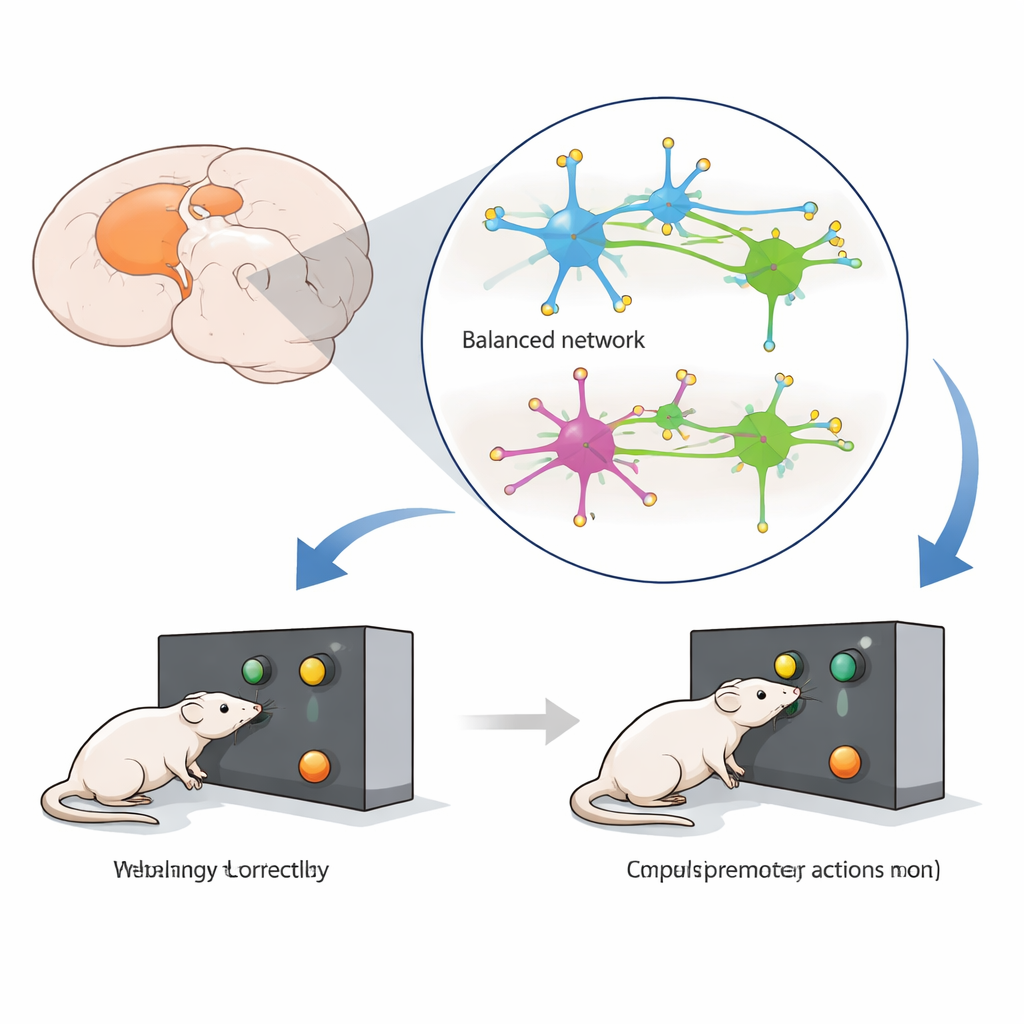
The crucial question was whether mGluR5 levels in any of these regions actually tracked how impulsive a given rat was. When the researchers related receptor availability to behavior across the whole brain, one clear pattern emerged: in the ACC, rats with fewer mGluR5 receptors made more premature responses. This strong negative relationship held up even after accounting for differences in motivation and alertness, and it appeared not only when all rats were considered together but also within each strain separately. In contrast, mGluR5 levels in no brain region—including the ACC—were reliably related to risky choices on the gambling task. Other areas such as the striatum, hippocampus, and amygdala showed some correlations with motor impulsivity, but these were less consistent and mainly restricted to the less impulsive strain.
What This Means for Understanding and Treating Impulsivity
These findings suggest that a shortage of mGluR5 receptors in the ACC specifically weakens the brain’s braking system for actions, without necessarily affecting how we weigh risky rewards. Because mGluR5 helps balance excitation and inhibition in local circuits, lower receptor levels may tilt the ACC toward overactivity, making it harder to withhold a response once movement plans are set in motion. This dovetails with human studies linking altered ACC chemistry to impulsive behavior and with animal experiments showing that drugs which boost mGluR5 signaling can reduce premature responding. Although the work was done in male rats and cannot yet prove cause-and-effect, it points to the ACC and its mGluR5 receptors as promising targets for future treatments aimed at calming excessive motor impulsivity in a range of psychiatric disorders, while leaving normal risk evaluation largely intact.
Citation: Marchessaux, F., Arrondeau, C., Goutaudier, R. et al. Metabotropic glutamate receptor 5 in the anterior cingulate cortex predicts individual differences in motor impulsivity but not in risky decision-making. Transl Psychiatry 16, 192 (2026). https://doi.org/10.1038/s41398-026-03951-5
Keywords: impulsivity, anterior cingulate cortex, glutamate receptors, motor control, positron emission tomography