Clear Sky Science · en
Pre-trauma hair cortisol moderates adverse childhood experience and hypothalamic volume effects on stress symptoms after adult trauma
Why past stress and hidden hormones matter
Most of us will face at least one frightening event in our lives, from a car crash to a violent assault. Some people recover emotionally, while others develop lingering problems such as flashbacks, nightmares, and constant tension. This study asks why those differences arise, focusing on how early-life hardship, a deep brain region that helps control stress, and stress hormones quietly stored in our hair come together to shape our reactions to trauma in adulthood. 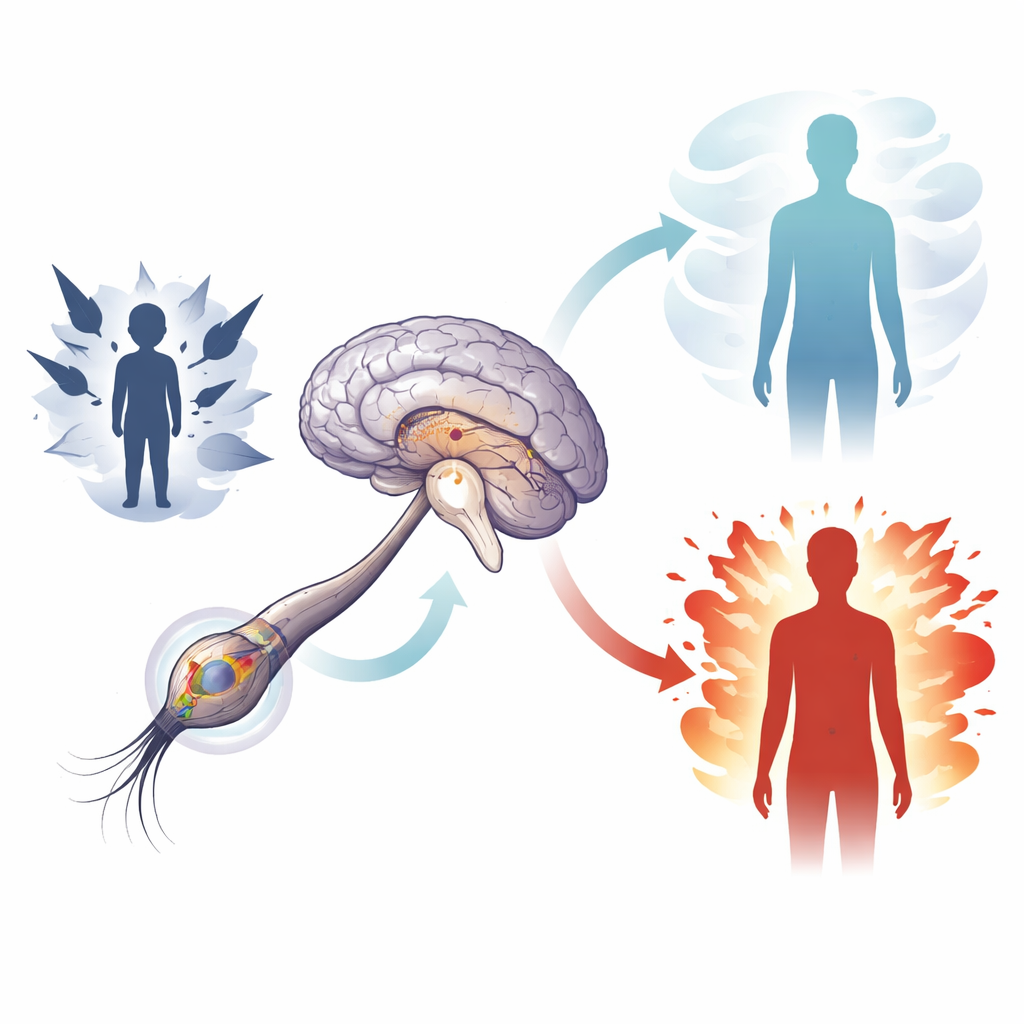
Childhood hardship leaves a long shadow
The researchers began with a well-known but puzzling observation: adults who suffered abuse or neglect as children are more likely to develop serious stress problems after new trauma. These early experiences, known as adverse childhood experiences, have been linked to changes in brain development and to long-term changes in how the body regulates stress. In particular, the hypothalamus—a small but crucial structure deep in the brain—helps manage the body’s main stress system and the release of the hormone cortisol. Earlier work by the same group showed that people with more severe childhood adversity tended to have smaller hypothalamus volumes and were more likely to develop post-traumatic stress disorder after adult trauma.
Reading stress history from hair and brain scans
To explore how these pieces fit together, the team recruited 73 adults from hospital emergency departments within 48 hours of serious events such as motor vehicle collisions, physical assaults, or sexual assaults. Soon after the trauma, they cut small strands of hair from the back of each participant’s head. Because hair grows slowly, the cortisol trapped along its length provides a record of average stress hormone levels during the months before the trauma, rather than just a single moment. Within two weeks, participants also had MRI brain scans so that the researchers could measure the size of the hypothalamus and its subregions. Everyone completed questionnaires about childhood adversity and about their current trauma-related symptoms, and those symptoms were assessed again two weeks and three months later.
How cortisol levels and brain structure work together
The core finding was not a simple one-to-one link between any single measure and stress symptoms. Instead, the impact of brain structure and childhood adversity depended strongly on pre-trauma cortisol levels. When people had relatively high cortisol in their hair before the trauma, larger hypothalamus volumes—especially in a back portion involved in memory and stress—tended to go along with more severe stress symptoms shortly after the event and, for some, more intense re-experiencing symptoms months later. In contrast, among people whose hair showed low pre-trauma cortisol, smaller hypothalamus volumes were tied to worse symptoms. In other words, the same brain feature could be helpful or harmful depending on the person’s recent hormone history. 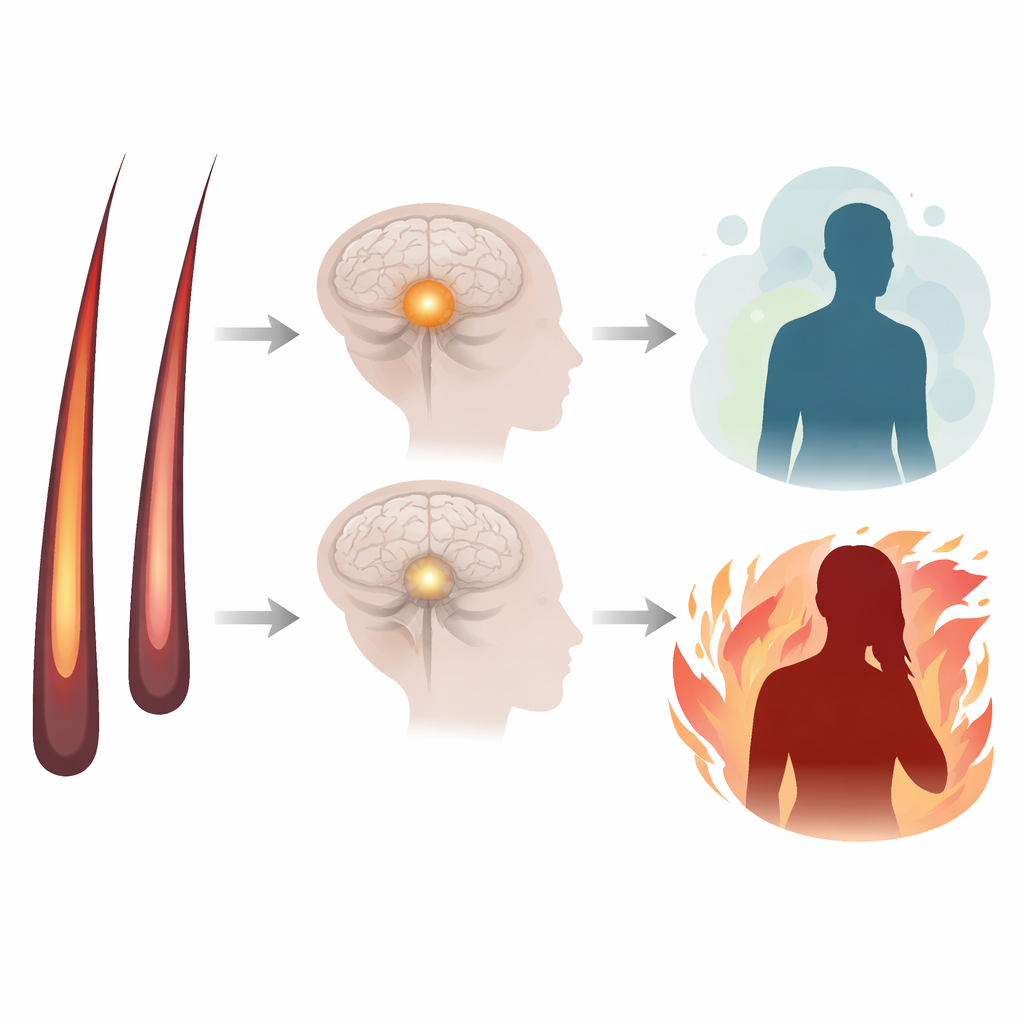
Childhood experiences, low hormones, and later flashbacks
The study also found that childhood adversity was most strongly linked to later intrusive memories and flashbacks when pre-trauma cortisol levels were low. For people with both low cortisol and smaller left hypothalamus volume, more severe childhood adversity predicted particularly strong re-experiencing symptoms three months after trauma. But when cortisol levels were higher, or when the hypothalamus was larger, the link between early hardship and later intrusive symptoms was weaker or disappeared. These patterns suggest that childhood experiences may alter the stress system in a way that leaves some adults with both reduced cortisol and structural changes in the brain, increasing their vulnerability when new trauma strikes.
What this means for understanding and prevention
To a layperson, the main message is that post-traumatic stress does not emerge from a single cause. Instead, it reflects a complex interplay between what happened in childhood, how the stress-control brain region is built, and the body’s hormone balance in the months leading up to trauma. Measuring cortisol in hair and examining specific parts of the brain soon after injury may one day help identify people at higher risk for long-lasting symptoms, opening doors to targeted support and early treatment. The study highlights that both our past experiences and our hidden biology shape how we cope when life suddenly becomes dangerous.
Citation: Xie, H., Davidson, L., Hamdan, R.M. et al. Pre-trauma hair cortisol moderates adverse childhood experience and hypothalamic volume effects on stress symptoms after adult trauma. Transl Psychiatry 16, 170 (2026). https://doi.org/10.1038/s41398-026-03901-1
Keywords: post-traumatic stress, childhood adversity, cortisol, hypothalamus, hair biomarkers