Clear Sky Science · en
Time-Dynamic analysis of sex-specific NREM sleep disturbance induced by social isolation among adolescent mice
Why being alone can change teen sleep
Adolescence is a time when friendships feel vital, and being cut off from others can be deeply stressful. This study asked a timely question: how does prolonged social isolation during the “teenage” period affect sleep, and does it do so differently in males and females? Using young mice as a stand‑in for human adolescents, the researchers traced not only how sleep patterns shifted over weeks of isolation, but also how the brain’s activity at the level of genes changed over time in each sex.
How the study was set up
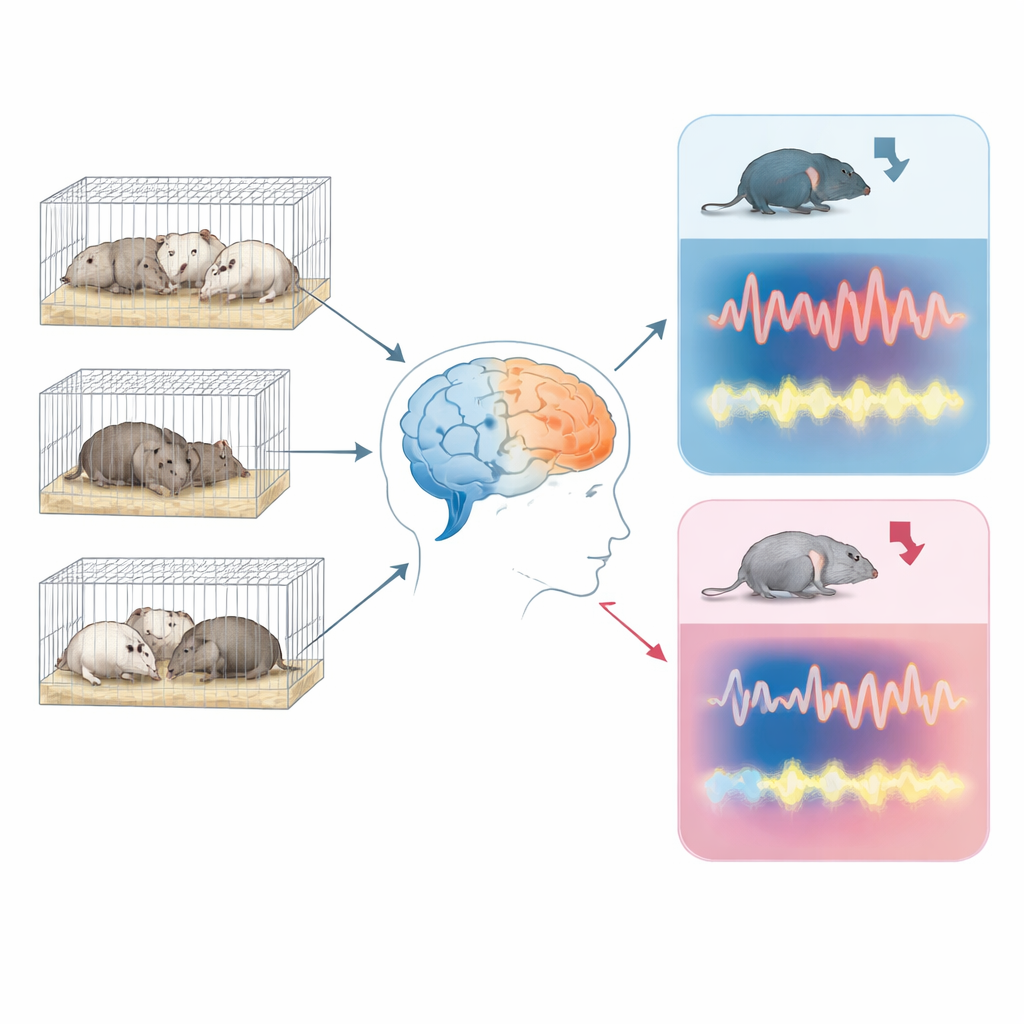
The team worked with male and female mice just after weaning, a developmental stage roughly comparable to early adolescence in humans. Some mice lived in normal group housing, while others were housed alone to mimic social isolation. From three weeks of age onward, the animals stayed in these conditions for up to four weeks. Each week, the researchers recorded brain and muscle activity over 24 hours to classify wakefulness, a light dreaming stage called REM sleep, and a deeper non‑dreaming stage known as NREM sleep, which is especially important for physical and mental recovery.
What happened to sleep in males and females
For the first week of isolation, sleep structure looked similar to that of group‑housed mice. But by weeks two, three, and four, isolated male mice consistently spent less time in NREM sleep across the day, especially during the usual rest period when they should have been sleeping most deeply. Their total number of sleep episodes did not change much, suggesting that isolation made their deep sleep shorter rather than more fragmented. Female mice told a different story: after two and three weeks alone, their NREM sleep remained comparable to that of females kept with companions. Only after a full four weeks of isolation did females show a clear drop in NREM sleep time. REM sleep and wakefulness were relatively stable in both sexes. Together, these findings reveal that adolescent males are more quickly and persistently affected in their deep sleep by social isolation than females, in contrast to adulthood, when women often report more sleep problems.
Peeking under the hood of the brain
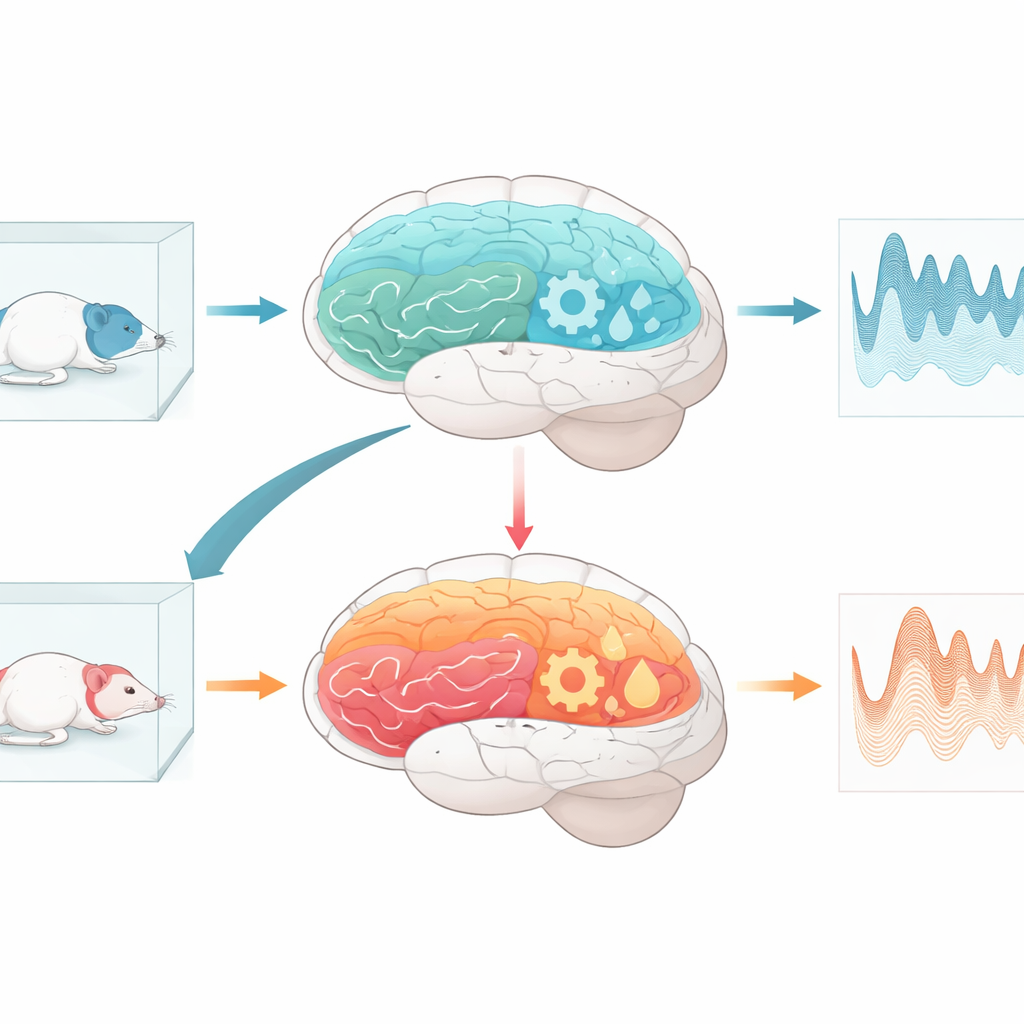
To understand what might drive these sex‑ and time‑dependent changes, the researchers examined which genes were turned on or off across the whole brain after different durations of isolation. They identified hundreds of genes whose activity differed between isolated and group‑housed animals and then used a clustering method to see how groups of genes rose or fell together over time. In males, early changes associated with NREM loss after two weeks were linked to pathways involved in sensing the environment, including light‑processing in the eye. By the third week, the key gene groups pointed toward shifts in the brain’s handling of basic fuels and building blocks, such as amino acids and lipids. By week four, the strongest signals involved immune‑related pathways, hinting that prolonged isolation may push male brains toward a more inflammatory state that tracks with persistent deep‑sleep loss.
How female brains adapt differently
In females, gene activity followed a different trajectory. Even before their NREM sleep declined, at two weeks of isolation, key genes were already changing in pathways tied to fat production and to hormone and immune signaling. After three weeks, the dominant changes involved vitamin processing and digestion‑related functions, suggesting ongoing metabolic adaptation to stress. Only at four weeks—when NREM sleep finally dropped—did the most prominent gene shifts center on energy and amino acid metabolism, including pathways that handle nitrogen and arginine, a molecule important for cellular energy and signaling. These patterns suggest that female brains may initially counteract the stress of isolation by flexibly adjusting metabolism and immune responses, delaying the onset of deep‑sleep disturbance until these compensatory systems are strained.
What this means for teen mental health
To a non‑specialist, the main message is that prolonged loneliness during the teenage years does not affect everyone’s sleep in the same way or on the same timetable. In this mouse model, males lose deep, restorative sleep earlier, in step with heightened sensitivity of sensory and immune systems, while females hold out longer by leaning on metabolic adjustments before eventually showing similar sleep loss. Although mice are not humans, the work highlights that both sex and how long a stressful situation lasts matter when considering sleep problems in adolescents. It also points to different biological levers—such as sensory pathways and immune balance in males, and energy and amino acid metabolism in females—that could inspire more tailored strategies to protect or restore healthy sleep during vulnerable developmental windows.
Citation: Li, S., Ma, X., Jiang, Y. et al. Time-Dynamic analysis of sex-specific NREM sleep disturbance induced by social isolation among adolescent mice. Transl Psychiatry 16, 165 (2026). https://doi.org/10.1038/s41398-026-03895-w
Keywords: adolescent sleep, social isolation, sex differences, NREM sleep, stress and brain