Clear Sky Science · en
Application of artificial intelligence in schizophrenia rehabilitation management: a systematic scoping review
Why smart tools matter for serious mental illness
Schizophrenia can make it hard for people to think clearly, connect with others, and manage daily life, and many continue to struggle even after hospital treatment. At the same time, mental health services around the world are stretched thin, and many people get little or no ongoing support. This article explores how artificial intelligence (AI) – the same family of techniques behind phone assistants and online recommendations – is being tested as a new helper in the long journey of rehabilitation for schizophrenia: keeping people well, supporting medication use, and catching early warning signs before a crisis hits.
From hospital visits to everyday life
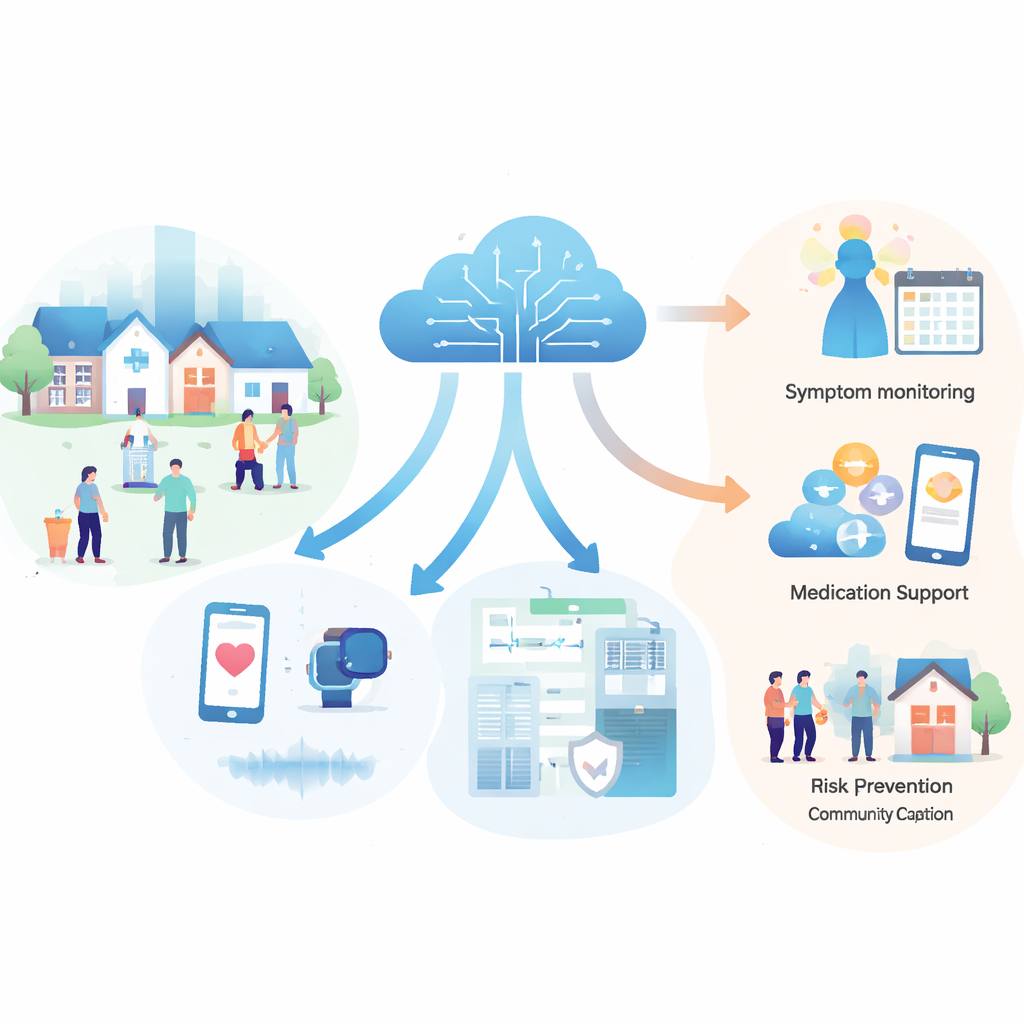
The authors start by contrasting two very different goals in mental health care. Diagnosis aims to put a name to a condition, such as schizophrenia, so clinicians can communicate and plan treatment. Rehabilitation, by contrast, is about helping people live, work, and participate in their communities over years or decades. It includes tracking symptoms over time, adjusting medication, preventing relapse, and building skills and social connections. Despite clear guidelines, this kind of long-term support is uneven worldwide: many people never see a specialist, and follow-up is often irregular. This gap has opened the door for digital tools – smartphones, wearables, online platforms – that can collect information continuously and deliver help at a distance.
What this review looked at
To understand how AI is being used for rehabilitation, the researchers examined 83 studies published between 2012 and late 2025. All studies involved people with clinically confirmed schizophrenia or related psychotic disorders and focused on tasks linked to ongoing care, not just diagnosis. The team grouped each project into rehabilitation domains such as symptom monitoring, medication management, risk management, functional training, and psychosocial support. They also recorded what kinds of data were used (for example, speech, electronic health records, or smartphone sensors), what AI techniques were applied, how well the systems performed, and whether they had been tested in real-world settings.
How AI is being used today
Most of the work so far centers on watching symptoms over time. Many studies analyzed speech, text, or smartphone data to estimate the severity of hallucinations, thinking problems, motivation, or social functioning without relying solely on lengthy clinic interviews. Others used phone sensors, wearables, or internet search patterns to warn of a possible relapse days or weeks before hospitalization. A second major group of studies focused on medication: checking whether people took their medicines using smartphone cameras, predicting who might stop a drug or respond poorly, and flagging side effects such as hormone changes or diabetes risk using routine health records. A third cluster dealt with risk management, such as forecasting relapse, rehospitalization, violence, or serious physical illness. Only a handful of projects tried to support skills training or guide therapists in real time, even though these areas are central to rebuilding daily life.

How good are these systems so far?
On paper, many models look promising. For tasks like sorting people into risk groups or estimating symptom scores, typical accuracy was fairly strong, and some small studies reported very high performance when analyzing voice or behavior patterns. Relapse warning systems could often spot unusual changes in behavior, but they tended to miss many actual relapses while still producing false alarms, meaning they are better suited as early “nudges” than as stand‑alone decision makers. Importantly, only a few studies tested their systems on entirely new groups of patients, and very few reported how well the predictions were calibrated – that is, whether a stated risk actually matched what happened. Even fewer projects closed the loop by turning predictions into concrete actions, such as outreach from a clinician or adjustments to treatment, and then measuring whether this improved patients’ lives.
What needs to happen next
The review concludes that AI has clear potential to strengthen rehabilitation in schizophrenia by keeping closer watch on symptoms, supporting medication use, and highlighting people at higher risk of relapse or medical problems. However, most tools are still at the “early prototype” stage, tuned to data from high‑income countries and tested mainly on short-term or indirect outcomes. To truly help patients, future systems will need careful external testing, clear ways to express uncertainty, safeguards around privacy and fairness, and designs that keep clinicians and patients in the loop rather than replacing them. Above all, the authors argue, success should be judged not by technical scores alone but by whether AI‑supported care reduces crises and helps people with schizophrenia participate more fully in everyday life.
Citation: Yang, H., Chang, F., Muroi, F. et al. Application of artificial intelligence in schizophrenia rehabilitation management: a systematic scoping review. Transl Psychiatry 16, 180 (2026). https://doi.org/10.1038/s41398-026-03872-3
Keywords: schizophrenia rehabilitation, digital phenotyping, medication adherence, relapse prediction, mental health AI