Clear Sky Science · en
Bisphenol a exposure and major depressive disorder: an integrative analysis combining network toxicology, molecular docking, genetic epidemiology, and transcriptomic validation
Why Plastic Chemicals and Mood Are Connected
Many of us drink from plastic bottles or store food in plastic containers without a second thought. One of the chemicals often found in these products is bisphenol A (BPA), an industrial compound that can act like a hormone in the body. At the same time, major depressive disorder (MDD) is a leading cause of disability worldwide. This study asks a worrying but important question for everyday life: could long-term, low-level exposure to BPA subtly change our brains in ways that make depression more likely?
From Everyday Exposure to the Brain
BPA is widely used in hard plastics and epoxy resins found in food containers, medical devices, dental materials, and thermal paper receipts. People are exposed by eating, breathing, or skin contact. Most BPA is quickly broken down and excreted, but a small active fraction can still interact with sensitive tissues, including the brain. Previous research has linked BPA to problems such as breast cancer, reproductive issues, and neurodevelopmental disorders. Observational studies and animal experiments have hinted that BPA exposure is tied to anxiety, mood changes, and altered brain development, but the exact biological links to major depression remained unclear.
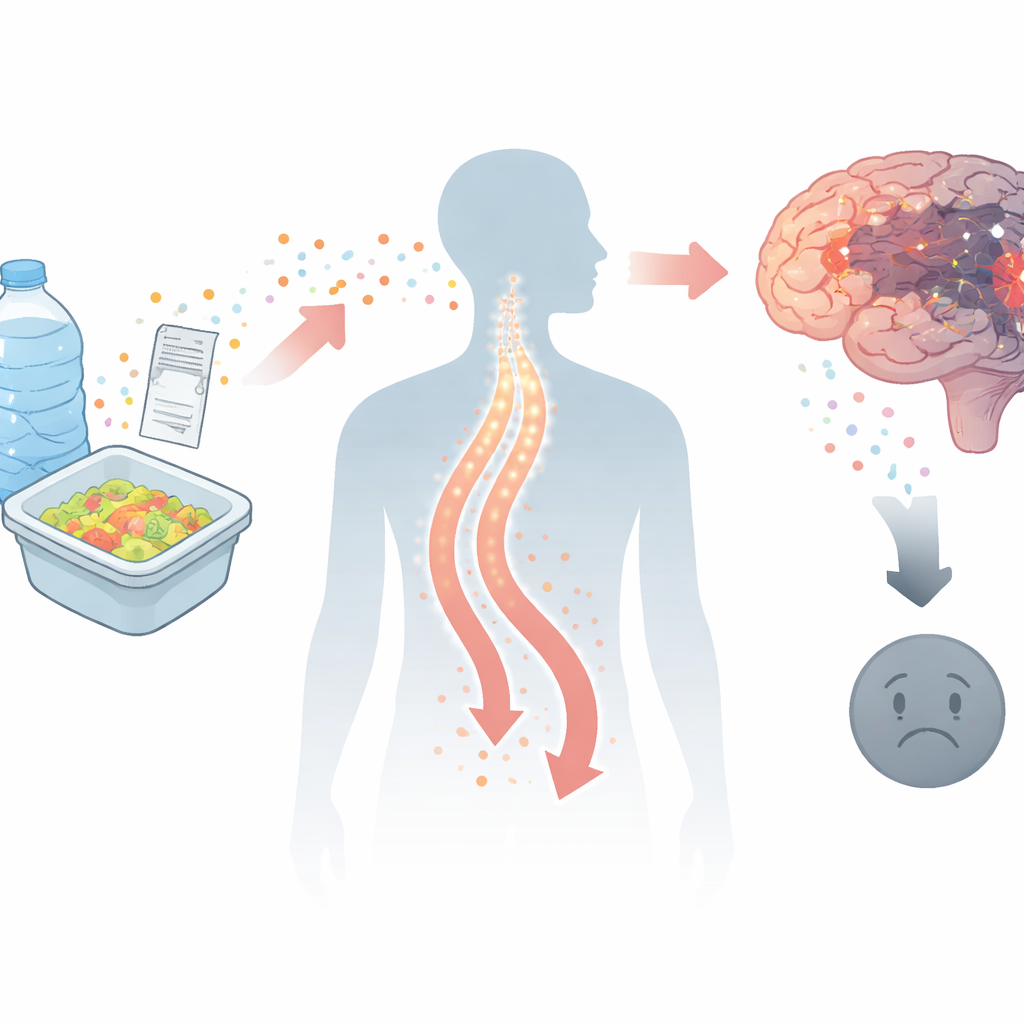
Tracking the Chemical’s Footprint in the Body
The researchers used a multi-step, data-driven strategy to trace how BPA might influence depression biology. First, they pulled together thousands of known and predicted protein targets of BPA from several chemical and biological databases, and then intersected these with genes already associated with major depressive disorder. This overlap contained 571 shared targets. These genes were heavily involved in brain wiring and communication, including the growth of nerve cell branches, the survival or death of neurons, and the strength of synapses where brain cells talk to each other. Pathway analyses tied these targets to dopamine signaling, circadian rhythms, learning and memory, and conditions such as attention-deficit/hyperactivity disorder and autism, all of which intersect with mood and cognitive health.
Six Key Molecular Gateways
Next, the team built a large protein–protein interaction map to see which of the 571 shared targets sit at the crossroads of many biological routes. Using several network analysis methods, they narrowed this list down to six “core” genes: ESR1, SRC, EGFR, AKT1, PLCG2, and JAK3. These genes encode proteins involved in hormone signaling, cell growth and survival, immune responses, and the fine-tuning of synapses. To test whether changes in these genes are merely associated with depression or might actually contribute to it, the authors applied Mendelian randomization, a genetic technique that uses naturally occurring DNA differences as a kind of lifelong experiment. Variations that increase the activity of AKT1, SRC, PLCG2, and JAK3 were linked to higher depression risk, whereas higher EGFR activity appeared protective. ESR1 showed a weaker, less clear-cut effect.
Zooming In on Brain Cells and Animal Behavior
To see where in the brain these core genes matter most, the researchers examined single-cell RNA sequencing data from human inhibitory neurons, comparing cells from healthy people, patients with depression, and patients after treatment. The six genes were most active in several key interneuron types involved in balancing brain circuits; their activity patterns were disturbed in depression and partially normalized after therapy. The team then checked bulk blood RNA data and plasma protein levels from people with and without depression, finding that EGFR levels tended to drop in depression, while the other five genes were elevated, and these patterns eased in remission. Molecular docking simulations suggested that BPA can physically bind to all six proteins with relatively strong affinity, raising the possibility that BPA could nudge these pathways directly. Finally, in a mouse model fed BPA over weeks, animals developed anxiety-like and depression-like behaviors, and their brain tissue showed the same gene-expression shifts: SRC, PLCG2, AKT1, JAK3, and ESR1 went up, while EGFR went down.
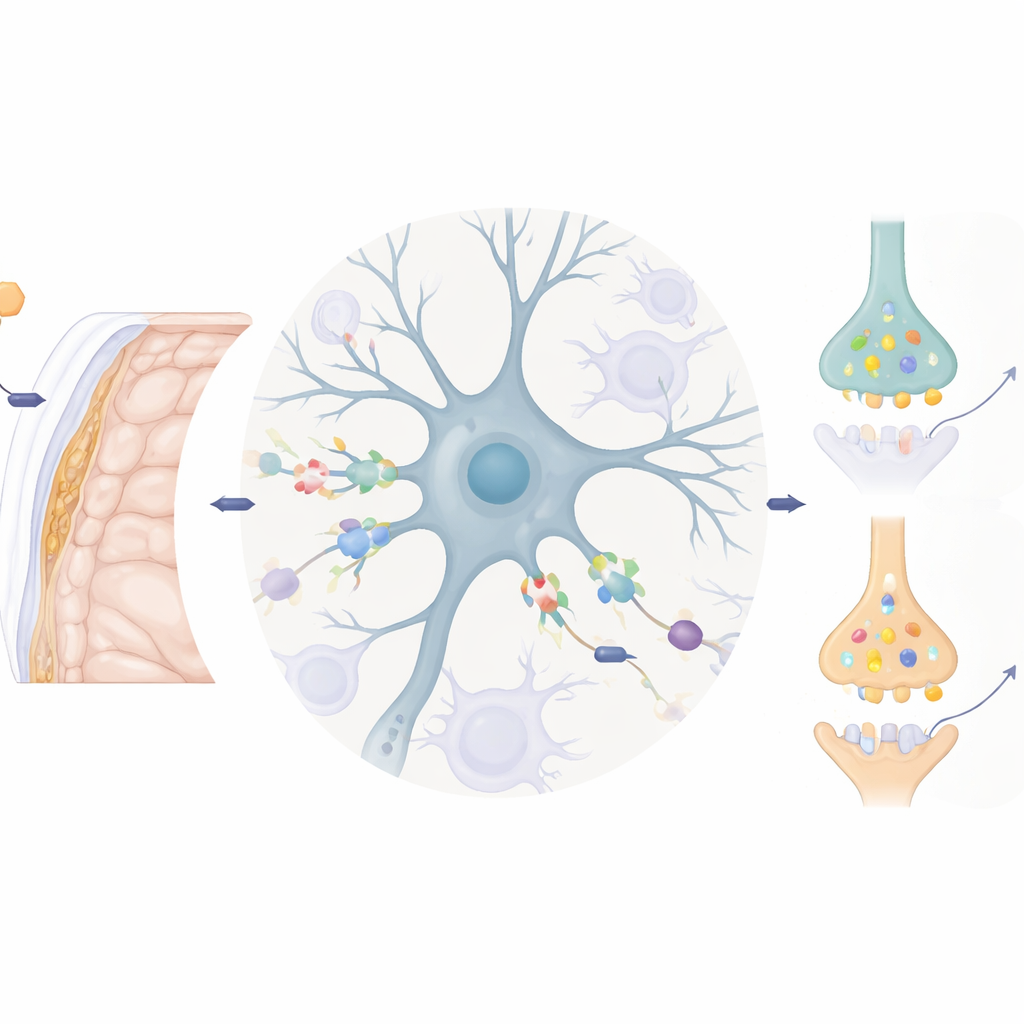
What This Means for Health and Prevention
Taken together, this integrative analysis suggests that BPA exposure may increase vulnerability to major depression by disturbing a network of hormone, growth, and immune signaling proteins that are crucial for healthy brain wiring, synaptic strength, and cognitive function. The six highlighted genes appear to act as gateways linking environmental exposure to genetic risk and cell-level changes in the brain. While this work does not prove that BPA alone causes depression in any given person, it strengthens the case that everyday chemical exposures can subtly tune biological systems that shape mood. The findings also point to specific molecular targets that might one day help doctors identify people at higher risk or guide new treatments aimed at restoring healthier brain signaling, while reinforcing public health efforts to reduce unnecessary BPA exposure.
Citation: Lu, Z., Shi, W. Bisphenol a exposure and major depressive disorder: an integrative analysis combining network toxicology, molecular docking, genetic epidemiology, and transcriptomic validation. Transl Psychiatry 16, 215 (2026). https://doi.org/10.1038/s41398-026-03862-5
Keywords: bisphenol A, major depressive disorder, environmental exposure, brain signaling, endocrine disruptors