Clear Sky Science · en
Multimodal EEG–fNIRS classification as a clinical tool for bipolar disorder diagnosis
Why this matters for everyday mental health
Bipolar disorder is often difficult to diagnose, especially when doctors need to distinguish between its main subtypes. Because current diagnosis relies almost entirely on interviews and observation, people can spend years on the wrong treatment. This study explores whether simple, non-invasive brain recordings—taken while people perform an emotional task—could provide objective clues to who has bipolar disorder, which subtype they have, and who is healthy. If successful, such an approach could lead to faster, more tailored care in ordinary clinic settings.
Looking inside mood swings with light and electricity
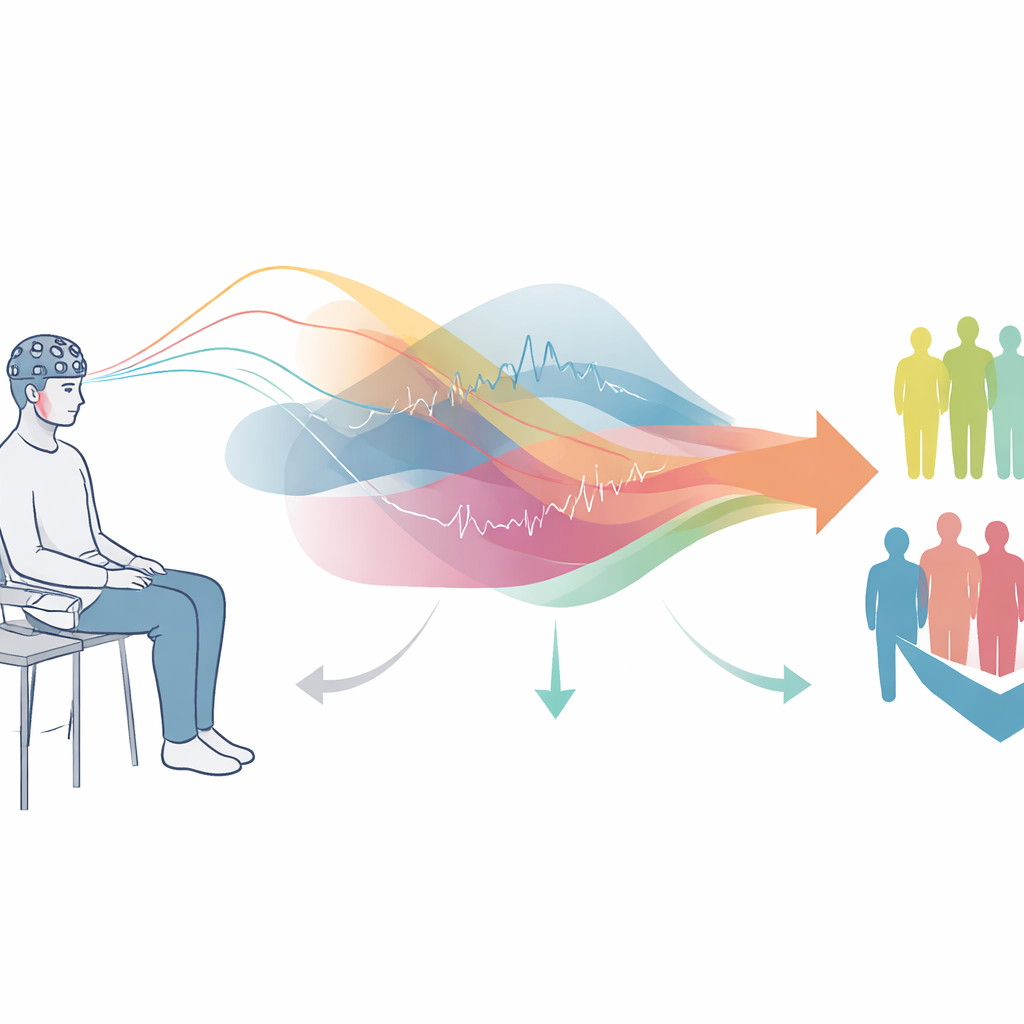
The researchers focused on a core feature of bipolar disorder: ongoing trouble managing emotions, even during seemingly stable periods. They used two tools that can be used outside large hospitals. One, EEG, records the brain’s electrical activity from a cap of sensors on the scalp. The other, fNIRS, shines near-infrared light through the forehead to track blood-oxygen changes in the outer parts of the brain. Together, these methods capture both fast electrical signals and slower blood-flow responses in the frontal region, which helps control emotion, decision-making, and social behavior.
Testing emotional distraction in real time
To probe emotional control, the team designed a visual task where people had to respond only to the color of a frame around a picture, while ignoring whether the image was pleasant, neutral, or unpleasant. This set-up, a variation of the emotional Stroop task, creates a tug-of-war between emotional reactions and a simple thinking task. Participants included adults with bipolar disorder type I, bipolar disorder type II, and healthy volunteers. While they performed the task, EEG sensors covered the entire scalp, and a small set of fNIRS light sources and detectors recorded blood-flow changes over the left frontal area.
Patterns that reveal who is who
First, the researchers checked behavior. People with bipolar disorder took longer to respond to unpleasant pictures than to neutral or pleasant ones, suggesting that negative emotions interfered more with their thinking. Healthy volunteers did not show this pattern. Next, the team turned to the brain signals. They extracted time windows from the EEG (from rapid visual responses around one-tenth of a second to later waves linked to emotion and decision-making) and from the slower fNIRS response (capturing how blood flow rose and fell after each picture). Using these features, they trained machine-learning models to classify whether a person was healthy or had bipolar disorder, and—within bipolar patients—whether they had type I or type II.
Combining signals boosts diagnostic power
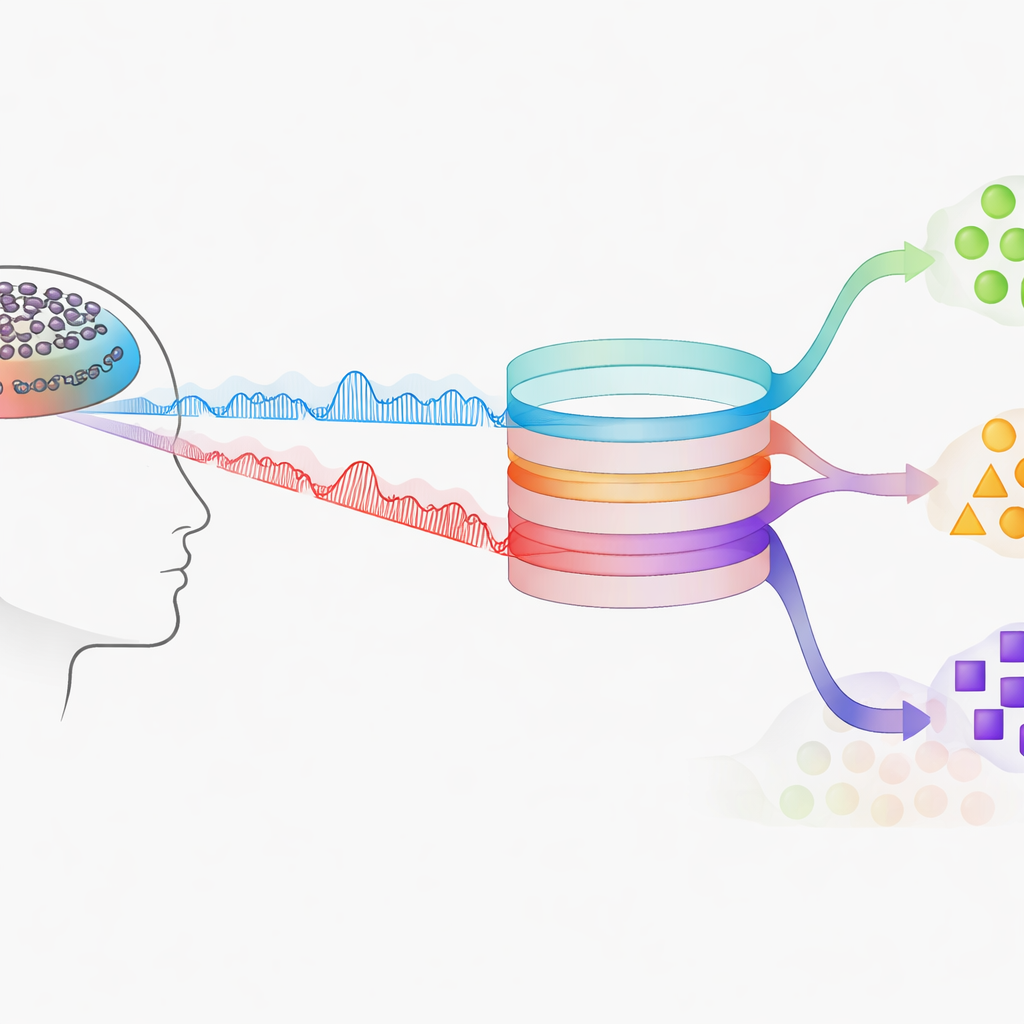
When they used only the EEG signals from the full-head cap, the models already separated patients from healthy volunteers, and could often tell the two bipolar subtypes apart. But adding fNIRS features consistently improved these results, especially for the harder problems: distinguishing bipolar type II from healthy participants and telling type I from type II. The light-based measurements added information about how blood vessels and nerve activity interact in the frontal brain, capturing subtle neurovascular differences that EEG alone could not. Even when EEG data were restricted to only frontal sensors—mimicking a simplified, more portable system—combining EEG and fNIRS reduced misclassifications and kept performance high.
Toward simpler, more objective diagnosis
In plain terms, this study shows that a small set of sensors on the head can pick up reliable brain patterns that differ between healthy people and those with bipolar disorder, and even between its main subtypes. By pairing electrical activity and blood-flow changes, the method strengthens the signal available to computer-based classifiers, making subtype distinctions more accurate. Although larger studies are still needed, these findings point toward future clinic-friendly tools that could complement interviews, help avoid misdiagnosis, and eventually enable earlier, more personalized treatment for people at risk of bipolar disorder.
Citation: Tahir, I., Planat-Chrétien, A., Bertrand, A. et al. Multimodal EEG–fNIRS classification as a clinical tool for bipolar disorder diagnosis. Transl Psychiatry 16, 177 (2026). https://doi.org/10.1038/s41398-026-03858-1
Keywords: bipolar disorder, brain imaging, EEG, fNIRS, emotional regulation