Clear Sky Science · en
Non-gene-edited neural stem cells reverse neuroinflammation and microbiota dysbiosis in a sprague-dawley rat model of autism spectrum disorder
New hope from brain and gut
Autism spectrum disorder affects many families and is often discussed in terms of behavior and learning, but beneath those signs lie changes in both the brain and the gut. This study in rats explores a new type of stem cell treatment that aims to calm brain inflammation and rebalance gut microbes at the same time, offering a glimpse of how future therapies might address autism as a whole-body condition rather than just managing symptoms.
How the model mirrors autism
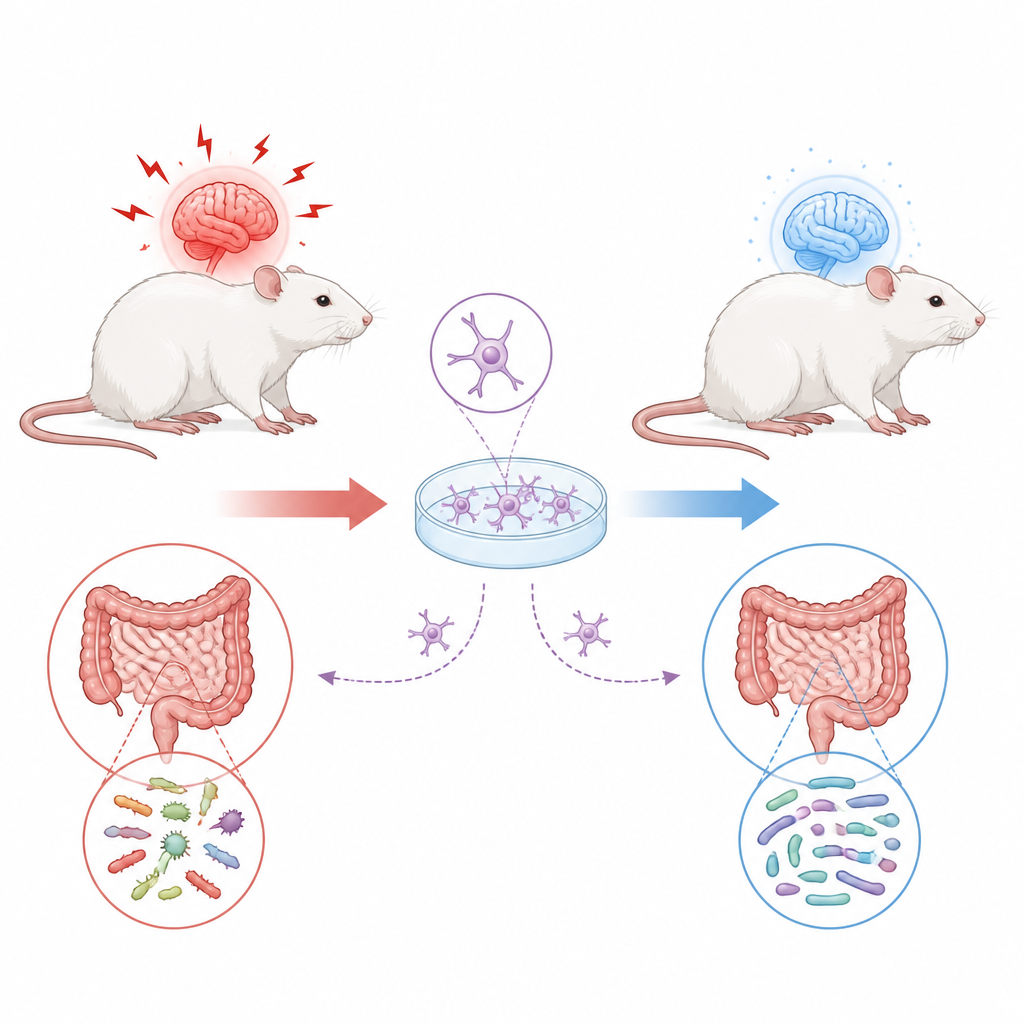
To study autism-like features in a controlled way, the researchers used a well-known rat model in which pregnant animals receive the drug valproic acid. Their offspring later show reduced social interaction, repetitive actions such as excessive grooming and marble burying, higher anxiety, and learning and memory difficulties in a water maze. These rats also display brain inflammation, oxidative stress that can damage cells, disrupted synapses where nerve cells communicate, and a disturbed mix of gut bacteria similar to findings reported in some people with autism.
A special kind of stem cell
The team developed human neural stem cells without altering any genes. They began with stem cells from donated umbilical cords, reprogrammed them into pluripotent cells using only small molecules, then guided them into neural stem cells. These cells showed key markers of stemness and neural identity, could form many tissue types in safety tests, produced functional neurons with normal electrical activity, and did not form tumors in mice over six months. This careful safety and quality control is important for any future clinical use in children.
Two routes into the body and brain
In the main experiments, young male rats from the autism-like group received the human neural stem cells through a dual-pathway approach. First, the cells were given intravenously so they could act throughout the body and immune system. Later, a smaller dose was injected into the fluid-filled spaces of the brain to better reach key regions involved in memory and social behavior, especially the hippocampus and prefrontal cortex. Exosomes, tiny packages released by stem cells, were also given intranasally to support communication along the gut–brain axis.
Changes in behavior, brain and gut
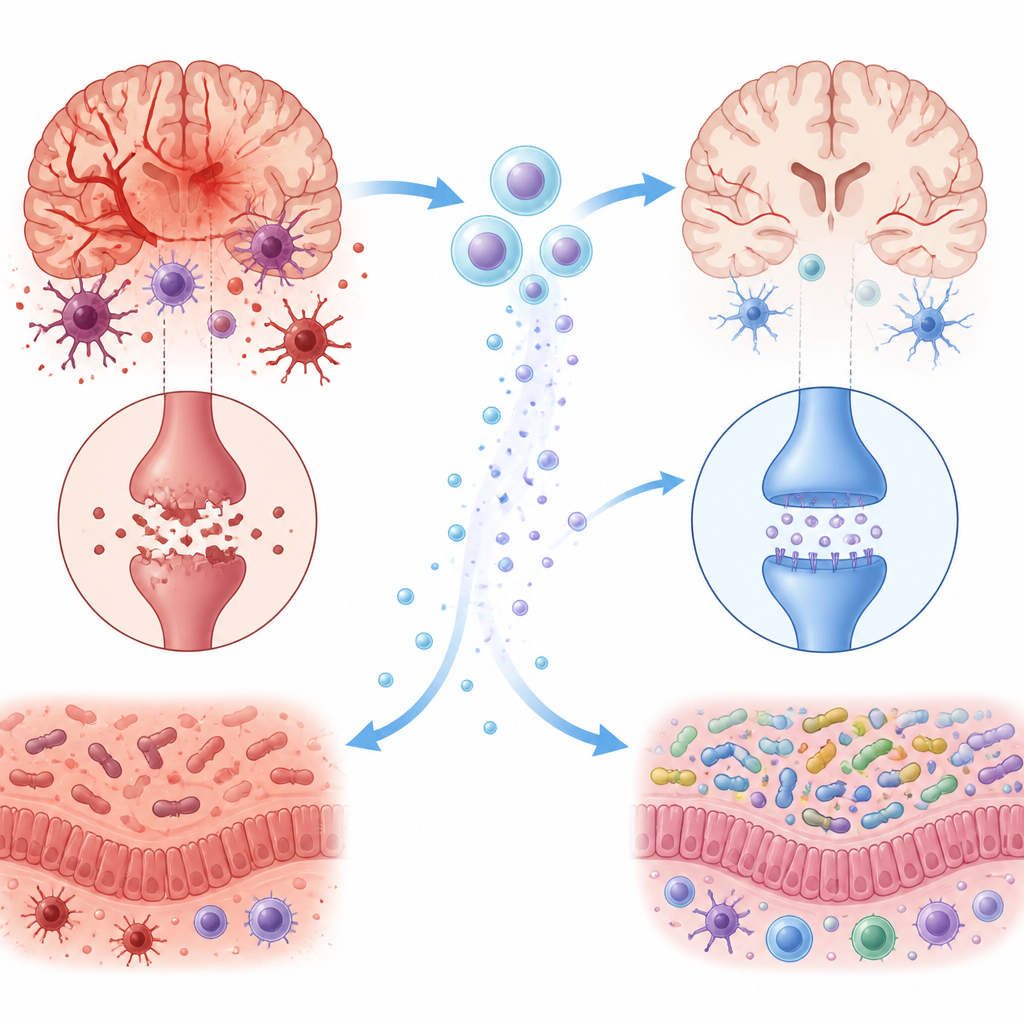
After treatment, the rats’ behavior improved in several ways. They spent more time interacting with unfamiliar rats, showed fewer repetitive actions, explored open spaces more confidently, and found the hidden platform faster in the water maze, pointing to better sociability, lower anxiety, and improved memory. In the brain, levels of pro-inflammatory molecules dropped while an anti-inflammatory molecule rose, and antioxidant defenses were restored. Microscopy revealed that overactive immune cells in the brain quieted down, mitochondria looked healthier, and synapses regained their normal structure with more synaptic vesicles ready for signaling. At the same time, gut bacterial communities shifted toward a healthier pattern: the balance between major bacterial groups moved back toward normal, harmful species declined, and beneficial groups associated with helpful metabolites and barrier support increased, with partial recovery of overall diversity.
What this could mean for future care
For a lay reader, the key message is that a carefully designed neural stem cell treatment in rats did more than just change behavior. It calmed brain inflammation, repaired tiny connection points between nerve cells, reduced oxidative damage, and nudged the gut microbiome back toward a healthier state, all in one integrated strategy. While this work is still at the animal stage and does not translate directly into a treatment for people, it shows that targeting both the brain and the gut together with non-gene-edited stem cells may be a promising way to address multiple layers of autism-related biology in the future.
Citation: Liu, Z., Wu, C., Li, X. et al. Non-gene-edited neural stem cells reverse neuroinflammation and microbiota dysbiosis in a sprague-dawley rat model of autism spectrum disorder. Transl Psychiatry 16, 275 (2026). https://doi.org/10.1038/s41398-026-03841-w
Keywords: autism spectrum disorder, neural stem cells, gut brain axis, microbiota dysbiosis, neuroinflammation