Clear Sky Science · en
Effects of doxycycline on intrusive experimental trauma memory: a pre-registered, randomized double-blind placebo-controlled trial
Why this study matters for everyday life
Many people who live through terrifying events later find those moments suddenly replaying in their minds, as if a mental “flashback” button had been pushed. These intrusive memories are a hallmark of post-traumatic stress disorder (PTSD) and can seriously disrupt daily life. Scientists have wondered whether a common antibiotic, doxycycline, might subtly alter how such memories form, potentially reducing these unwanted replays. This study puts that idea to the test in a carefully controlled experiment with human volunteers.
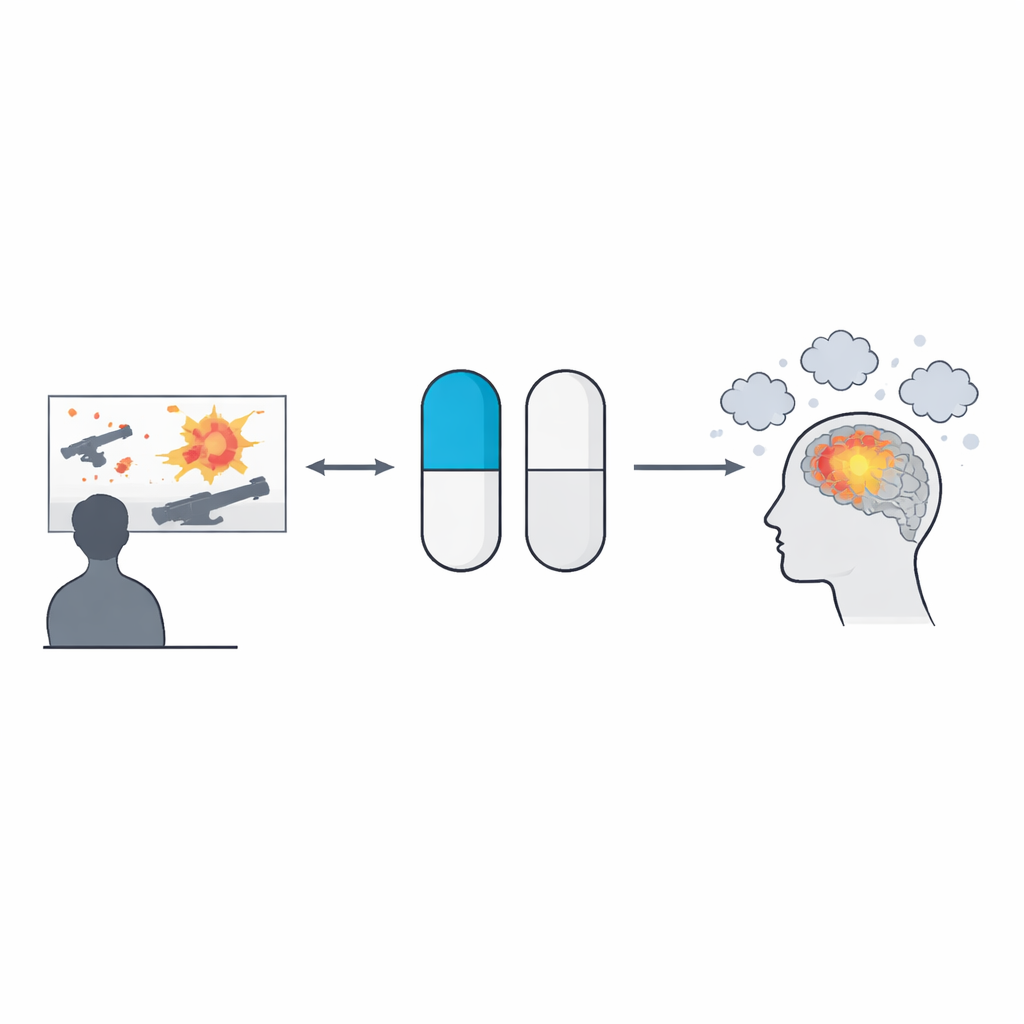
Testing a pill that might shape memories
The researchers focused on a biological system involved in how the brain’s wiring strengthens after emotional events. Doxycycline blocks an enzyme called MMP-9, which helps remodel the microscopic scaffolding around nerve cells. Animal studies suggest this remodeling is important for long-lasting memories of fear. Earlier work in humans hinted that doxycycline could weaken simple learned fear responses. Here, the team asked a more real-world question: if people take doxycycline before witnessing a distressing event, will they have fewer intrusive memories of it in the following days?
Simulating trauma safely in the lab
Eighty healthy young women came to the laboratory and were randomly given either a single dose of doxycycline or a placebo pill, without knowing which one they received. Several hours later—after the drug had reached peak levels—they watched a short but highly disturbing film scene involving severe interpersonal violence, a well-established stand-in for real trauma in experimental psychology. Over the next week, participants used a smartphone diary to log every time an image or thought from the film forced its way into their mind, rating how upsetting and how vivid each intrusion felt. The researchers also measured heart rate, sweating, and breathing during the film and again a week later while showing blurred reminder images, and they tested how many factual details about the film the women could recall.
What happened to intrusive memories
Almost everyone experienced at least one intrusive memory of the film in the week that followed, confirming that the experiment successfully evoked trauma-like replays. However, doxycycline did not deliver the hoped-for protective effect. Compared with placebo, it did not reduce how often intrusions occurred, how vivid they were, or how distressing they felt. Intrusions naturally declined over the week in both groups, and this decline looked very similar regardless of which pill participants had taken. In other words, the antibiotic did not blunt the formation of these involuntary flashback-like memories.
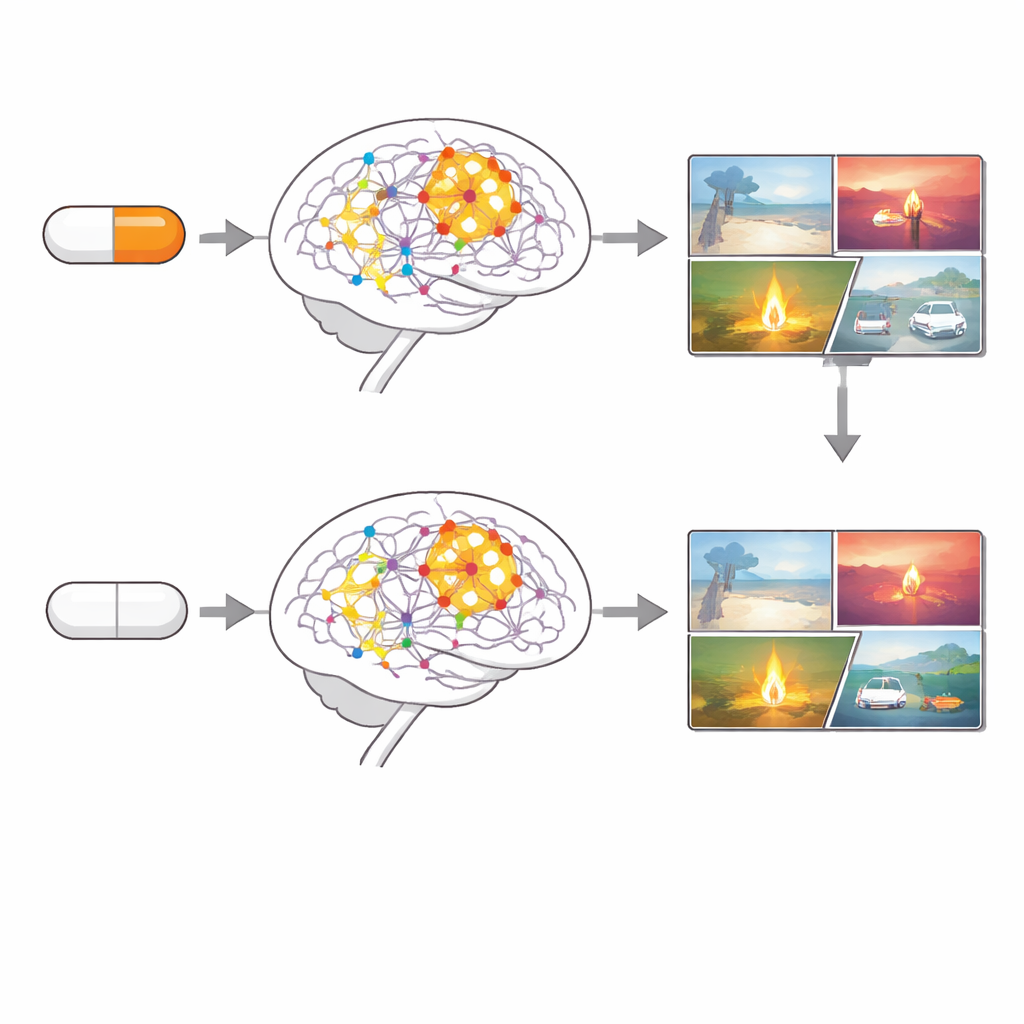
Sharper memory and stronger body reactions
Although intrusive memories were unchanged, doxycycline did appear to influence other aspects of remembering. One week after the film, participants completed a quiz about specific details from the scene. Those who had taken doxycycline actually performed slightly better than those on placebo, suggesting their deliberate, conscious memory for the event was stronger, not weaker. At the same follow-up session, when participants saw blurred reminder images, those in the doxycycline group also showed larger changes in skin conductance—an electrical signal on the skin that rises with emotional arousal. This pattern indicates that their bodies reacted more strongly to the reminders, even though their self-reported intrusions were no worse.
What this means for future treatments
For people hoping for a simple pill to prevent trauma-related flashbacks, these findings are sobering. In this study, taking doxycycline before a distressing event did not lessen the number or intensity of intrusive memories and was linked to slightly heightened body arousal and clearer recall of what happened. That suggests doxycycline may shift certain memory processes rather than switch them off. The work highlights how complex trauma memory is: voluntary recall, bodily responses, and sudden mental replays can move in different directions. While this antibiotic does not look promising as a way to ward off PTSD-like intrusions, the study helps narrow the search and points researchers toward more targeted drugs that might one day support early interventions after trauma without erasing important memories.
Citation: Meister, L., Rosi-Andersen, A., Bavato, F. et al. Effects of doxycycline on intrusive experimental trauma memory: a pre-registered, randomized double-blind placebo-controlled trial. Transl Psychiatry 16, 172 (2026). https://doi.org/10.1038/s41398-025-03657-0
Keywords: post-traumatic stress, intrusive memories, doxycycline, trauma film paradigm, memory consolidation