Clear Sky Science · en
Genotype influences antidepressant discontinuation in a pre-emptive pharmacogenetic testing population
Why some people stop their mood medicines
Antidepressant medicines help many people with depression and anxiety, yet about half of patients stop taking them earlier than recommended. This study asks a simple but important question for patients and doctors alike: could our genes help explain who is more likely to give up on a medication, and might that knowledge guide us toward better first choices?
How the body handles antidepressant drugs
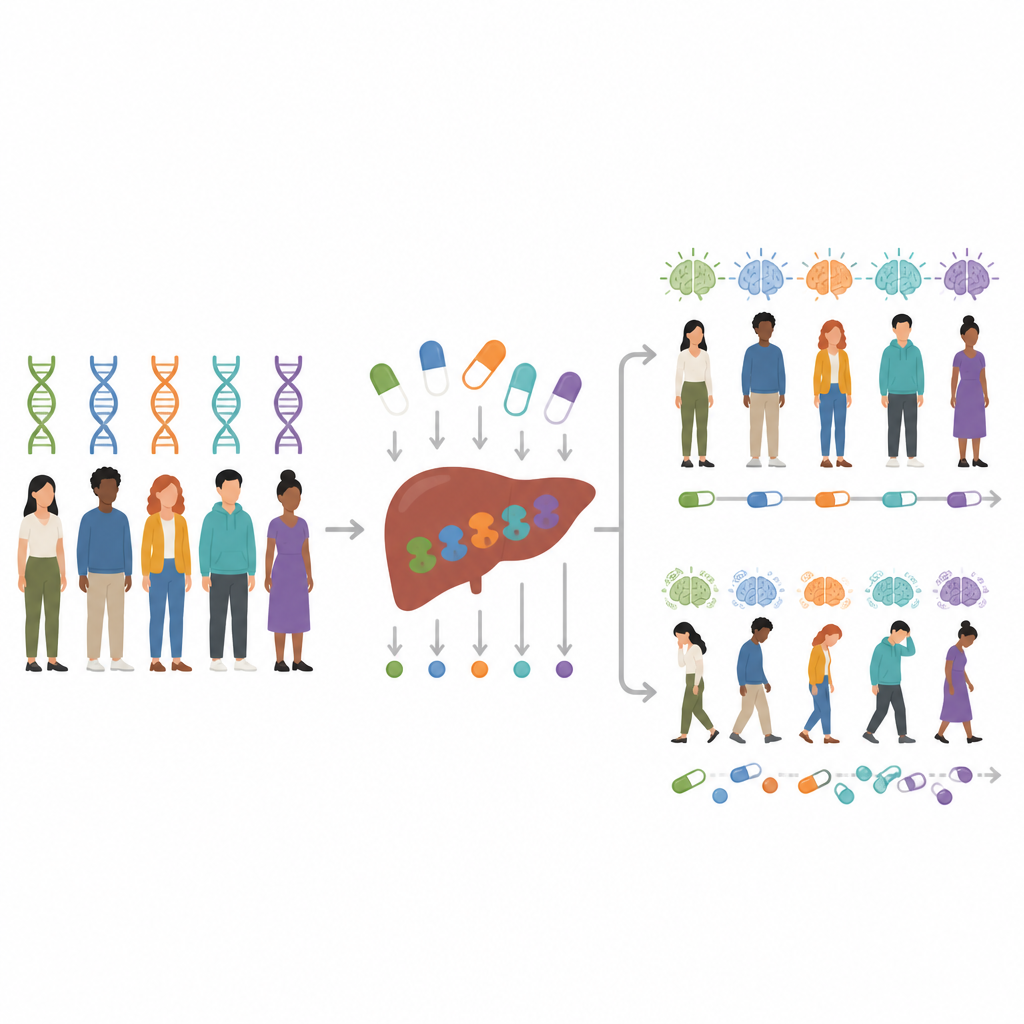
When you swallow an antidepressant pill, your body must process it before it can affect the brain. Special proteins in the liver act like tiny chemical factories, breaking down medicines at different speeds from person to person. These factories are built from instructions in our genes, so some people naturally clear certain drugs very quickly while others do so slowly. If a drug is cleared too fast, it may not work well; if it is cleared too slowly, side effects may build up, either of which can push someone to stop taking the medicine.
Looking at DNA and real-world prescriptions
The researchers used medical records from a large rural health system in the northern United States that has offered optional genetic testing for medication use since 2014. They focused on over 5800 adults with depression or anxiety who had genetic results for two key drug-processing genes and at least one prescription for common antidepressants such as citalopram, escitalopram, sertraline, paroxetine, venlafaxine, or vortioxetine. In total, there were more than 8500 antidepressant orders to analyze.
How the team defined stopping a medicine
Medical records rarely include a simple yes-or-no note that a patient stopped taking a drug. Instead, the team treated a gap in prescription refills as a sign that a particular antidepressant had been discontinued. They adjusted for many other factors that might influence this decision, including age, how long the person had been on that medicine, symptom scores, allergy notes, fatigue, and whether the drug was prescribed for depression, anxiety, or both. They also accounted for other medicines that can slow down the same liver enzymes, which can temporarily make someone act like a slow metabolizer even if their genes suggest otherwise.
What the genes revealed about stopping rates
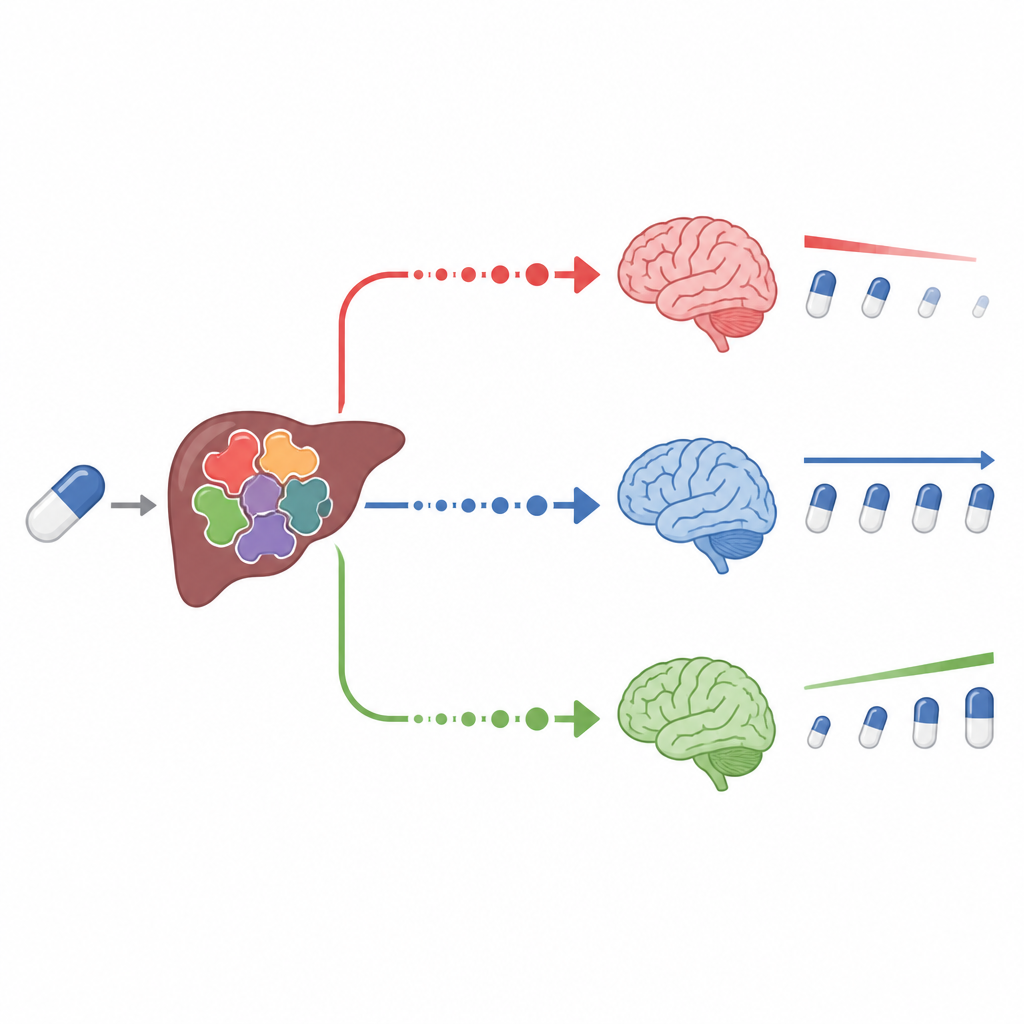
About half of all antidepressant prescriptions were discontinued before the time of genetic testing. People whose CYP2C19 gene made them process certain drugs more quickly than average had a modest but clear increase in the chance of stopping their medicine. This was especially true for escitalopram and sertraline, two widely used antidepressants. For another drug, venlafaxine, people whose CYP2D6 gene led to slower processing were more likely to discontinue. In contrast, for several other gene–drug combinations, the study did not find strong evidence that the genetic differences changed discontinuation rates, suggesting that gene effects are specific to certain medicines rather than universal.
Why these findings matter for patients
For patients and clinicians deciding on an antidepressant, these results suggest that genetic information may help flag medicines that are more likely to be abandoned early in certain people. Knowing that fast metabolizers of CYP2C19 may be more prone to stop escitalopram or sertraline, and that slow metabolizers of CYP2D6 may struggle with venlafaxine, could steer choices toward options that are a better fit from the start. While more research is needed and genes are only one piece of the puzzle, the study supports the idea that simple genetic tests could reduce trial-and-error in antidepressant treatment and help more patients stay on therapies long enough to benefit.
Citation: Baye, J.F., Petry, N.J., Hines, L. et al. Genotype influences antidepressant discontinuation in a pre-emptive pharmacogenetic testing population. Pharmacogenomics J 26, 22 (2026). https://doi.org/10.1038/s41397-026-00416-2
Keywords: antidepressants, pharmacogenetics, CYP2C19, CYP2D6, medication adherence