Clear Sky Science · en
Impact of population-specific pharmacogenomic variants on drug dosing in ICU patients
Why your genes matter in intensive care
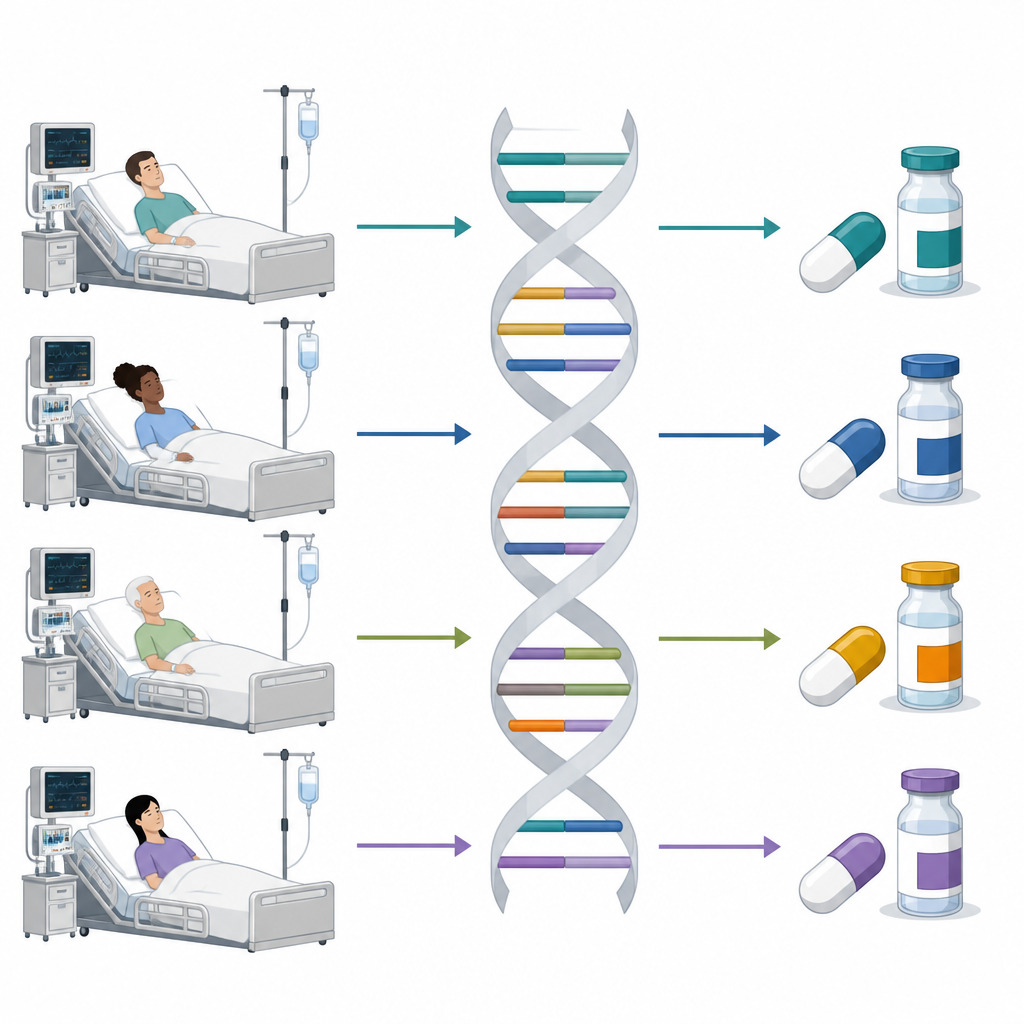
When someone lands in an intensive care unit, doctors must quickly choose and dose powerful drugs, often several at once. This study asks a simple but important question: do hidden differences in each patient’s DNA help explain why the same dose can heal one person yet harm another, and could reading those genetic clues one day make ICU treatment safer?
Hidden fingerprints in drug response
The research centers on pharmacogenomics, the study of how inherited genetic differences shape the way our bodies handle medicines. Many ICU drugs are broken down by enzymes made from our genes. Small changes in those genes can make an enzyme work faster, slower, or not at all. That can leave drug levels too low to help or so high they become toxic, which is especially risky for critically ill patients whose organs are already under strain.
A close look at ICU patients in Qatar
The team sequenced the entire genomes of 210 Qatari patients treated in a major ICU in Doha. They focused on 30 commonly used ICU drugs, including blood thinners like warfarin, antibiotics such as vancomycin, painkillers like fentanyl and morphine, sedatives such as midazolam and propofol, and anti-seizure drugs like levetiracetam. Using large pharmacology databases, they identified 171 genes known to help process these medicines, then searched each patient’s DNA for variants predicted to damage how those genes work.
Many patients, many risky variants
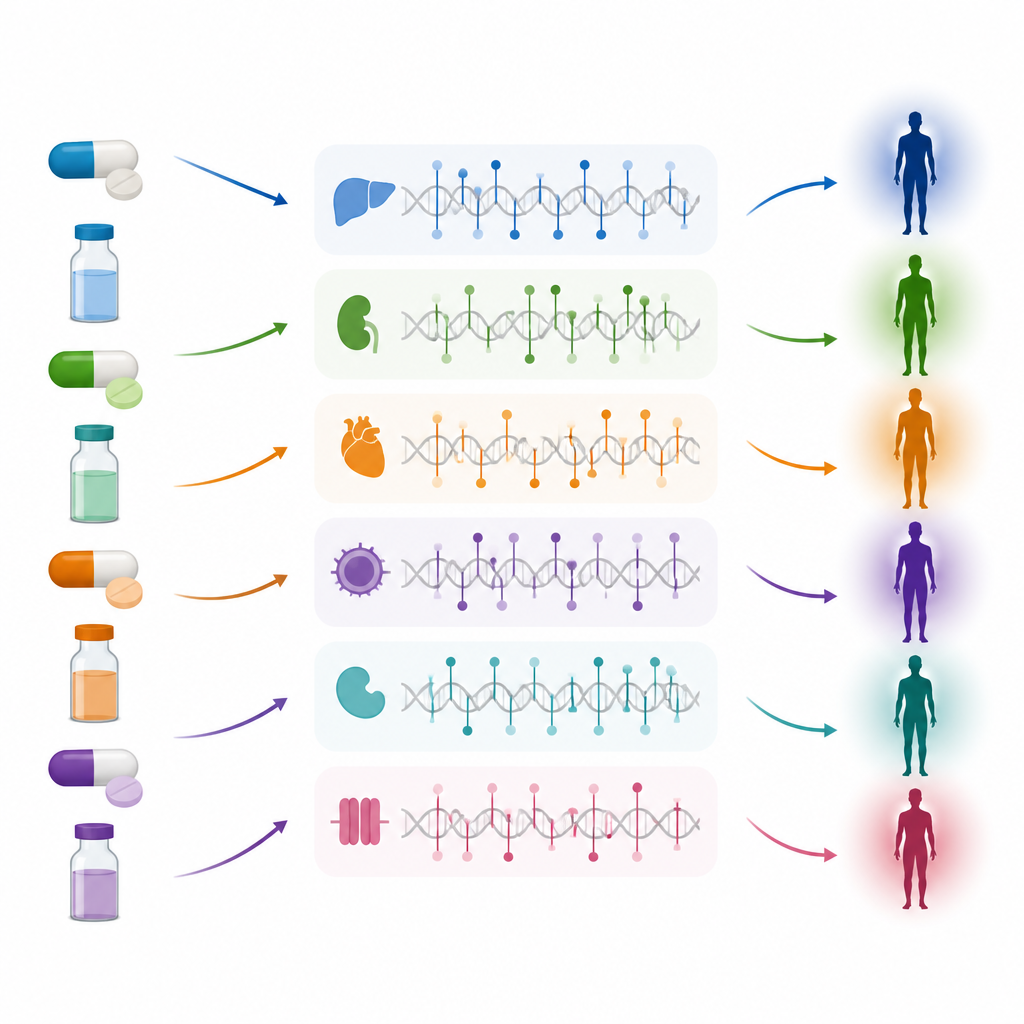
The picture that emerged was striking. Every patient received at least one of the 30 drugs, and most received about seven. Nearly all patients carried gene variants predicted to change how they handled at least one medication they were actually given, and most had 14 or more such variants overall. For five heavily used drugs in this ICU—warfarin, phenytoin, midazolam, vancomycin, and levetiracetam—93 percent of treated patients had at least one metabolism-related variant. The study also examined a key group of drug-processing genes called CYP enzymes; every patient had an “altered” status in at least one of these, meaning their bodies were likely to process some drugs differently from standard expectations.
What is special about Qatari genetics
The researchers then compared the ICU group with more than 14,000 other Qataris whose genomes had been sequenced, and with tens of thousands of Europeans and African or African American individuals in public databases. Many of the potentially harmful variants seen in ICU patients also appeared in the wider Qatari population, showing they are not rare one-off events. At the same time, each population carried its own mix of variants and different average frequencies for those variants. For some ICU drugs, like midazolam, vancomycin, and levetiracetam, damaging variants were much more common in Qataris and African or African American groups than in Europeans, underlining that “one size fits all” dosing rules may not work equally well everywhere.
What this means for future ICU care
While the study does not test actual patient outcomes or prove that any specific dose was wrong, it shows that most ICU patients carry multiple gene changes that could, in theory, tilt their drug levels toward being too weak or too strong. Only a few ICU drugs, such as warfarin, currently have clear genetics-based dosing advice, and there are many practical hurdles to using DNA results in real time. Still, the findings suggest that rapid genetic testing could someday help tailor ICU drug choices and doses to each patient’s biology. Until such tools are widely available, knowing which drugs are most likely to be affected by genetic differences can at least alert ICU teams to watch more closely for signs of either poor effect or toxicity.
Citation: Rostami, M.R., Rodriguez-Flores, J., Ait Hssain, A. et al. Impact of population-specific pharmacogenomic variants on drug dosing in ICU patients. Pharmacogenomics J 26, 23 (2026). https://doi.org/10.1038/s41397-026-00415-3
Keywords: pharmacogenomics, intensive care, drug metabolism, genetic variation, precision dosing