Clear Sky Science · en
CYPRI: a clinical decision-making tool to select psychiatric patients for pharmacogenetic testing
Why this matters for everyday mental health care
Many people living with mental health conditions face a long, frustrating journey of trying one medication after another before finding something that actually helps without unpleasant side effects. This article presents a new, practical tool called CYPRI that helps doctors decide which patients are most likely to benefit from a genetic test that can guide safer and more effective psychiatric medication choices.
The problem with trial-and-error treatment
Depression, schizophrenia, anxiety, and other mental illnesses are among the leading causes of disability worldwide, and medicines are a cornerstone of treatment. Yet for 20–60% of patients, standard drugs either do not work well enough or cause troubling side effects. One important reason is that people differ in how their bodies break down medicines. Two liver enzymes, known as CYP2D6 and CYP2C19, play a major role in processing many antidepressants, antipsychotics, and other commonly used drugs. Changes in the genes that encode these enzymes can make someone process medication too quickly, too slowly, or in a more typical way, which in turn affects both benefits and risks.
How gene-guided prescribing fits in
In recent years, pharmacogenetic testing—lab tests that examine a person’s drug-processing genes—has become more available in psychiatry. Some studies suggest that using these genetic results to guide treatment can improve symptom relief and reduce side effects, especially in depression. Professional groups have published detailed guidelines on how to adjust doses or switch medications once genetic results are known. However, they give little help with a key practical question: which patients should actually be sent for testing, especially when the tests are expensive and not always covered by insurance? Without clear selection rules, testing may be underused in people who need it most and overused in those unlikely to benefit.
A simple score built from everyday clinical clues
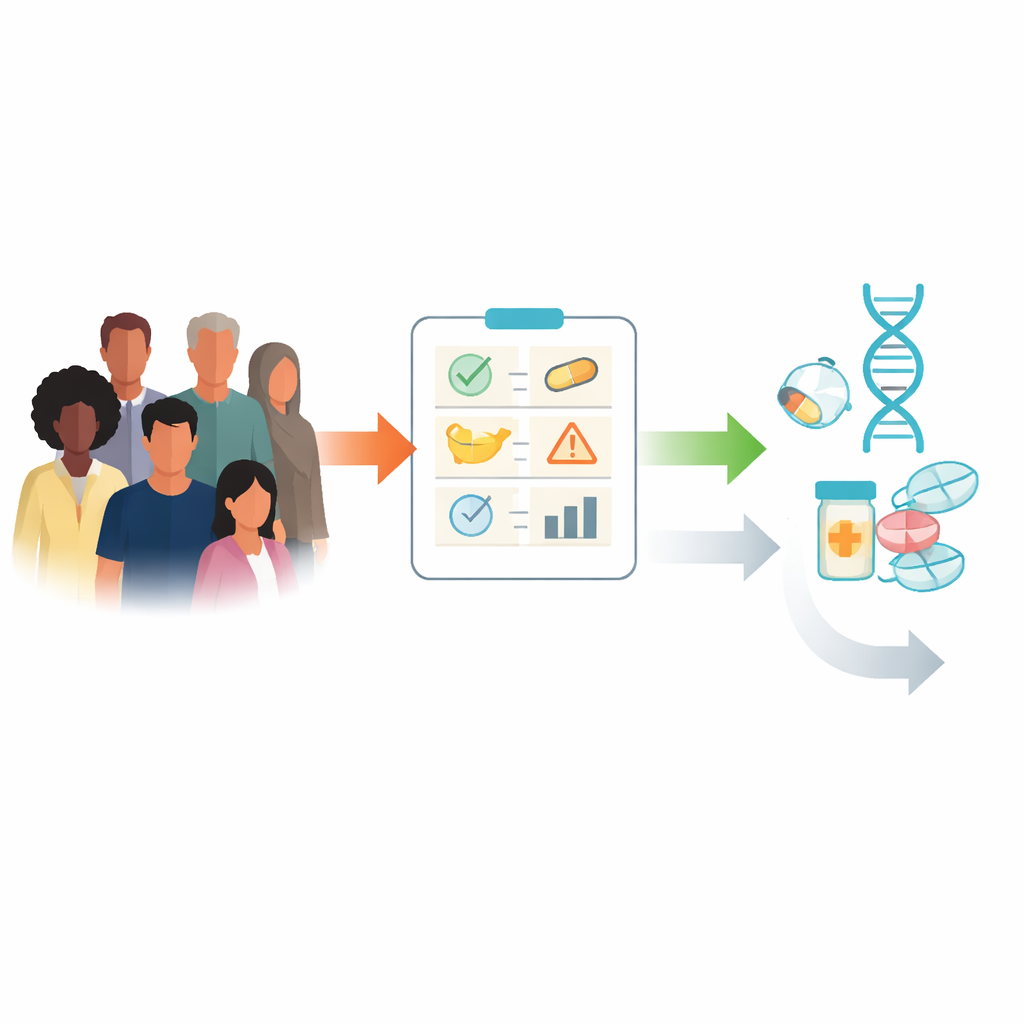
To close this gap, pharmacists at a psychiatric hospital in Prague developed the CYPRI (CYP Pharmacogenetic Risk Index). It is a point-based checklist that uses only information that clinicians already gather in routine care. CYPRI assigns points for three main types of clues: the use of medicines that are strongly affected by CYP2D6 or CYP2C19; signs that a patient’s response to treatment is unusually poor despite proper dosing and good adherence; and blood-test or side-effect patterns that suggest the body is handling drugs in an unexpected way. Some features, such as clearly abnormal blood drug levels or serious side effects on low doses, receive higher weight because past research strongly links them to unusual drug metabolism. The total CYPRI score is then used to estimate how likely it is that a genetic test will lead to meaningful medication changes.
Testing CYPRI in real patients
The authors performed a pilot study in 34 patients with various psychiatric diagnoses who had already undergone genetic testing in their hospital. They created a second score, called IMPACT, to describe how much the genetic test actually affected each person’s care—from no change, to minor informational value, to major impact such as dose changes, medication switches, or extra monitoring. Statistical analyses showed that higher CYPRI scores were strongly linked to greater clinical impact of the genetic results. In other words, patients flagged by CYPRI as higher risk were more likely to be the ones whose treatment was meaningfully adjusted based on their gene test.
Finding a practical cut-off
The team also examined how well different CYPRI scores separated patients with major treatment changes from those with little or no change. Using standard diagnostic-accuracy methods, they found that a CYPRI score of 4 or more was a promising threshold. Above this value, most patients did in fact have test results that led to important clinical decisions, while relatively few low-scoring patients did. Although the study was small and carried out in a single hospital, computer simulations suggested that the sample was adequate to detect the observed relationship between the risk score and test impact.

What this could mean for patients and systems
If confirmed in larger, multi-center studies, CYPRI could become a simple, transparent way to prioritise who should receive pharmacogenetic testing in psychiatry. For patients, this could mean fewer rounds of trial-and-error prescribing and a better chance that costly genetic tests are used where they truly matter—those with stubborn symptoms, puzzling blood levels, or strong side effects at standard doses. For health systems and insurers, CYPRI offers a potential route to make gene-based prescribing more cost-effective by focusing resources on patients most likely to benefit. While more research is needed before CYPRI is widely adopted, this pilot work suggests that a short checklist based on everyday clinical information can meaningfully guide when to bring genetics into the treatment conversation.
Citation: Tašková, I., Šafářová, N. & Hahn, M. CYPRI: a clinical decision-making tool to select psychiatric patients for pharmacogenetic testing. Pharmacogenomics J 26, 19 (2026). https://doi.org/10.1038/s41397-026-00414-4
Keywords: pharmacogenetics, psychiatric medication, clinical decision tool, personalized medicine, CYP2D6 and CYP2C19