Clear Sky Science · en
FTO rs7195994 Is associated with TNF inhibitor response in lean rheumatoid arthritis patients: A BMI-stratified pharmacogenetic analysis
Why some arthritis drugs work better for certain people
Tumor necrosis factor inhibitors (TNFi) are powerful drugs that have reshaped the outlook for people with rheumatoid arthritis, a painful joint disease. Yet a sizeable share of patients do not gain enough relief despite months of treatment. This study asks a simple but important question: can a person’s genes and body weight help predict who will and will not benefit from these expensive medicines?
Peeking under the hood of arthritis treatment
Rheumatoid arthritis is driven by an overactive immune system that attacks the joints, leading to swelling, stiffness, and long-term damage. TNFi drugs work by blocking a key immune signal, but response to these drugs varies widely. Current clinical clues—such as age, sex, or early disease activity—only partly explain this variation. The researchers used data from a large precision medicine project in Taiwan, which links genetic information with real-world medical records, to look for DNA differences that might forecast TNFi success or failure in everyday patients.
How the study was carried out
The team analyzed 519 adults with rheumatoid arthritis who had taken one of four TNFi medicines for at least six months. They examined treatment response using standard scores that blend joint counts and blood tests of inflammation, and they also considered more basic measures such as common lab markers. From hundreds of thousands of genetic markers, they focused on 97 previously reported candidates and then narrowed in on five promising variants in genes tied to both immunity and metabolism. Statistical models accounted for age, sex, disease activity, companion drugs like methotrexate, and other health conditions to isolate the impact of each genetic marker.

A key gene stands out in lean patients
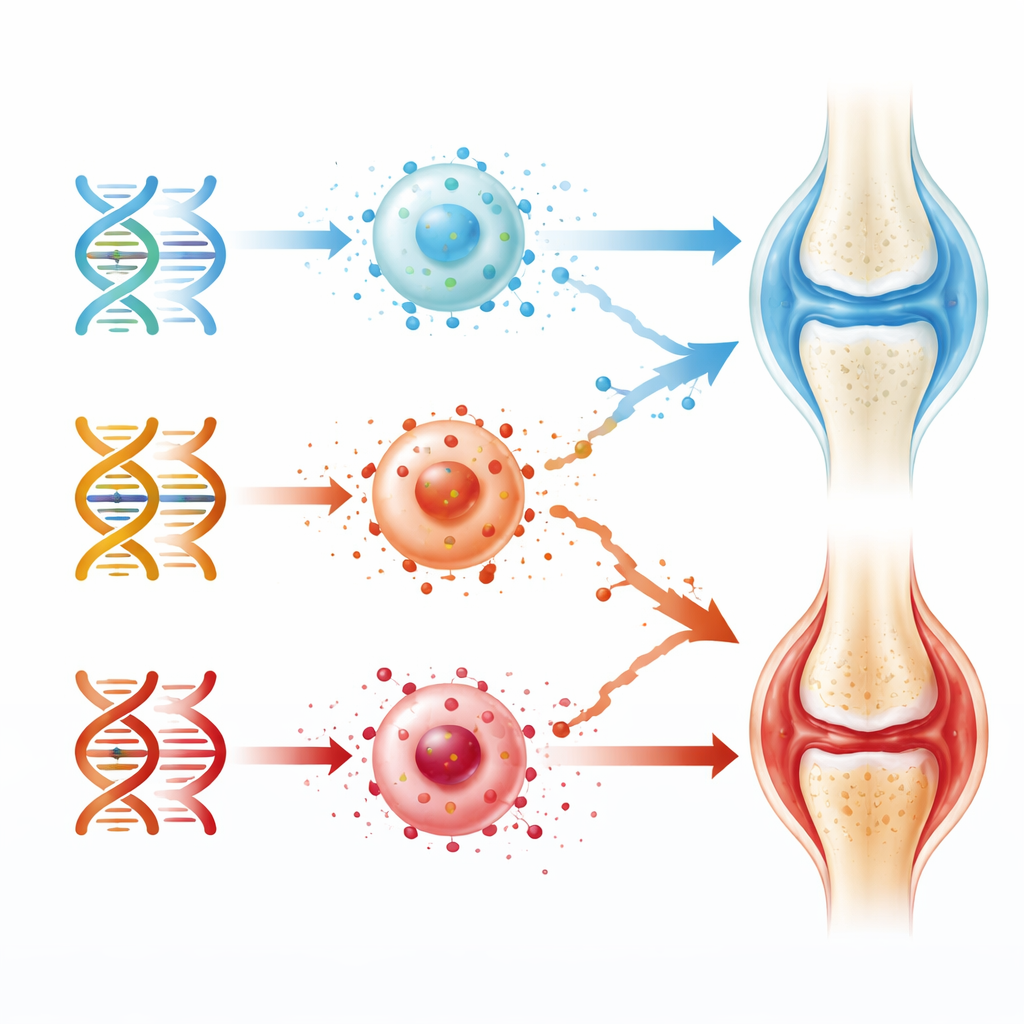
Three of the five genetic variants initially showed links to how well patients responded to TNFi therapy, but after fuller analysis, one stood out: a marker in the FTO gene, known for its role in body weight and energy balance. Carriers of the rs7195994 variant were less likely to respond to TNFi, even after adjusting for other risk factors. When the researchers divided patients by body mass index (BMI), a clear pattern emerged. Among those with lower BMI—below 27 kg/m², and even more so below 24 kg/m²—people carrying this FTO variant were roughly half as likely to experience a good treatment response. In contrast, the same variant did not show a meaningful effect in heavier patients, suggesting that body build shapes how this gene influences the immune system and drug response.
What this means for personalized care
FTO was once thought of mainly as an “obesity gene,” but newer work shows it can also steer immune activity and inflammation. This study adds to that picture by linking an FTO variant to resistance to TNFi drugs, particularly in lean patients. It hints that in people with less body fat, subtle genetic differences in immune regulation may matter more than the broad inflammatory influence of fat tissue itself. The authors also found suggestive, though weaker, signals in a few other immune-related genes, reinforcing the idea that many small genetic nudges may add up to shape a person’s drug response.
How this research could help patients
For people living with rheumatoid arthritis, trying a biologic drug that ultimately fails can mean months of pain, wasted cost, and delayed relief. This work suggests that a simple genetic test, interpreted alongside BMI, might someday help doctors flag lean patients who are unlikely to benefit from TNFi and guide them sooner toward alternative treatments. The findings still need confirmation in other ethnic groups and deeper lab studies to uncover the exact biology. But they point toward a future in which arthritis treatment is better tailored to each person’s genetic and metabolic profile, reducing trial-and-error and bringing effective relief faster.
Citation: Li, YT., Chen, IC., Yang, HW. et al. FTO rs7195994 Is associated with TNF inhibitor response in lean rheumatoid arthritis patients: A BMI-stratified pharmacogenetic analysis. Pharmacogenomics J 26, 20 (2026). https://doi.org/10.1038/s41397-026-00409-1
Keywords: rheumatoid arthritis, tumor necrosis factor inhibitors, pharmacogenetics, FTO gene, precision medicine