Clear Sky Science · en
Comparison of health outcomes between traumatic spinal cord and cauda equina injuries
Why These Spinal Injuries Matter
Injuries to the lower spine can turn everyday tasks—walking, washing, working—into major challenges. Doctors have long suspected that damage to the bundle of nerves at the base of the spine (the cauda equina) might heal better than damage to the spinal cord itself. This study followed more than a thousand injured people over two years to ask a simple but urgent question: do these two kinds of injuries really lead to different lives?
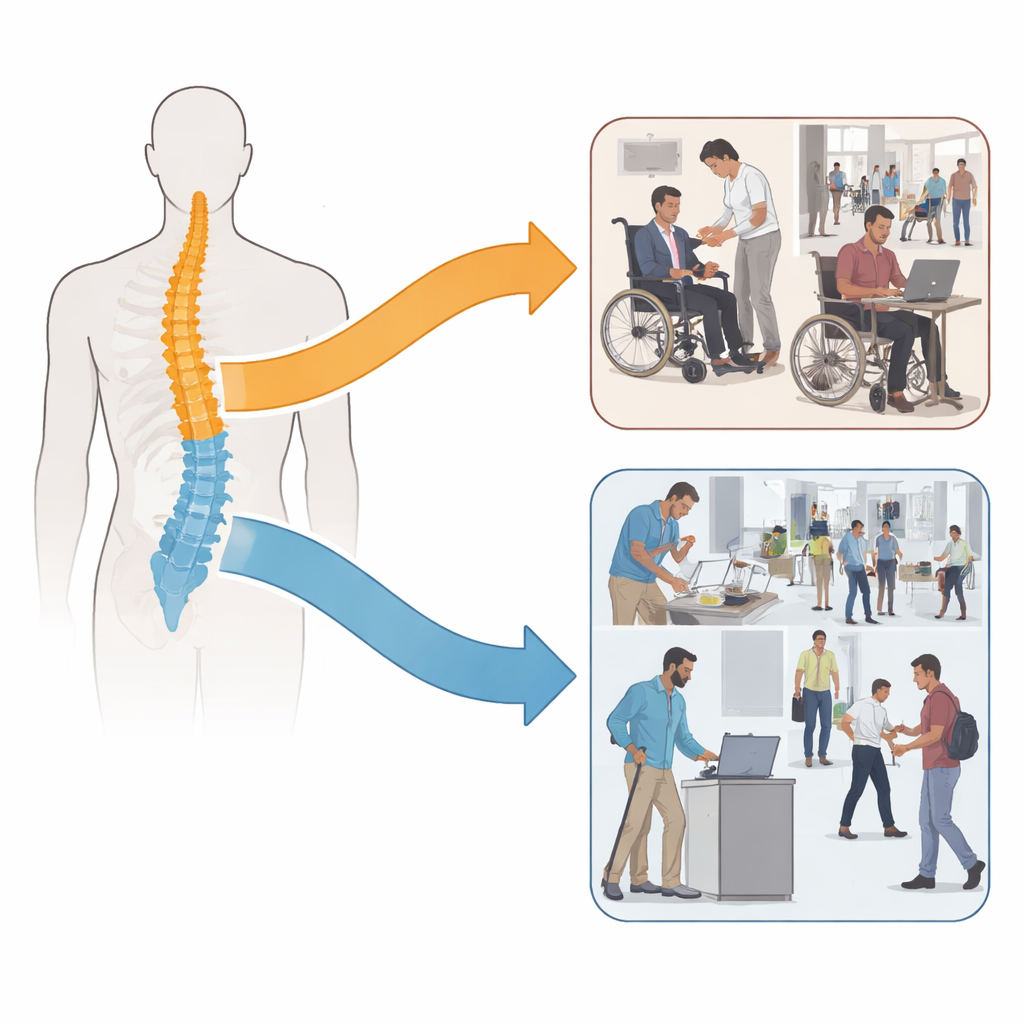
Two Types of Lower Spine Injury
The researchers focused on adults in the Australian state of Victoria who had serious spine injuries from events such as road crashes or falls. They divided people into two broad groups. One group had injuries to the spinal cord or its very end, which behave like “central wiring” problems in the nervous system. The other group had injuries to the cauda equina, a spray of nerve roots that behave more like “peripheral wiring.” In theory, damage to peripheral nerves should recover better than damage to the central cord. The team wanted to see whether this idea holds up when you look at real people’s lives over time.
Following Recovery Over Two Years
Using the Victorian State Trauma Registry, the team identified 1156 people injured between 2010 and 2022. Most (1113) had spinal cord–type injuries, while a much smaller number (43) had cauda equina–type injuries. Apart from the injury location, the two groups looked similar in age, sex, and overall health. The main difference was how they got hurt: road trauma was the leading cause in the spinal cord group, while low falls—such as slipping or tripping from standing height—were more common in the cauda equina group. Everyone was followed up at six, twelve, and twenty‑four months after injury.
What Life Looked Like After Injury
To understand recovery, the study used two well‑known questionnaires. One measured general health and daily functioning—things like moving around, self‑care, pain, and mood. The other measured disability across areas such as mobility, self‑care, social life, and daily activities. People also reported whether they had gone back to work or study, and whether they returned to the same job and workplace. By two years after injury, about two thirds of survivors were still responding to these follow‑up questions, giving a detailed picture of how their lives had changed.
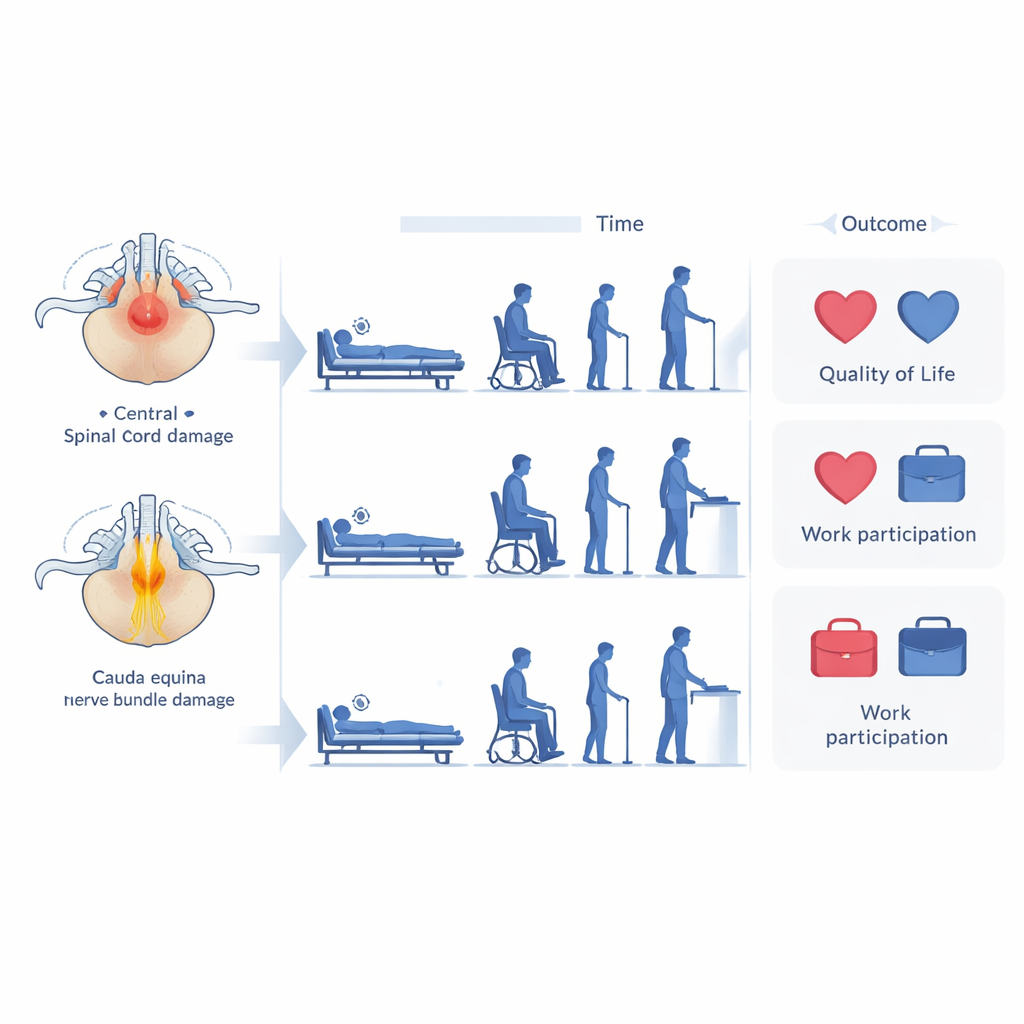
Quality of Life: Little Improvement for Either Group
Despite the hope that cauda equina injuries might do better, the broad picture was sobering. On almost every measure of health and disability, both groups reported similarly high levels of ongoing problems. Most people in both groups continued to have difficulties with mobility, everyday activities, pain, and mood across all time points, with very little improvement seen from six months to two years. Around two thirds of people in each group scored in the range that indicates a substantial level of disability at the two‑year mark.
Work and Daily Roles After Injury
The one area where a difference did appear was return to work or study. Among those who had been working or studying before they were hurt, people with cauda equina injuries were more likely to be back at work at each follow‑up. Two years after injury, about 72 percent of this group had returned to work or study, compared with 57 percent of those with spinal cord–type injuries. When people did go back, most in both groups managed to return to the same workplace and even the same role, suggesting that workplace reintegration is possible—but not guaranteed.
What This Means for Patients and Families
For patients, families, and planners of health services, the message is clear. Whether the damage lies in the spinal cord or the cauda equina, serious lower spine injuries often leave people living with long‑term pain, mobility problems, and disability, with only modest change over the first two years. Cauda equina injuries may offer a somewhat better chance of getting back to work, but they do not translate into clearly better overall quality of life. The study underlines the need for sustained rehabilitation, support for participation in society, and further research aimed at improving life after these life‑changing injuries.
Citation: Beaumont, X., Liew, S., Reeder, S. et al. Comparison of health outcomes between traumatic spinal cord and cauda equina injuries. Spinal Cord 64, 337–345 (2026). https://doi.org/10.1038/s41393-026-01191-4
Keywords: spinal cord injury, cauda equina, quality of life, disability, return to work