Clear Sky Science · en
Study design considerations in clinical trials testing transcutaneous stimulation for spinal cord injury
Why This Matters for People Living With Paralysis
Spinal cord injury has long been viewed as a life sentence of permanent disability once the initial recovery period ends. Yet a new wave of treatments that gently stimulate the spinal cord through the skin hints that function can still be improved years after injury. This paper does not test the therapy itself, but asks a more practical question: how do we design fair, safe, and believable clinical trials for such stimulation when participants can feel exactly what is happening? The authors argue that standard "placebo" approaches may fail here—and that smarter, more humane trial designs are needed to move these promising therapies into everyday care.
New Hope From Skin-Deep Stimulation
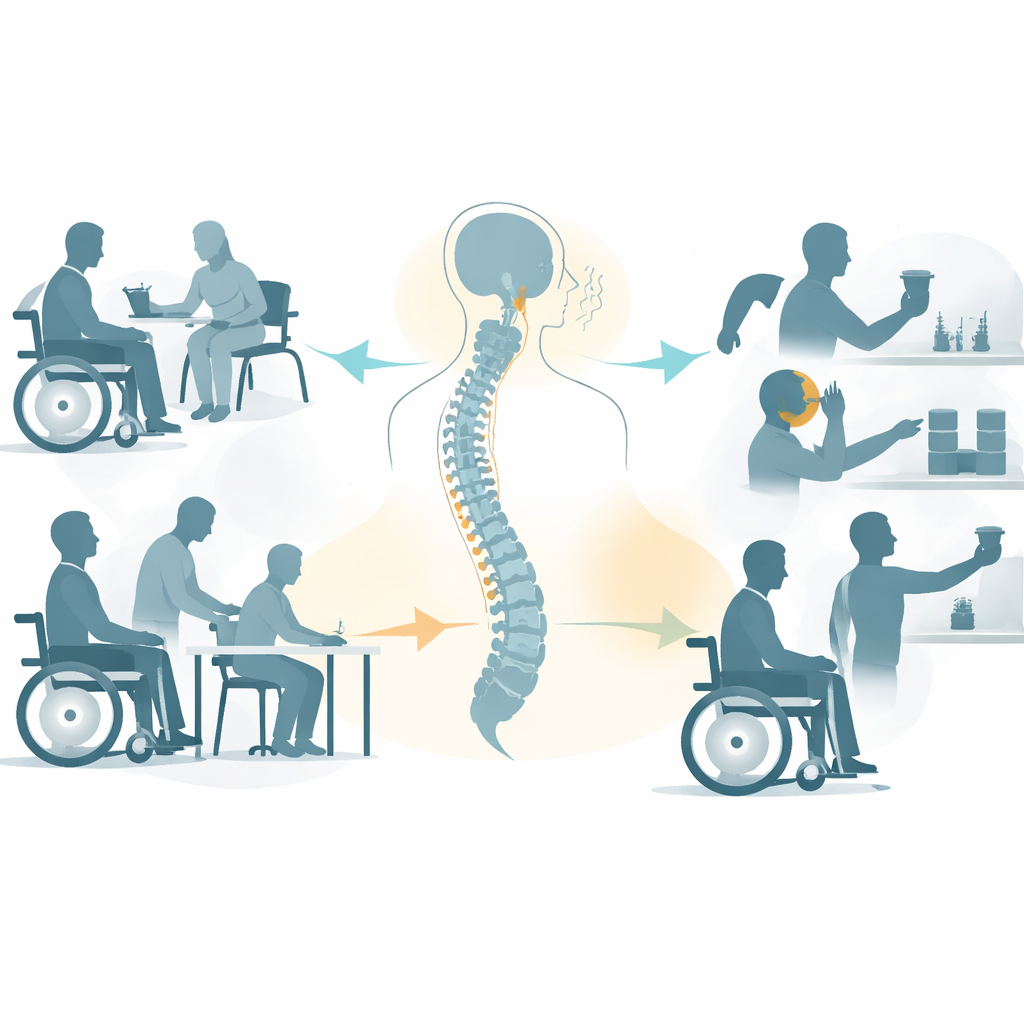
Transcutaneous spinal cord stimulation (tSCS) delivers small electrical currents through electrodes on the skin over the spine. When paired with intensive, task-focused rehabilitation, tSCS has helped some people with long-standing cervical spinal cord injuries regain better use of their hands and arms. The pivotal Up-LIFT trial, which supported recent regulatory approval of this approach, showed that carefully tuned stimulation can make spinal circuits more responsive, allowing people to engage more effectively in practice and thereby harness the brain’s capacity for rewiring. Crucially, the trial measured function when the stimulator was turned off, looking for lasting improvements rather than short-term "on-the-spot" boosts.
Why Placebos Are So Hard in These Trials
In most drug studies, a sugar pill can serve as a convincing placebo. For tSCS, that is far more difficult. Because the currents create unmistakable sensations on the skin and changes in muscle activity, participants quickly notice whether stimulation is present, where it is located, and even small changes in strength. Very low currents that might feel "real" are not actually neutral—they still reach the nervous system and may have some effect. Over dozens of sessions, people compare notes in clinics and online, see their own movement changes, and can easily guess whether they are receiving true stimulation. At the same time, asking people to attend months of demanding training for a treatment that may be fake raises serious ethical concerns about time, effort, and disappointment.
Expectations, Motivation, and the Human Factor
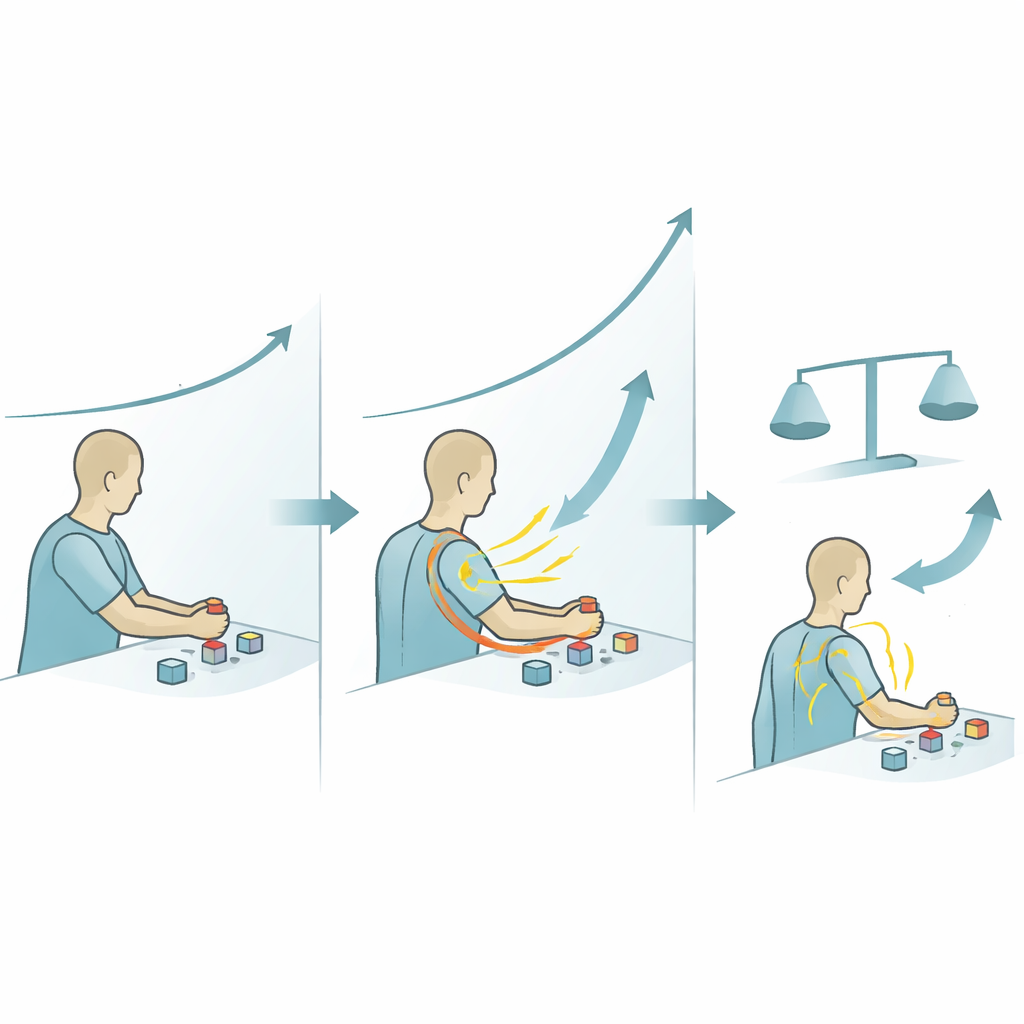
The paper highlights that in rehab-focused studies, what people believe can be nearly as important as what the device does. Positive expectations can boost effort and engagement, while suspicion of being in a sham group can sap motivation, a phenomenon the authors call "lessebo" effects. Because progress after spinal cord injury depends heavily on hard, repetitive practice, any drop in motivation can directly reduce gains, especially over long protocols. Trust between participants and therapists can also suffer if people feel deceived for months. In close-knit spinal cord injury communities, negative experiences quickly spread, potentially discouraging others from joining future trials.
Designing Trials Around Real-World Limits
To navigate these challenges, the Up-LIFT trial used a sequential "self-controlled" design. Participants first completed a period of rehabilitation alone, then a matched period of rehabilitation plus tSCS, serving as their own controls. This approach helped account for individual differences in injury, health, and life circumstances, while ensuring everyone had a chance to receive active treatment. The authors also note that the COVID-19 pandemic raised the stakes: each extra clinic visit for a sham phase meant additional infection risk for a medically vulnerable group. They argue that, in this context, the costs and dangers of a traditional sham-controlled trial would have outweighed its scientific advantages.
New Paths Forward for Fair and Useful Studies
Rather than abandoning rigor, the authors propose a toolbox of alternative designs. Short, tightly controlled studies with brief sham exposure can help reveal basic mechanisms. Longer trials can use self-controlled or adaptive designs that adjust to who responds, and can rely more on objective brain and muscle signals as biomarkers of real physiological change. As tSCS moves into clinical practice, comparisons between different active approaches—rather than active versus fake—may be most informative. The core message to a lay reader is that good science sometimes means rethinking the rules: in complex, effort-intensive therapies like spinal cord stimulation, ethically sound, creatively designed trials may provide stronger and more trustworthy answers than traditional placebo-based studies.
Citation: Guest, J., Moritz, C. Study design considerations in clinical trials testing transcutaneous stimulation for spinal cord injury. Spinal Cord 64, 352–361 (2026). https://doi.org/10.1038/s41393-026-01190-5
Keywords: spinal cord injury, neuromodulation, clinical trial design, spinal cord stimulation, rehabilitation