Clear Sky Science · en
Adverse in-hospital outcomes after major cancer surgery in paraplegic patients
Why this study matters for patients and families
When someone with a spinal cord injury that causes paraplegia develops cancer, decisions about major surgery become especially difficult. Families and doctors must weigh the hope of removing the tumor against the worry that the body, already under strain, may struggle to recover. This study uses two decades of U.S. hospital data to ask a simple but crucial question: when paraplegic patients undergo big operations for common cancers, how often do serious problems occur in the hospital, and how does that compare with other patients?
Looking across five major cancer operations
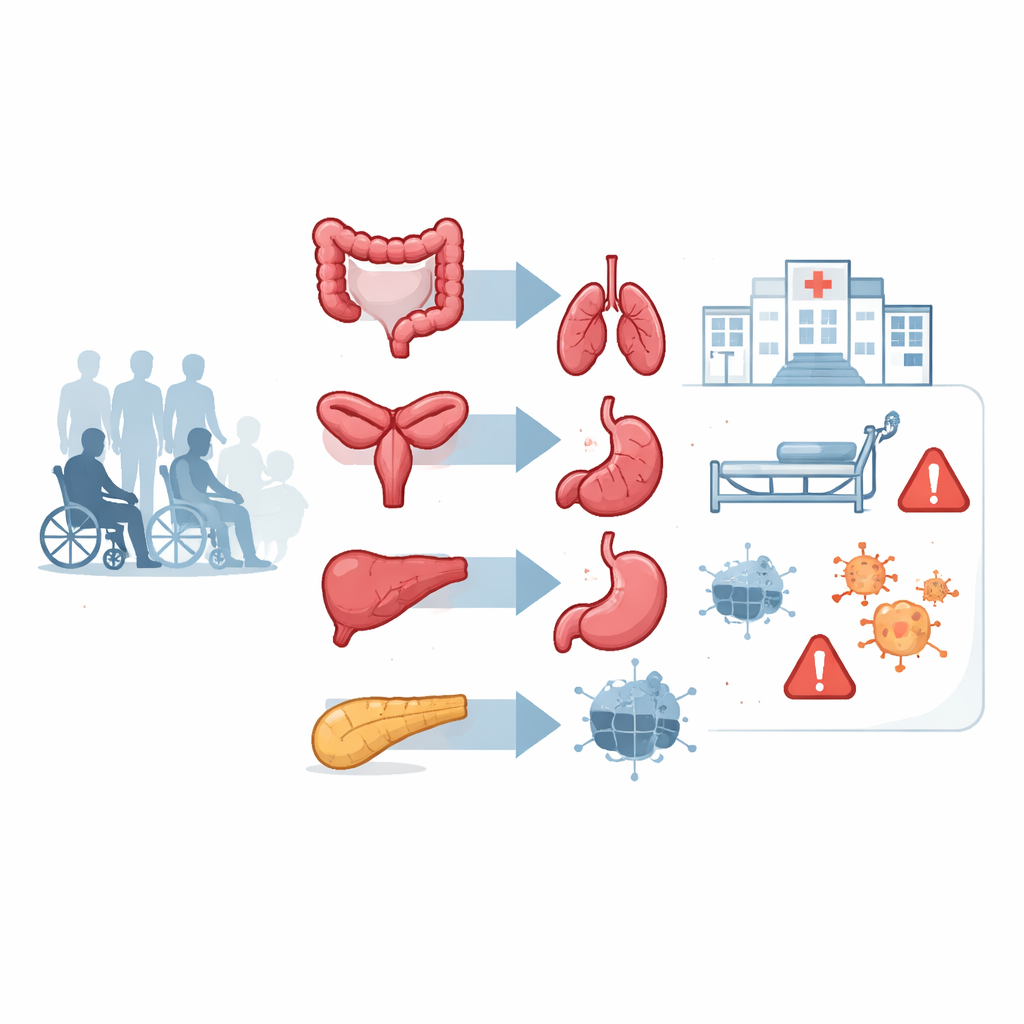
The researchers examined records from the National Inpatient Sample, a large database that captures hospital stays across the United States from 2000 to 2019. They focused on five common operations used to treat cancers of the colon, uterus, lung, stomach, and pancreas: colectomy, radical hysterectomy, lung resection, gastrectomy, and pancreatectomy. Among hundreds of thousands of adults who had these procedures for cancer, only a small fraction—about two to three patients in every thousand—were paraplegic. Even with such low proportions, the overall numbers were large enough to allow a detailed comparison between paraplegic and non-paraplegic patients, once other differences were carefully balanced.
Balancing apples to apples
Because paraplegic patients often have additional health problems, the team first used a technique called matching to pair each paraplegic patient with ten similar non-paraplegic patients. These pairs were aligned by age, sex, overall burden of other illnesses, type of surgical approach, and the size and teaching status of the hospital. After this step, the two groups looked very similar on paper except for the presence or absence of paraplegia. The investigators then used statistical models to probe whether paraplegia itself was linked to worse in-hospital outcomes—such as infections, breathing troubles, blood clots, heart problems, the need for blood transfusions, long hospital stays, or dying before discharge.
Higher complication risks across most surgeries
Across nearly all comparisons, paraplegic patients faced more frequent complications and longer hospitalizations than their matched peers. For colon surgery and radical hysterectomy, paraplegia predicted higher risk in every one of the twelve hospital outcomes the authors examined, including overall complications and specific problems affecting the lungs, heart, blood vessels, urinary system, surgical wound, and digestive tract. After adjusting for other factors, the odds of experiencing any complication were about two-and-a-half to three times higher. For lung surgery, increased risks appeared in eleven of the twelve categories; for pancreas surgery, in nine; and for stomach surgery, in four. Paraplegic patients were also more likely to stay in the hospital far longer than typical for each procedure—roughly two times as likely to fall in the longest-stay quarter of patients.
Concerning differences in survival
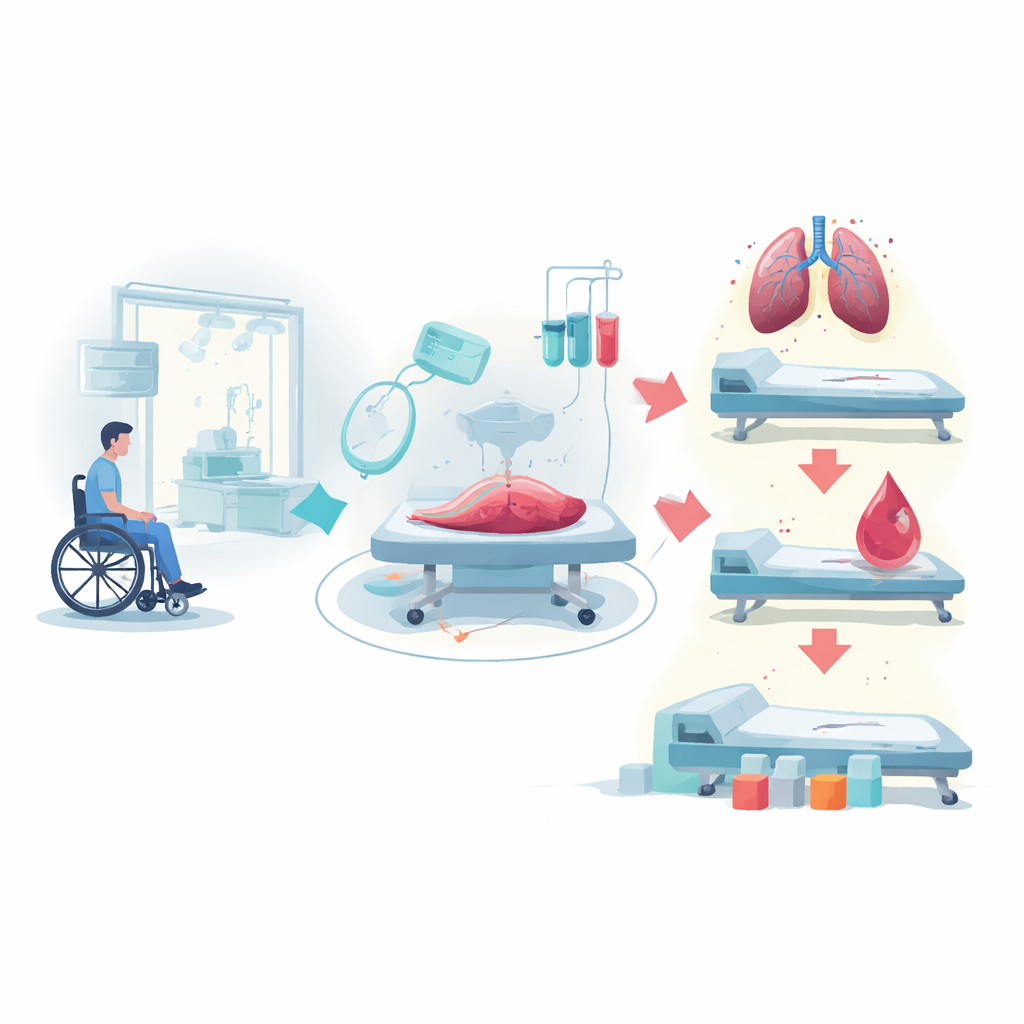
Beyond complications and length of stay, the most sobering finding involved survival during the hospital stay. After colon surgery, lung resection, and surgery on the pancreas, paraplegic patients died in the hospital several times more often than comparable non-paraplegic patients, with risk increases of nearly fourfold to more than sixfold. For stomach surgery and radical hysterectomy, the study could not demonstrate a clear difference in in-hospital death rates—partly because the number of such events was small—but paraplegic patients still experienced more overall complications. These patterns suggest that the added strain of major surgery falls particularly hard on paraplegic bodies during operations that are already among the most demanding.
What might be driving the extra risk
The authors point to several reasons why paraplegia may amplify surgical danger. Long-standing spinal cord injury can alter control of blood pressure and heart rate, weaken breathing, and dampen immune responses. Many affected people also live with bladder and bowel problems, reduced mobility, and fragile skin, all of which can feed into urinary infections, pneumonia, blood clots, or slow wound healing after an operation. Hospitals that routinely care for the general population may not have specialized routines for preventing these issues in people with spinal cord injuries, such as tailored bowel and bladder care, careful positioning, and early rehabilitation. The study suggests that greater involvement of spinal cord injury specialists, or better training of surgical teams in this kind of care, might help reduce avoidable harm.
What this means for decision-making
For patients with paraplegia considering major cancer surgery, this research delivers a clear, if sobering, message. Across five common operations, paraplegic patients consistently faced more in-hospital problems and, for some procedures, much higher chances of dying before discharge. The size of this added risk varied by the type of surgery and the kind of complication, being greatest for colon, uterus, lung, and pancreas operations and less pronounced for stomach surgery. The study cannot tell us everything—it lacks details about cancer stage, emergency versus planned surgery, and what happens after discharge—but it offers the most comprehensive picture to date. Its findings can help surgeons, rehabilitation specialists, patients, and families have more informed conversations, weighing not only the potential benefit of removing a tumor but also the heightened risks that paraplegia brings to the operating room and the recovery ward.
Citation: Marmiroli, A., Rodriguez Peñaranda, N., Longoni, M. et al. Adverse in-hospital outcomes after major cancer surgery in paraplegic patients. Spinal Cord 64, 362–370 (2026). https://doi.org/10.1038/s41393-026-01175-4
Keywords: paraplegia, cancer surgery, surgical complications, spinal cord injury, perioperative risk