Clear Sky Science · en
Phosphoproteomics distinguishes disease-specific mechanisms for human phospholamban cardiomyopathy reversible by RNA therapy
When a Tiny Heart Switch Goes Wrong
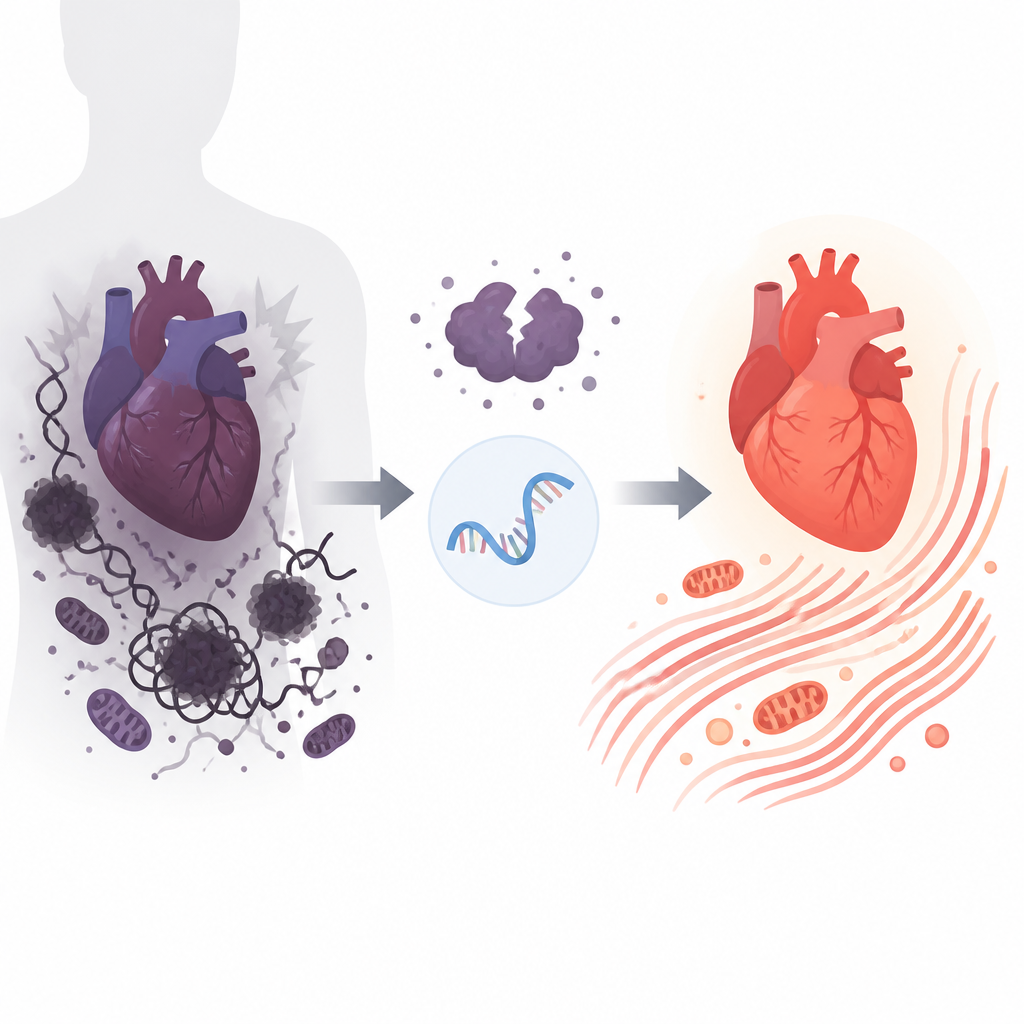
Some people inherit a tiny flaw in a heart protein called phospholamban that can lead to dangerous heart failure and sudden death. This study looks closely at how that flaw disrupts heart cells in humans and tests whether an experimental form of RNA therapy can dial down the damage. By zooming in on the chemical on and off switches that control heart muscle behavior, the researchers show how this therapy might help steady failing hearts.
Looking Beyond the Usual Clues
Doctors have long known that the phospholamban R14del variant weakens the heart and raises the risk of abnormal rhythms, but the detailed chain of events inside human heart cells remained unclear. Traditional approaches that measure genes or total protein levels often miss a crucial layer of control: the small phosphate tags that can quickly tune protein activity. The team therefore focused on these tags, known as phosphorylation sites, in tissue taken from patients with the R14del variant and compared them with tissue from people who had other forms of dilated cardiomyopathy. This allowed them to search for a disease fingerprint that was specific to phospholamban R14del.
A Distinct Signal in Diseased Hearts
When the researchers scanned thousands of proteins, they found that overall protein levels in R14del hearts mainly pointed to heavy scarring and structural remodeling, changes that appear in many types of late stage heart failure. In contrast, the phosphorylation patterns told a more specific story. Hundreds of sites differed between R14del hearts and other failing hearts, especially on proteins that build and support the contractile machinery and inner scaffolding of heart muscle cells. Proteins involved in handling calcium, the key trigger for each heartbeat, also carried altered phosphate tags. Together these signals suggested that the mutant phospholamban disrupts how calcium cues are translated into orderly contraction and how the cell’s framework responds to constant mechanical stress.
Recreating the Disease in the Dish
To make sure these changes truly belonged to the genetic variant and were not just a side effect of late stage disease, the team engineered human stem cells to carry the same R14del change and turned them into beating heart cells in the lab. These lab grown cells showed phosphorylation shifts that mirrored those found in patient hearts, again centering on contractile proteins, cytoskeletal components, and calcium handling systems. Functionally, the modified cells cycled calcium more quickly and had faster contraction and relaxation than their genetically matched controls, and they developed clusters of phospholamban aggregates inside the cells, echoing a hallmark feature seen in patients.
RNA Therapy Turns the Dials Back
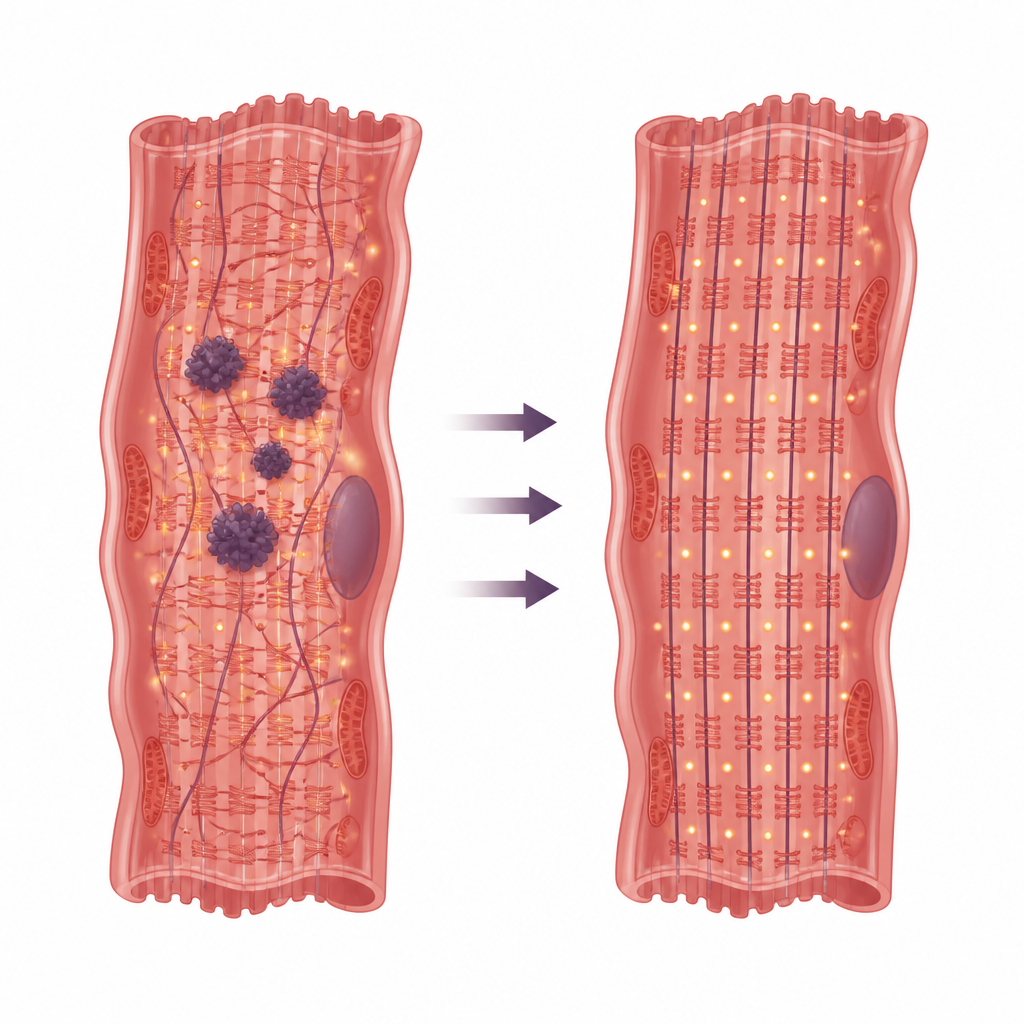
The researchers then tested an RNA based drug designed to lower phospholamban production in the engineered heart cells. As the dose of this antisense oligonucleotide increased, levels of phospholamban RNA and protein dropped. This reduction came with broad shifts in phosphorylation across hundreds of sites. A set of 28 sites changed consistently in patient tissue and in lab grown cells, and 22 of these moved back toward normal after treatment. Many of these sites sat on proteins that link the internal scaffold of actin fibers and cell to cell junctions, pointing to recovery of the cell’s structural wiring. At the same time, the number and size of phospholamban containing protein clusters decreased, and the treated cells showed stronger contractions and more efficient calcium cycling, even though not every measure returned fully to normal.
What This Could Mean for Patients
For people living with phospholamban R14del cardiomyopathy, these findings suggest that the disease is driven less by how much of each protein is present and more by how those proteins are tuned by phosphate tags, especially in the cell’s contractile and structural systems. The RNA therapy tested here did not simply remove a toxic protein; it also nudged these tuning marks toward a healthier pattern, reduced protein build up, and improved the behavior of human heart cells in the lab. While much work remains to confirm safety, dosing, and long term effects in patients, the study provides a clear mechanistic map and supports RNA based lowering of phospholamban as a realistic strategy to treat this inherited form of heart failure.
Citation: Deiman, F.E., Bömer, N., Davidsson, P. et al. Phosphoproteomics distinguishes disease-specific mechanisms for human phospholamban cardiomyopathy reversible by RNA therapy. Sig Transduct Target Ther 11, 199 (2026). https://doi.org/10.1038/s41392-026-02791-5
Keywords: phospholamban cardiomyopathy, RNA therapy, heart failure, phosphoproteomics, calcium handling