Clear Sky Science · en
VCPIP1 drives diabetic cardiomyopathy by deubiquitinating AMPKγ1 and preventing AMPKα-γ subunit assembly in cardiomyocytes
When Diabetes Quietly Damages the Heart
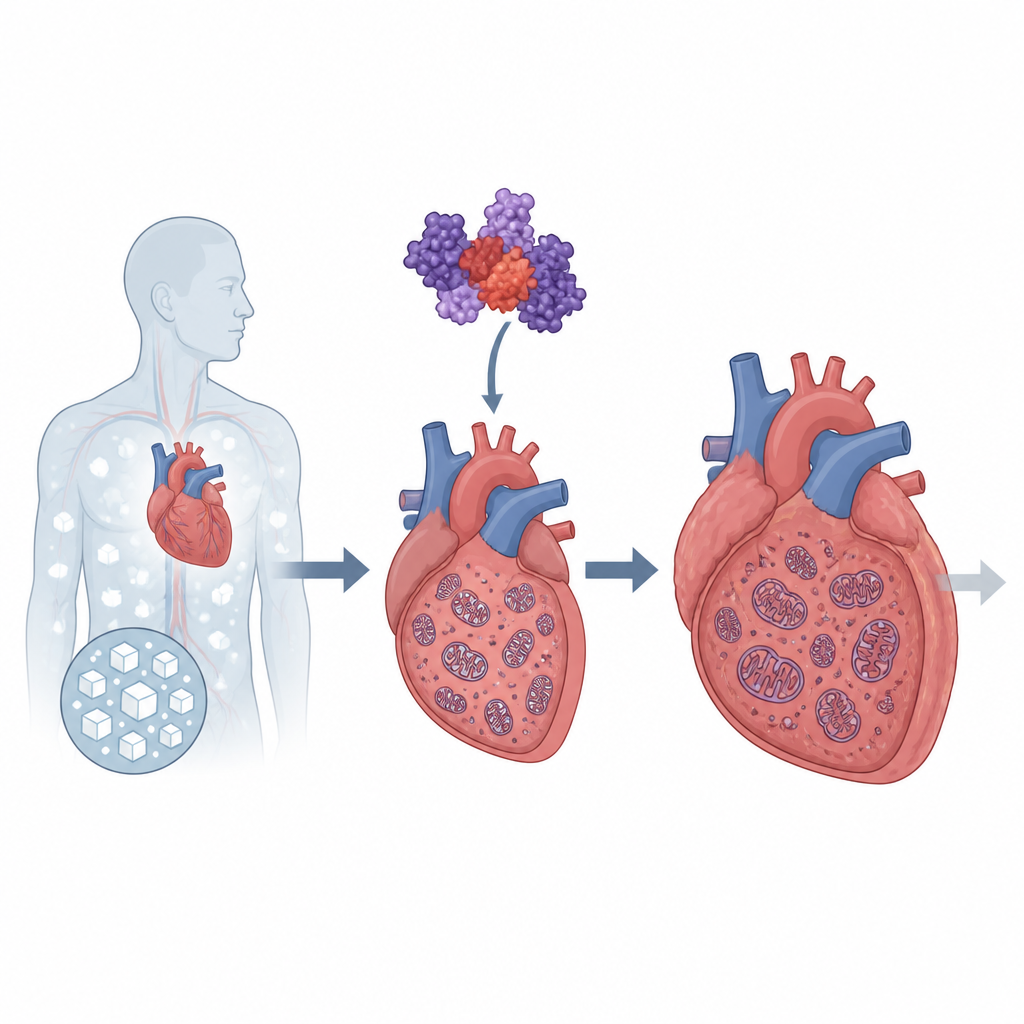
Many people with diabetes never feel chest pain yet still develop heart failure. This hidden damage, called diabetic cardiomyopathy, is hard to treat because we do not fully understand what goes wrong inside heart cells. This study uncovers a new culprit molecule that quietly sabotages how heart cells make energy, pointing to a fresh idea for protecting the diabetic heart.
A Closer Look at the Diabetic Heart
Doctors have long known that diabetes greatly raises the risk of heart failure, even when arteries are not badly clogged. The heart muscle of people with diabetes often becomes thick, stiff, and weak. The authors note that this problem is tightly linked to sickly mitochondria, the tiny “power plants” that supply more than 90 percent of the heart’s energy. In diabetes, these power plants lose strength, leak harmful oxidants, and cannot keep up with the muscle’s constant demand for fuel, setting the stage for long-term scarring and loss of pumping power.
The Cell’s Energy Switch Under Pressure
At the center of this story is AMPK, a protein complex that works like a master energy switch in cells. When energy runs low, AMPK usually flips on repair programs, boosts mitochondrial function, and helps the heart cope with stress. But previous work has shown that AMPK activity is blunted in diabetic hearts. Until now, it was unclear why this safety system fails. By mining public gene databases from diabetic animals and patients, the researchers noticed that another protein, VCPIP1, is consistently higher in diabetic heart tissue, especially in heart muscle cells, raising the possibility that it might be interfering with AMPK’s protective role.
The Saboteur Inside Heart Cells
To test this idea, the team used mouse models of both type 1 and type 2 diabetes and grew heart cells in high sugar and fat conditions. When they removed VCPIP1 only from heart muscle cells, the diabetic mice kept much better heart function, had smaller hearts, less thickening of muscle cells, and less scar tissue. In dishes, turning down VCPIP1 protected heart cells from swelling and stress signals, while turning it up made these problems worse. These findings showed that VCPIP1 is not a bystander but an active driver of damage in the diabetic heart.
How VCPIP1 Breaks the Energy Machinery
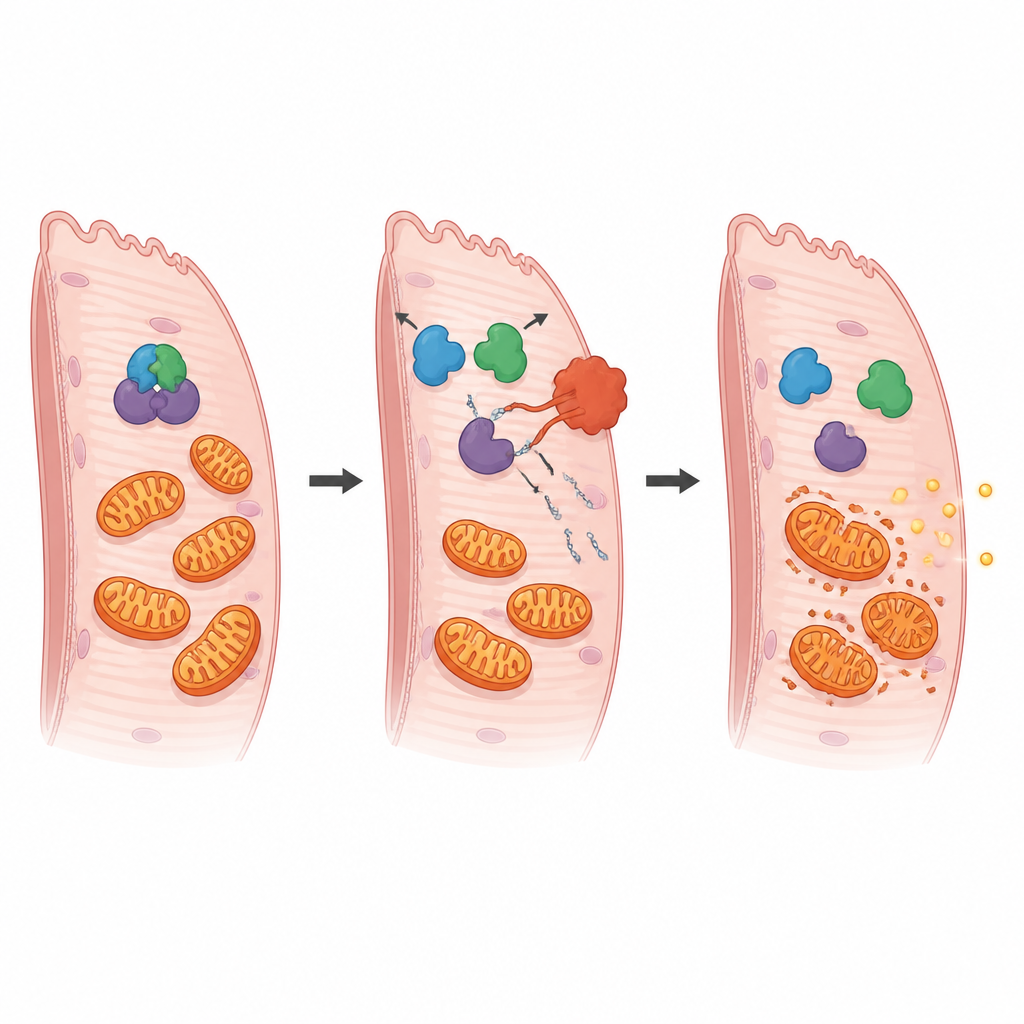
The researchers then zoomed in on the molecular machinery. AMPK is built from three parts that must fit together to work. Using protein mapping tools, they found that VCPIP1 latches onto one part of AMPK, known as the gamma 1 subunit, at a specific region. VCPIP1 then snips off small “ubiquitin” chains at one key spot on this subunit. Those tiny chains do not destroy the protein; instead, they act more like tuning knobs that keep the AMPK pieces in the right shape. When VCPIP1 removes them, the AMPK parts no longer assemble properly, and the complex cannot be switched on by its usual partner kinase. As a result, the master energy switch remains stuck in the off position in diabetic heart cells.
From Broken Switch to Failing Power Plants
With AMPK turned down, the mitochondria in diabetic heart cells fare badly. Gene activity maps showed that many of the genes involved in mitochondrial respiration and the “respirasome” super-complexes were weakened when the key site on AMPK gamma 1 was stripped of its ubiquitin signal. In both diabetic mice and stressed heart cells, high VCPIP1 levels lined up with fewer healthy respiratory-chain proteins, lower oxygen consumption, less ATP (the cell’s energy currency), distorted mitochondrial shapes, and more oxidative stress. Removing VCPIP1 reversed many of these changes, while engineering a version of AMPK that mimics constant removal of this ubiquitin mark recreated the same heart damage seen with excess VCPIP1.
What This Means for People with Diabetes
In simple terms, this research shows that VCPIP1 acts like a hidden saboteur in diabetic hearts. It tamps down the cell’s main energy switch, AMPK, by preventing its pieces from locking together, which in turn weakens the heart’s power plants and promotes thickening and scarring of the heart muscle. The work suggests that blocking VCPIP1 in heart cells might offer a new way to gently nudge AMPK back into action and improve mitochondrial health, adding a fresh strategy to future treatments aimed at protecting the hearts of people living with diabetes.
Citation: Han, X., Huang, Z., Liu, G. et al. VCPIP1 drives diabetic cardiomyopathy by deubiquitinating AMPKγ1 and preventing AMPKα-γ subunit assembly in cardiomyocytes. Sig Transduct Target Ther 11, 185 (2026). https://doi.org/10.1038/s41392-026-02701-9
Keywords: diabetic cardiomyopathy, heart mitochondria, AMPK signaling, protein ubiquitination, cardiac hypertrophy