Clear Sky Science · en
PRELP negatively regulates IL-17A-mediated proliferation and the inflammatory response in psoriasis
Why calming inflamed skin matters
Psoriasis is more than dry, scaly skin; it is a long lasting immune disorder that can hurt quality of life and raise the risk of other illnesses. Many modern drugs target a powerful immune signal called IL-17A and can clear skin impressively, but not everyone responds. This study asks a practical question with big implications: is there a natural brake inside the skin that can quiet IL-17A driven inflammation and, if so, can boosting it offer a new way to treat psoriasis and related diseases?
A hidden brake inside skin cells
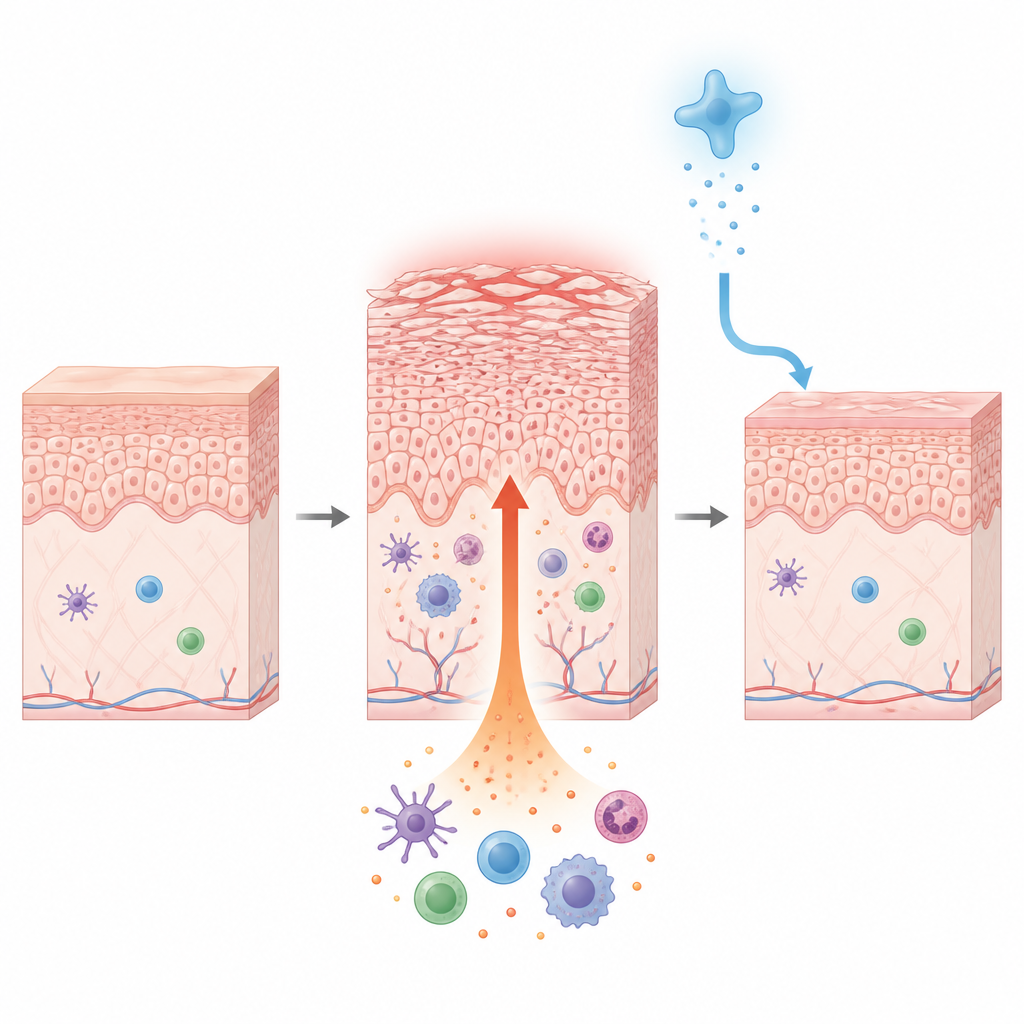
The authors focused on a little known protein called PRELP, which is normally present in many tissues, including the outer layer of the skin. By mining genetic data from patients treated with IL-17A blocking drugs, they noticed a clear pattern: in psoriatic plaques, PRELP levels were low, but rose again after successful treatment with IL-17A inhibitors and other effective therapies. Detailed analysis of patient samples and mouse models showed that this drop in PRELP happens mainly in keratinocytes, the skin cells that form the protective barrier and overgrow in psoriasis.
How PRELP reins in runaway growth
To see what PRELP actually does, the team forced keratinocytes in the lab to make more of it and then exposed them to IL-17A. Extra PRELP slowed down cell division, encouraged damaged cells to die at the right time, and cut the production of many inflammatory signals and chemical beacons that normally call in more immune cells. These effects lined up with weaker activity in two key alarm systems inside cells, known as NF-kB and MAPK pathways, which usually drive psoriasis related swelling, redness, and thickening of the skin.
Breaking the vicious cycle between skin and immune cells
Psoriasis is sustained by a feedback loop: immune cells release IL-17A, keratinocytes respond by multiplying and pumping out cytokines such as IL-6, IL-23, and IL-1, and these in turn push more T cells toward an IL-17 producing state. The researchers found that keratinocytes rich in PRELP made far less of these upstream cytokines. In mice engineered to overproduce PRELP only in keratinocytes, classic psoriasis like changes triggered by chemical creams or injected IL-23 were much milder: the skin was less red, thinner, and contained fewer IL-17 producing T cells. In organ like skin cultures, boosting PRELP again reduced thickness and the levels of IL-6, IL-23, and IL-17A, showing that this protein helps disrupt the self sustaining loop between skin cells and immune cells.
How inflammation silences this protective protein
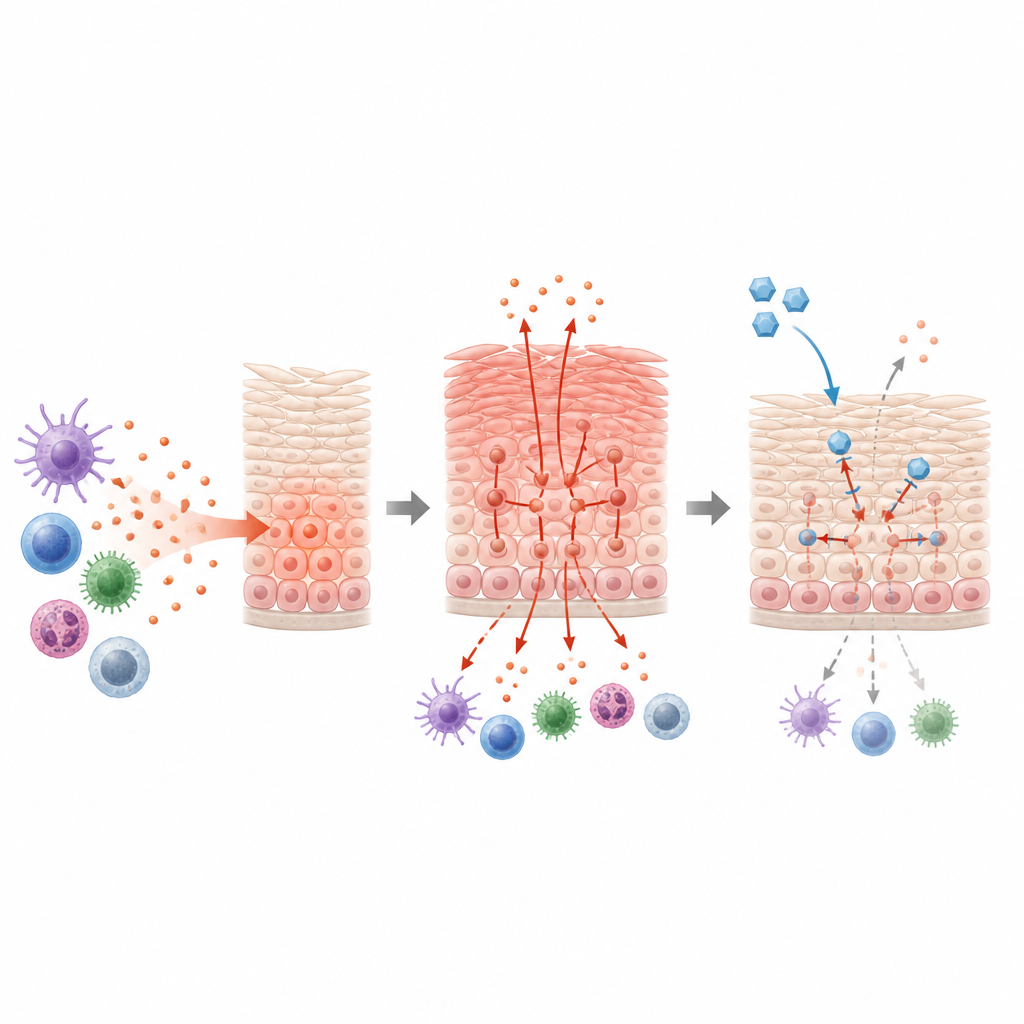
The study also asked why PRELP is so low in diseased skin. The team showed that IL-17A switches on a master regulator called STAT3 inside keratinocytes. Instead of turning PRELP on, STAT3 binds directly to the PRELP gene and acts as a brake, shutting it down. When STAT3 was blocked or removed, PRELP levels rose even in the presence of IL-17A. This creates a double edged situation: IL-17A activates STAT3 to fuel inflammation and, at the same time, STAT3 silences PRELP, removing an internal safeguard that would normally calm the response.
What this means for future treatments
Together, the findings present PRELP as an internal safety valve that keeps IL-17A driven inflammation and keratinocyte overgrowth in check. When this valve is shut by STAT3, psoriasis can become chronic and harder to treat. Restoring PRELP, whether through gene based delivery, protein mimics, or drugs that lift its repression, could complement existing IL-17 or IL-23 blockers and might help patients who do not fully respond to current therapies. Because reduced PRELP is also seen in gut and joint conditions linked to IL-17, targeting this natural brake may eventually benefit a wider group of people living with Th17 driven inflammatory diseases.
Citation: He, Cc., Lei, Mx., Jiang, Jw. et al. PRELP negatively regulates IL-17A-mediated proliferation and the inflammatory response in psoriasis. Sig Transduct Target Ther 11, 198 (2026). https://doi.org/10.1038/s41392-026-02693-6
Keywords: psoriasis, IL-17A, PRELP, keratinocytes, Th17 inflammation