Clear Sky Science · en
GSK-3 regulates CD4-CD8 cooperation for super-armed CD8+ cytolytic T cells in immunotherapy against tumors
Reprogramming the Body’s Cancer Fighters
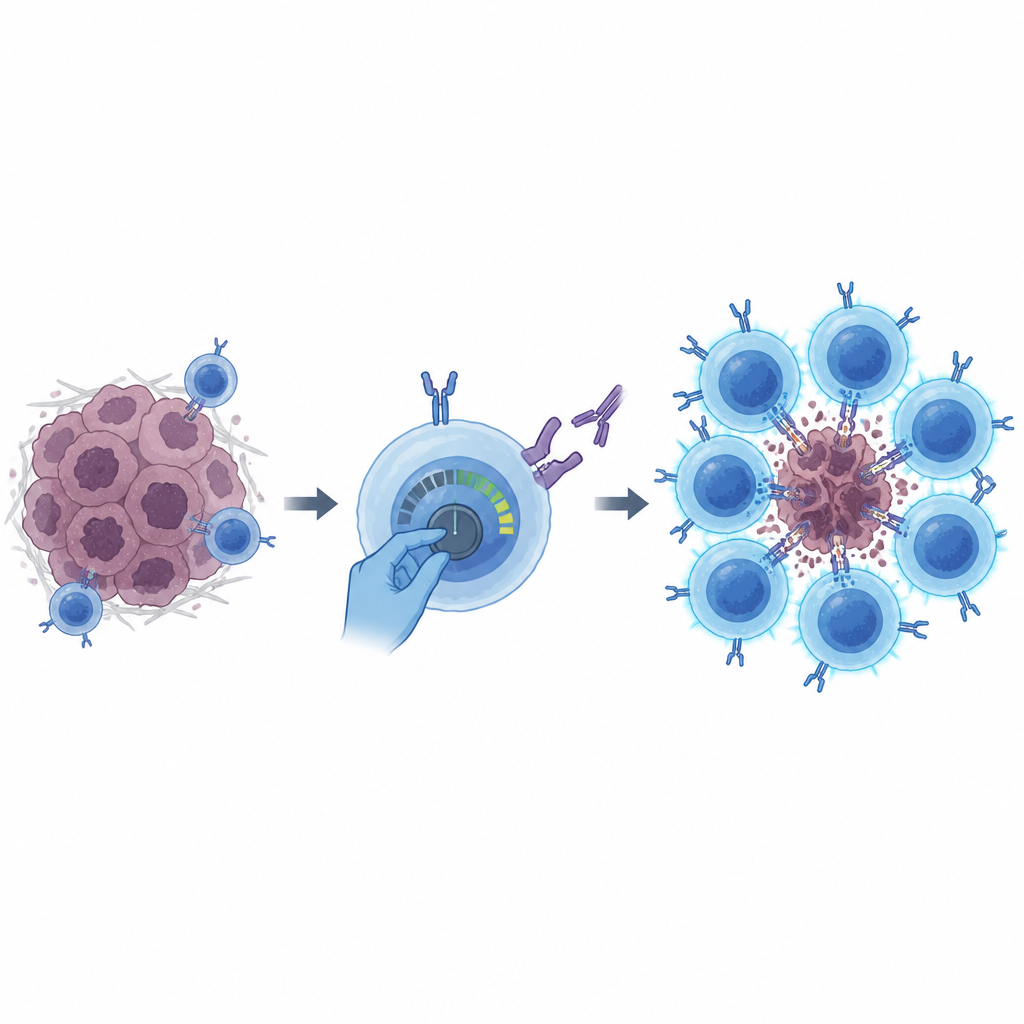
Our immune system can recognize and attack cancer, yet tumors often find ways to blunt this response. This study explores how dialing down a single enzyme in immune cells, together with an existing form of cancer immunotherapy, can turn ordinary killer T cells into “super-armed” tumor destroyers. By understanding how these cells grow, fuel themselves, and cooperate, the work points to new strategies for helping the immune system keep cancer in check.
Two Kinds of T Cells, One Shared Mission
The body relies on different types of T cells to fight infections and cancer. CD8 T cells act as front-line killers, directly attacking infected or malignant cells. CD4 T cells play a supporting role, either helping CD8 cells grow stronger or, in the form of regulatory T cells, putting the brakes on the immune response. Modern immunotherapies like PD-1 “checkpoint” inhibitors release some of these brakes, but they do not work for everyone. The authors asked how an enzyme called GSK-3, long known as a general control switch inside cells, shapes the teamwork between CD4 and CD8 T cells during chronic infection and in tumors.
Shifting Killer Cells Toward Long-Lasting Memory
Using mice engineered to make less GSK-3 in mature T cells, the researchers first examined responses to a persistent virus. These mice produced fewer naïve, untested T cells and more cells with a memory-like profile, even before infection. When exposed to a chronic virus, their killer CD8 cells expanded more strongly, resisted exhaustion, and were more likely to become long-lived “memory-precursor” cells. These cells carried higher levels of TCF-1, a marker of stem-like potential, and produced more antiviral molecules such as interferon-gamma and granzyme B, all while maintaining better control of the virus.
Supercharging the Cell’s Energy and Weapons
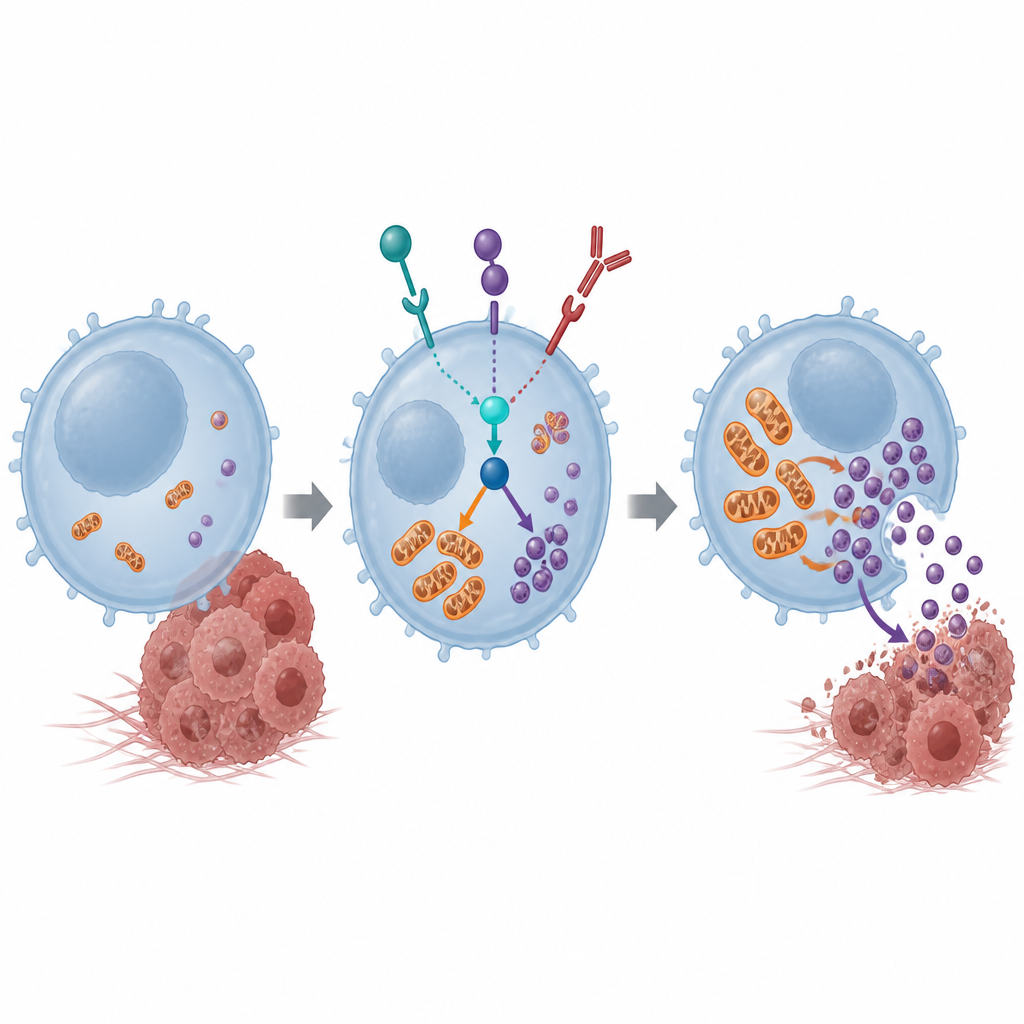
To understand why these T cells performed so well, the team probed their metabolism. Compared with normal cells, T cells with reduced GSK-3 could divide in response to much weaker stimulation. They took up more glucose, showed higher activity of both major energy pathways, and contained more mitochondria, the cell’s power plants. A technique that profiles energy use at the single-cell level revealed that stem-like CD8 cells became metabolically flexible: they could switch between sugar-burning and oxygen-based energy production depending on stress. In tumors, this same metabolic tuning was linked with higher levels of perforin and a wide panel of granzymes, the toxic proteins that CD8 cells use to punch holes in and dismantle cancer cells.
Turning Checkpoint Therapy from Weak Spark to Strong Flame
The most striking results came from combining GSK-3 reduction with PD-1 checkpoint blockade in mouse cancer models that usually resist therapy. Neither PD-1 antibodies nor GSK-3 inhibition alone slowed tumor growth. Together, however, they shrank tumors and improved survival. Inside the tumor, CD8 killer cells became more abundant and shifted into an effector-memory state linked with better tumor control. At the same time, regulatory CD4 T cells that normally dampen immunity were reduced or functionally weakened, while helper CD4 cells that secrete the growth factor interferon-gamma were boosted. Genetic analyses showed that this combination switched on perforin and seven of the nine known mouse granzymes, creating a “super-armed” cytotoxic program rarely seen in nature.
Balancing Help and Restraint for Better Cancer Control
The study concludes that GSK-3 acts as a master brake on both the fate and the fuel supply of T cells. Lowering its activity preserves a reservoir of stem-like CD8 cells, equips them with robust energy machinery, and allows PD-1 blockade to unlock an unusually broad arsenal of tumor-killing tools. At the same time, GSK-3 helps maintain the suppressive power of regulatory CD4 T cells; when its influence is reduced, helpful CD4 cells dominate and become essential partners for CD8 killers. Together, these insights suggest that carefully targeted GSK-3 inhibitors, combined with checkpoint therapy, might one day improve outcomes for patients whose tumors currently evade the immune system.
Citation: Moës, B., Krueger, J., Liu, C. et al. GSK-3 regulates CD4-CD8 cooperation for super-armed CD8+ cytolytic T cells in immunotherapy against tumors. Sig Transduct Target Ther 11, 188 (2026). https://doi.org/10.1038/s41392-026-02663-y
Keywords: GSK-3, CD8 T cells, PD-1 blockade, cancer immunotherapy, regulatory T cells