Clear Sky Science · en
Sirolimus plus roxadustat synergistically enhances immunosuppression and erythropoiesis in pure red cell aplasia: a multicenter trial
Why a Rare Blood Disorder Matters
Pure red cell aplasia is a rare condition in which the body suddenly stops making red blood cells, leaving people severely anemic, exhausted, and often tied to regular transfusions. Because it is uncommon, treatments have been pieced together from small studies and have important drawbacks. This new multicenter trial tests a two-drug combination that aims not only to calm the misfiring immune system that attacks red blood cell precursors, but also to jump-start red blood cell production itself—offering new hope to patients who have few good options.
A Shortage of Red Blood Cells
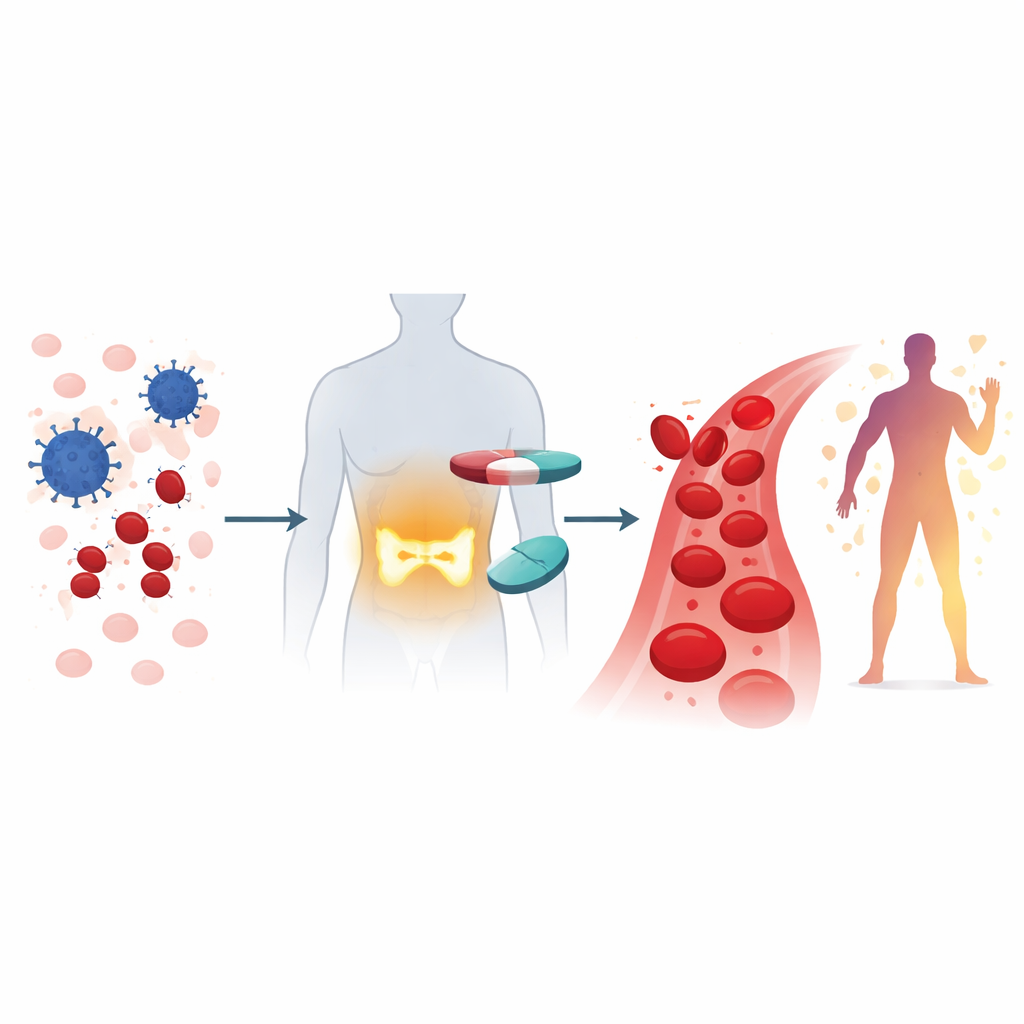
In acquired pure red cell aplasia, the rest of the bone marrow is relatively intact, but the factory line for red blood cells grinds to a halt. Most patients develop a profound anemia with very low hemoglobin, almost no young red cells in the bloodstream, and a striking absence of red cell precursors in the marrow. Many cases appear to be driven by the body’s own immune cells mistakenly destroying these precursors. Standard treatments rely on broadly suppressing immunity with drugs such as cyclosporine or corticosteroids. These can work, but responses are not guaranteed, relapses are common, and months may pass before patients can escape transfusions.
Pairing Two Targeted Medicines
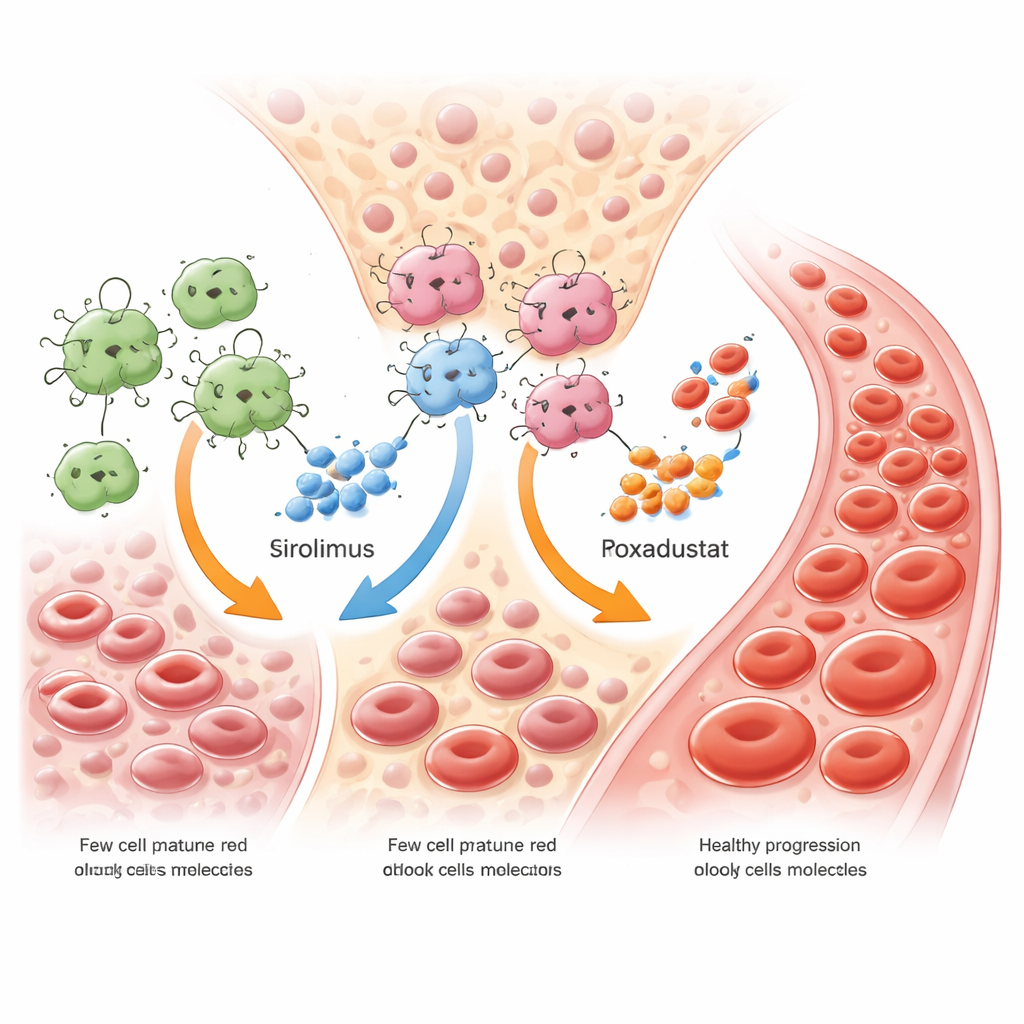
The researchers designed a regimen that combines sirolimus, a drug that dampens immune activity, with roxadustat, a pill originally developed to treat anemia in chronic kidney disease. Sirolimus blocks a key growth pathway in T cells, dialing down their ability to attack red cell precursors and promoting immune tolerance. Roxadustat tricks the body into sensing low oxygen, boosting natural signals that tell the marrow to make more red cells. Laboratory work has suggested that the pathways these drugs influence are intertwined: sirolimus may unintentionally slow red cell production, while roxadustat can counteract that effect. The authors hypothesized that using both together would provide stronger immune control without sacrificing the marrow’s ability to rebuild the red cell supply.
Results Across Many Hospitals
To test this idea, ten hospitals in China enrolled 82 adults with acquired pure red cell aplasia, both newly diagnosed and those whose disease had relapsed or resisted earlier therapies. Most were older, with a median age of 63, and many required regular transfusions. All participants received sirolimus daily, with blood levels adjusted to a set range, plus roxadustat three times per week. Other powerful immune-suppressing drugs and injected red cell–stimulating hormones were not allowed, so any benefit could be attributed to the combination itself. After accounting for a few early withdrawals, 72 patients were followed for at least six months to measure both effectiveness and side effects.
More Red Cells, Fewer Transfusions, Better Lives
The combination performed strikingly well. Within a median of just over a month, nine in ten patients showed a meaningful response, and by six months, 93 percent had improved, with over three quarters reaching near-normal hemoglobin levels. On average, hemoglobin rose from a dangerously low 5.5 grams per deciliter at the start to 11.6 after six months. Among those who had depended on transfusions, more than half became transfusion-free in the first month, and nearly nine in ten did so within three months. Blood tests showed that early bursts of new red cells were followed by stabilization, along with falling levels of the hormone that drives red cell production and a reduction in excess iron from previous transfusions. Patients also reported feeling less fatigued and scored higher on standard measures of physical, social, and emotional well-being.
Balancing Benefits and Risks
The safety profile of the two-drug regimen was generally acceptable, especially given that many patients were older and had already received years of immune-suppressing treatment. About 30 percent experienced side effects related to therapy, most often mouth sores, high cholesterol, or changes in blood sugar and kidney function, which were usually managed by adjusting the sirolimus dose and providing supportive care. Four patients developed serious pneumonia; all had extensive prior exposure to other immunosuppressants and additional health problems, and two ultimately died from mixed infections. The authors caution that while sirolimus may not directly cause these infections, it likely adds to overall vulnerability, underscoring the need for careful monitoring and infection prevention in such fragile patients.
What This Could Mean for Patients
For people with pure red cell aplasia, these findings suggest that a carefully tuned combination of sirolimus and roxadustat can both quiet the immune attack and restore red cell production more quickly and reliably than many existing options. The study is an important proof of concept: even in a rare disease, thoughtfully pairing drugs that act on linked biological pathways can yield substantial gains in independence from transfusions and quality of life. Because this was a single-arm trial without a direct comparison group, the authors emphasize that larger randomized studies are needed to confirm the advantage over current standard treatments and to better define long-term safety. Still, the work points to a future in which patients with this challenging condition may face fewer transfusions, less fatigue, and a better chance at sustained remission.
Citation: Wang, H., Wang, Q., Liu, S. et al. Sirolimus plus roxadustat synergistically enhances immunosuppression and erythropoiesis in pure red cell aplasia: a multicenter trial. Sig Transduct Target Ther 11, 143 (2026). https://doi.org/10.1038/s41392-026-02635-2
Keywords: pure red cell aplasia, sirolimus, roxadustat, anemia treatment, immunosuppression