Clear Sky Science · en
Clinical translational research on stem cell products: prospects and challenges
New Ways to Help the Body Heal Itself
Many serious illnesses, from leukemia to heart failure, still lack truly effective treatments. Stem cell therapies offer a different approach: instead of only easing symptoms, they aim to repair or even rebuild damaged tissues. This article reviews how stem cell products are moving from lab benches into clinics around the world, what they are already achieving for patients, and what still stands in the way.
What Stem Cells Can Do for the Body
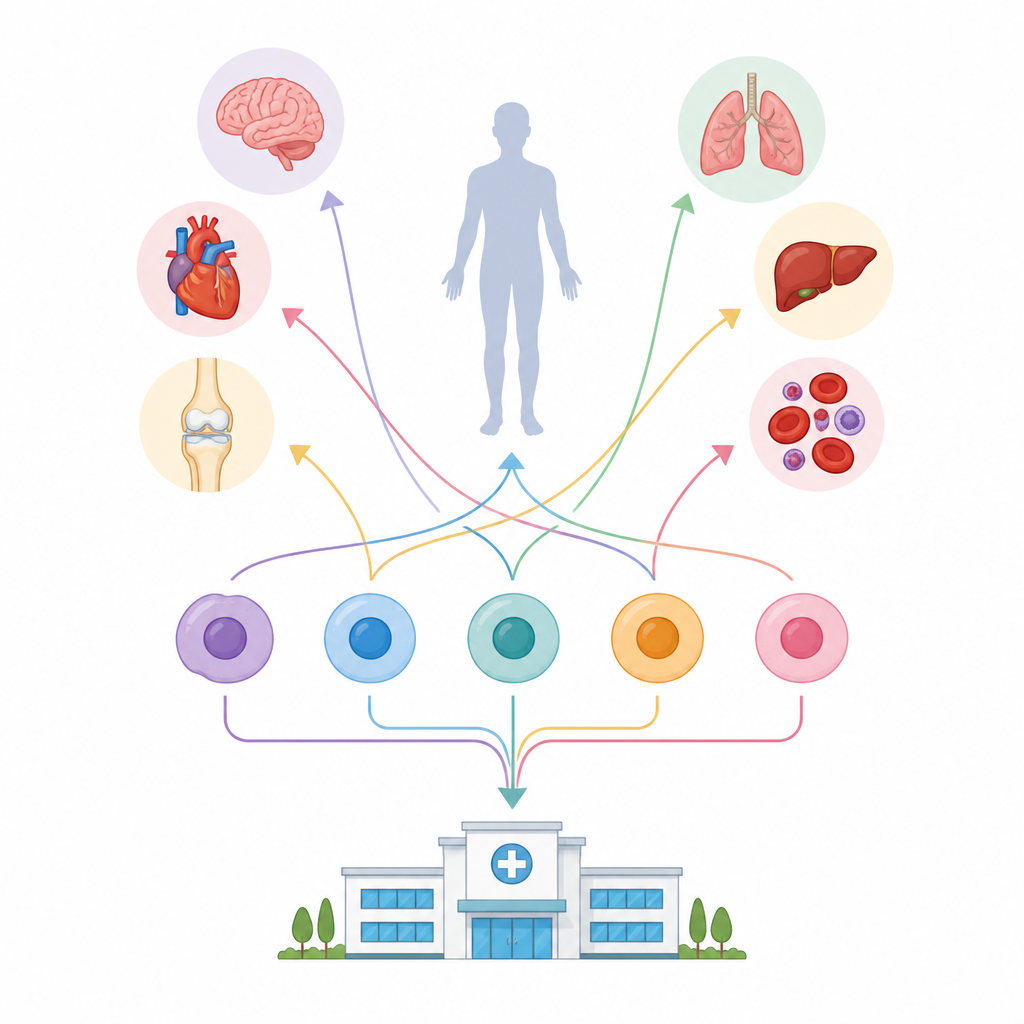
Stem cells are the body’s raw repair material. They can renew themselves and, under the right conditions, turn into many kinds of specialized cells. Doctors already use blood-forming stem cells to rebuild the blood and immune systems after high-dose cancer treatments. Other stem cell types, such as those from bone marrow, fat, or birth tissues like umbilical cord, are being tested for heart disease, lung scarring, arthritis, diabetes, liver failure, and brain and spinal cord injury. Scientists are also creating powerful “pluripotent” stem cells that can, in principle, give rise to almost any cell type, opening paths to lab-grown heart muscle, insulin-producing cells, and light-sensing cells for the eye.
How Stem Cell Treatments Reach the Clinic
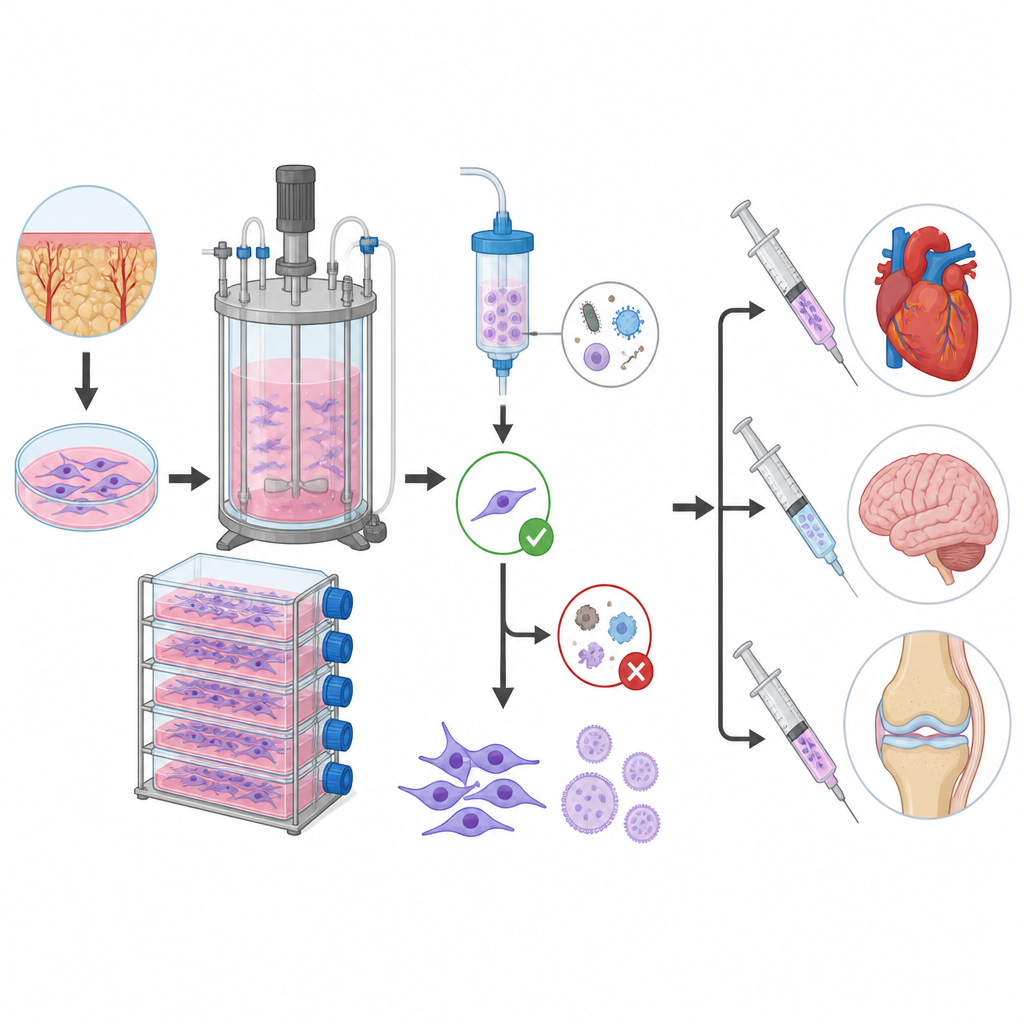
Turning stem cells into dependable medicines is far more complex than making pills. First, researchers must choose the right cell type for a particular disease and show, in animals and early human studies, that it can help without causing serious harm. Next comes manufacturing: cells must be grown in clean, tightly controlled facilities that follow drug-level quality rules. Every batch is checked for identity, purity, strength, and freedom from germs. The cells are then carefully frozen, stored, and shipped so they remain alive and stable when they reach the hospital. At the bedside, doctors decide how to deliver them, for example into a vein, into the spinal fluid, or directly into a damaged organ, and then follow patients for years to look for both benefits and late side effects.
Where Stem Cells Are Already Helping Patients
Blood stem cell transplantation is now standard care for many blood cancers, immune defects, and some severe autoimmune diseases. The review highlights decades of evidence showing that, while complications like graft-versus-host disease remain a concern, survival and safety have steadily improved. Products based on other stem cells are beginning to reach the market. For example, some bone marrow or umbilical cord cell products are approved in several countries for treating life-threatening immune reactions after transplants, joint cartilage damage, and poor blood flow to the limbs. Pluripotent stem cell–derived products are in early trials for heart failure, Parkinson’s disease, blindness from retinal damage, and both type 1 and type 2 diabetes, where replacement cells are starting to produce insulin in patients.
New Players: Tiny Packages and Support Cells
Scientists have learned that stem cells do not just replace damaged cells; they also send out molecular “packages” that calm inflammation and encourage repair. These packages, called extracellular vesicles, are being tested as cell-free treatments for severe viral pneumonia, stroke, bowel disease, liver failure, and hard-to-heal skin wounds. Because they are not living cells, they may be easier to store, standardize, and deliver. The article also describes progress with other adult stem cells, such as those from the eye’s surface, skin, muscle, and intestine, which are being explored for restoring vision, healing injuries, and rebuilding weakened tissues.
Remaining Obstacles on the Road to Routine Care
Despite the excitement, many hurdles remain before stem cell products become everyday medicines. Cells from different donors, tissues, and labs can behave quite differently, making results hard to predict. Growing enough cells at industrial scale without altering their behavior is technically demanding and expensive. Safety worries include the risk of unwanted immune reactions, the chance of cells settling in the wrong place, and, for highly flexible cells, the possibility of tumor formation if any rogue cells slip through. Tracking where cells go inside the body is still technically difficult, and measuring whether they truly change the course of a disease often requires long, carefully designed trials.
What This Means for Future Patients
Overall, the article concludes that stem cell products are already improving or saving lives in certain settings, particularly for blood diseases, and are edging closer to practical use in heart, brain, eye, and metabolic disorders. Progress now depends on better ways to standardize cell production, to sort out helpful cell types from less useful ones, and to monitor long-term safety. By combining stem cell science with gene editing, smart biomaterials, automation, and artificial intelligence, researchers aim to turn today’s complex, bespoke treatments into reliable, off-the-shelf options. If these efforts succeed, future patients may see stem cell therapies become a routine part of care for conditions that are now considered untreatable.
Citation: Chen, S., Zhang, L., Ren, Y. et al. Clinical translational research on stem cell products: prospects and challenges. Sig Transduct Target Ther 11, 178 (2026). https://doi.org/10.1038/s41392-026-02582-y
Keywords: stem cell therapy, regenerative medicine, mesenchymal stem cells, clinical trials, cell manufacturing