Clear Sky Science · en
GPX3 suppresses gallbladder cancer progression by modulating redox balance, glycolysis, and anti-tumor immunity
Why this research matters
Gallbladder cancer is rare but often deadly because it is usually found late and spreads quickly. This study explores a natural protective enzyme in our bodies, GPX3, and shows how losing it may help gallbladder tumors grow, fuel themselves, and hide from the immune system. Understanding this hidden protector could open new paths for treating a cancer that currently has few good options. 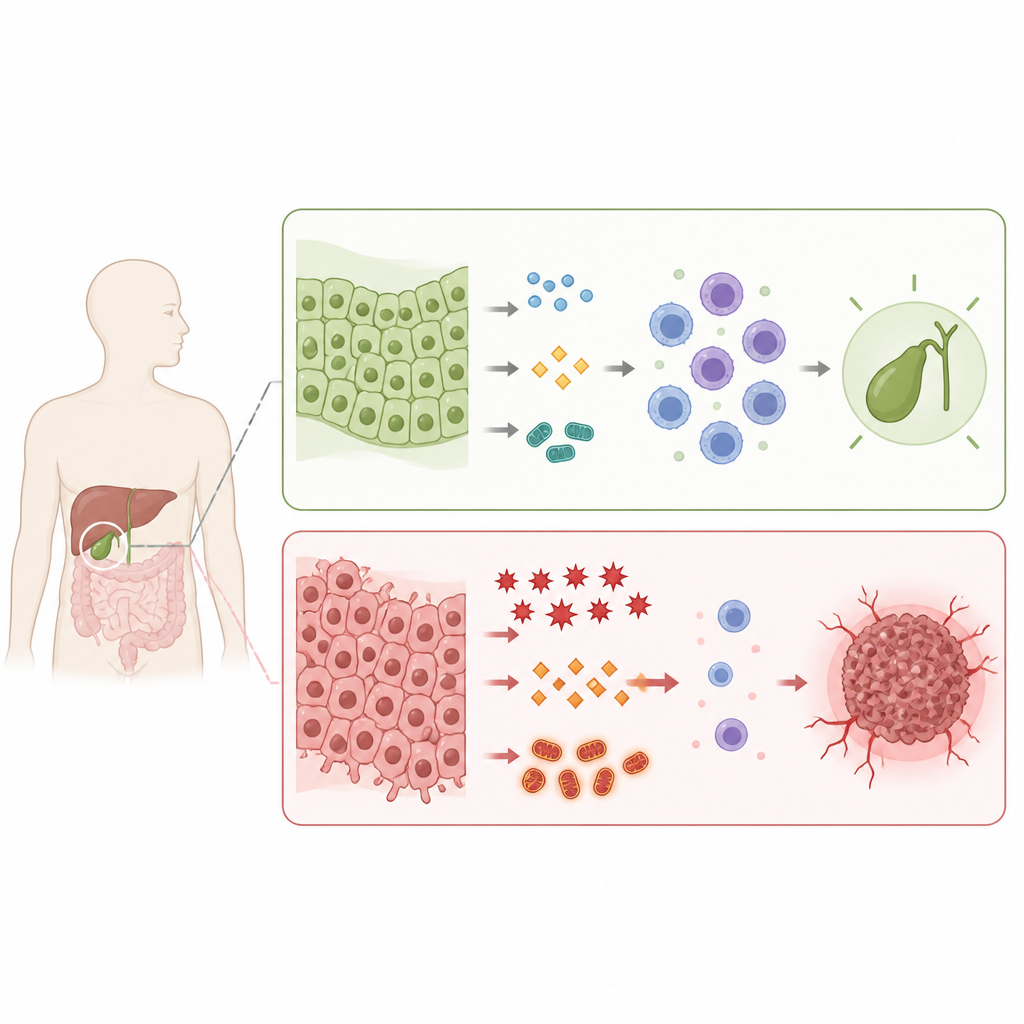
A missing bodyguard in gallbladder cells
The researchers began by comparing tumor tissue from people with gallbladder cancer to nearby healthy gallbladder tissue. Using several large-scale methods to measure genes, proteins, and small molecules, they repeatedly saw the same pattern: levels of a protective enzyme called GPX3 were much lower in cancer cells. GPX3 normally helps neutralize reactive oxygen species, unstable molecules that place cells under chemical stress. When GPX3 was low, signs of this stress were higher and the chemical environment inside the tumor shifted in ways that favor cancer cell survival.
How stressed cells change their fuel use
Next, the team examined how this loss of GPX3 affects the way gallbladder cancer cells make energy. They found that tumors with less GPX3 relied more heavily on glycolysis, a fast but wasteful way of burning sugar that produces plenty of lactic acid. Measurements of living cancer cells showed higher acid production and lower oxygen-based respiration when GPX3 was silenced, but the opposite pattern when GPX3 was restored. Markers of cellular damage rose when GPX3 was low and fell when it was high, showing that this enzyme sits at the crossroads between chemical stress and cellular fuel choice. 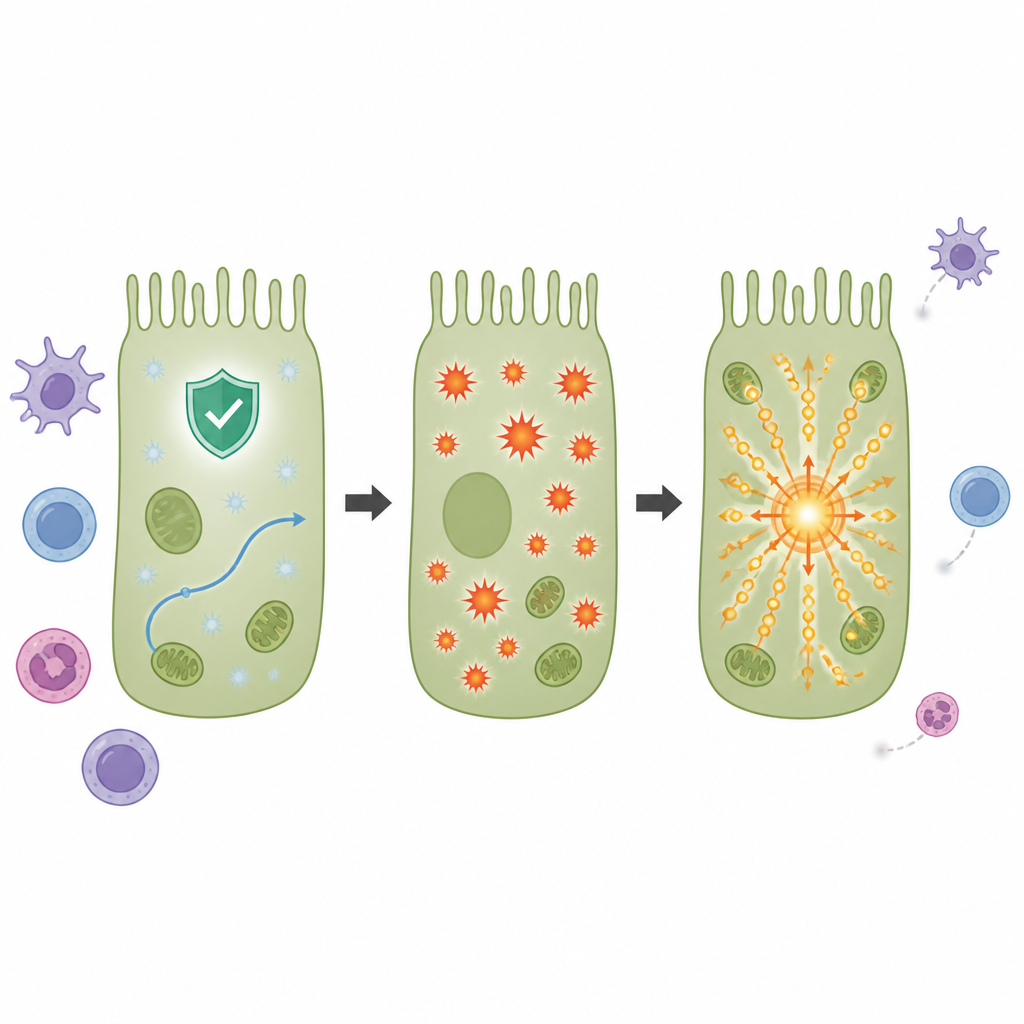
Turning the immune response up or down
Because cancer cells share their environment with immune cells, the scientists asked whether GPX3 also influences anti-tumor defenses. They grew human T cells together with gallbladder cancer cells engineered to have more or less GPX3. When GPX3 was boosted in the cancer cells, nearby T cells showed stronger activation signals and released more immune messenger molecules such as IL-2, IFN-gamma, and TNF-alpha, all important for attacking tumors. When GPX3 was reduced, T cells became sluggish and produced fewer of these messengers, suggesting that GPX3-deficient tumors create a friendlier environment for cancer and a harsher one for immune cells.
Tests in mice bring the picture into focus
To see whether these effects also occur in living organisms, the team implanted human gallbladder cancer cells with high or low GPX3 into mice. Tumors with extra GPX3 grew more slowly, formed fewer metastases in the liver, and showed lower chemical stress and less reliance on glycolysis. Tumors lacking GPX3 grew faster, spread more readily, and were linked to weaker T cell activity in the animals. The researchers traced much of this behavior to a molecule called HIF-1alpha, which is stabilized by chemical stress and encourages glycolysis. Blocking HIF-1alpha in GPX3-deficient tumors reduced their growth, toned down their warped energy use, and restored some immune activity.
What this means for future treatment
In simple terms, GPX3 acts like a multi-talented bodyguard for gallbladder cells. When it is present, chemical stress is kept in check, cells use a more balanced mix of fuels, and immune cells can better recognize and attack tumors. When GPX3 is lost, stress builds up, cancer cells switch to a turbocharged sugar-burning mode, and the immune system is pushed away. While more work is needed before this knowledge can directly guide patient care, the study points to GPX3 and its downstream partners, especially HIF-1alpha, as promising targets for therapies that both slow tumor growth and strengthen the body’s own defenses.
Citation: Ma, Z., Sun, J., Wu, X. et al. GPX3 suppresses gallbladder cancer progression by modulating redox balance, glycolysis, and anti-tumor immunity. Oncogenesis 15, 20 (2026). https://doi.org/10.1038/s41389-026-00603-7
Keywords: gallbladder cancer, GPX3, oxidative stress, tumor metabolism, tumor immunity