Clear Sky Science · en
Role of SCAP in regulation of pancreatic homeostasis, pancreatitis, and tumorigenesis
Why this research matters
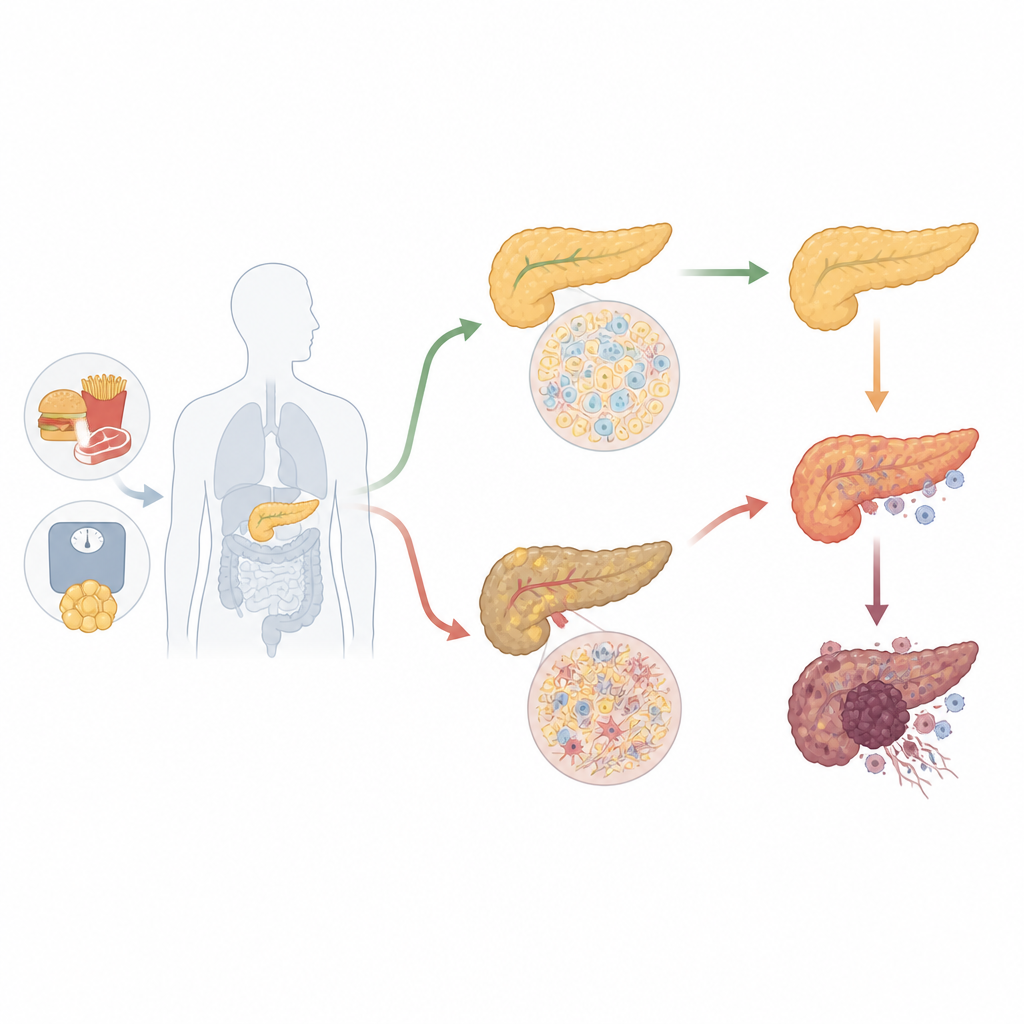
Pancreatic cancer is one of the deadliest cancers, and its rates are rising alongside obesity and diabetes. These conditions often involve disrupted fat and cholesterol handling in the body. This study asks a deceptively simple question with big stakes: what happens to the pancreas when a key controller of fat production, called SCAP, is switched off? The answer turns out to be complex and surprising, with major implications for how we think about links between diet, chronic inflammation in the pancreas, and cancer.
A traffic cop for fats in the pancreas
SCAP acts like a traffic cop inside cells, deciding when to turn on a group of proteins that drive the making of fats and cholesterol. These fats are not just fuel; they help build cell membranes and support growth. In earlier work, the authors showed that boosting this fat-making program could push pancreatic tumors toward a more aggressive state. That led to the idea that blocking SCAP in the pancreas might slow cancer. To test this, they used a standard mouse model of pancreatic ductal adenocarcinoma, the most common pancreatic cancer, and created a version where SCAP is removed specifically in the pancreas.
When blocking a safeguard backfires
In the cancer-prone mice, removing SCAP did not protect against tumors. Instead, it sped them up. Mice lacking SCAP in the pancreas developed cancer earlier, survived for a shorter time, and their tumors were more aggressive and less orderly in structure, often taking on a sarcomatoid, highly mesenchymal form. At the same time, healthy acinar cells, which normally produce digestive enzymes, largely disappeared. Detailed cell-by-cell genetic profiling showed that, in these SCAP-deficient tumors, not only the cancer cells but also the surrounding support cells were rewired toward rapid growth and stress responses. This created a microenvironment that favored tumor expansion rather than restraint.
From enzyme factory to inflamed, fatty organ
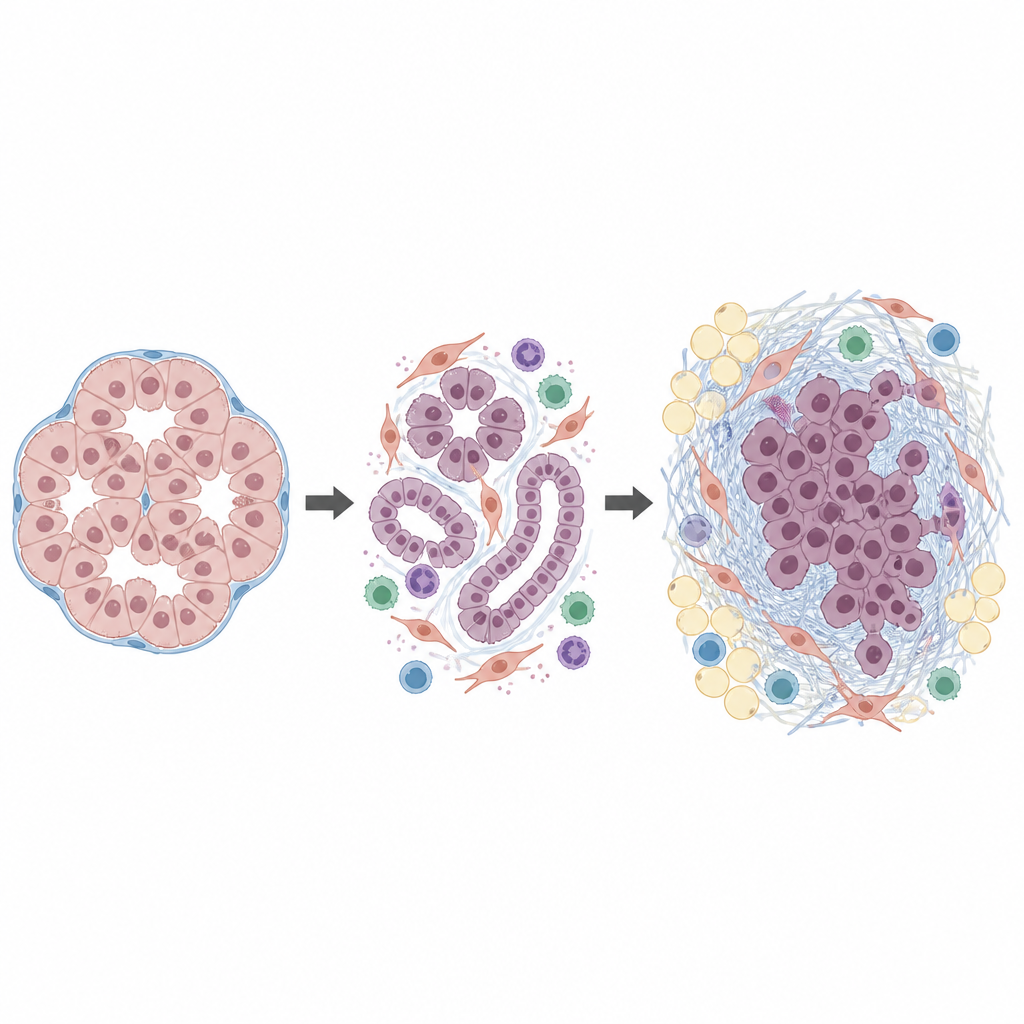
To understand what SCAP does before cancer starts, the researchers deleted SCAP in the pancreas without adding cancer-driving mutations. Here, the picture was just as striking. In young mice, the exocrine part of the pancreas, which includes the acinar cells, rapidly withered. Those enzyme-producing cells were replaced by fat deposits, scar tissue, and immune cell clusters. The overall pattern looked much like chronic pancreatitis, a long-lasting inflammation of the pancreas that is itself a risk factor for cancer. Importantly, the remaining acinar cells showed signs of acinar-to-ductal metaplasia, a change where enzyme-secreting cells begin to resemble duct cells, a known early step on the road to pre-cancerous lesions.
Hidden conversations between cell types
Single cell analyses revealed that not all pancreatic cell types responded to SCAP loss in the same way. Acinar and other exocrine cells largely shut down SCAP-driven fat programs and failed to complete normal maturation. In contrast, nearby fibroblasts and related mesenchymal cells ramped up a different fat and cholesterol program, especially through a partner protein called SREBP2. These support cells also turned on pathways linked to growth signals, energy production, and inflammation. Over time, they tended to stay in an activated, progenitor-like state that favors fibrosis and can nurture cancer cells. Immune cells, including B cells and macrophages, also accumulated and contributed to a chronic inflammatory setting.
What this means for patients and prevention
For a lay reader, the takeaway is that the pancreas needs a carefully tuned fat-making system to stay healthy. Turning this system off in the wrong cells at the wrong time can cause the organ to lose its enzyme factories, fill with fat and scar tissue, and create a neighborhood that helps cancer rather than stopping it. The work also serves as a cautionary note for therapies aimed at blocking cholesterol or fat production in the pancreas: while such strategies may look attractive on paper, they could unintentionally worsen inflammation or speed the development of harder-to-treat tumors. Understanding how SCAP and its partners differ between cell types will be essential before safely targeting these pathways in people.
Citation: Lilly, A.C., Pavlov, V.A., Pirestani, S. et al. Role of SCAP in regulation of pancreatic homeostasis, pancreatitis, and tumorigenesis. Oncogene 45, 1999–2013 (2026). https://doi.org/10.1038/s41388-026-03784-y
Keywords: pancreatic cancer, chronic pancreatitis, lipid metabolism, tumor microenvironment, SCAP SREBP signaling