Clear Sky Science · en
Trisomy 8 alters chromatin conformations and activates Y chromosome genes in stem cells to drive a pre-leukemic state
Why extra chromosomes matter for blood health
Our blood is constantly renewed by a small pool of stem cells hidden inside the bone marrow. When these cells go wrong, slow‑growing blood disorders called myelodysplastic syndromes (MDS) can appear and sometimes progress to aggressive leukemia. One puzzling clue in many patients is an extra copy of chromosome 8, a change called trisomy 8. This study asks a basic but crucial question: what does that extra chromosome actually do to stem cells, and how might it quietly set the stage for cancer, especially in men?
Building a mouse model of an extra chromosome
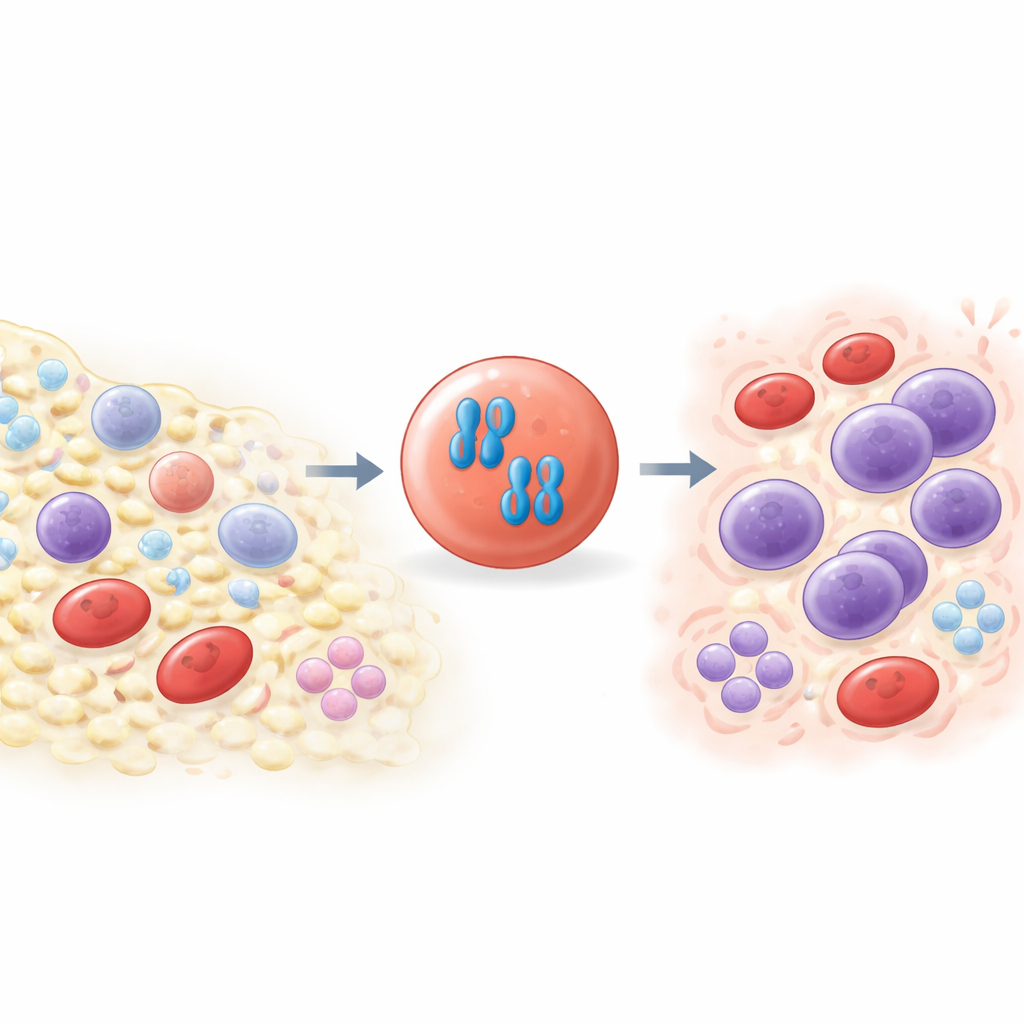
Because the genes that live on human chromosome 8 are scattered across several mouse chromosomes, the researchers used a clever workaround: they inserted an entire human chromosome 8 into mouse embryonic stem cells. These engineered cells were then used to create chimeric mice whose blood‑forming system carried trisomy 8. This allowed the team to follow the behavior of trisomy 8 stem cells alongside normal cells inside living animals, rather than only in dishes. The modified stem cells could still make all major blood cell types, but they did so less efficiently; over time, their contribution to the blood system shrank, revealing that the extra chromosome actually weakened stem cell self‑renewal instead of giving it a simple growth advantage.
From stressed stem cells to a pre‑cancerous state
To understand why these stem cells faltered, the scientists compared which genes were turned on or off in trisomy 8 cells versus normal ones. They found that genes linked to inflammation and immune responses were more active, while key programs that normally guide balanced stem cell behavior were disrupted. The cells also showed altered activity of a major gene‑silencing machine called polycomb repressive complex 2, which helps keep developmental genes in check. Together, these changes created a confused state: stem cells carried both “stem‑like” and “myeloid” signatures at once, then later failed to fully activate healthy myeloid (white blood cell) programs. In mice, this did not usually produce full‑blown MDS, but it did create a vulnerable, pre‑leukemic condition in which a few animals developed lethal blood disease.
Hidden changes in DNA folding and a surprising role for the Y chromosome
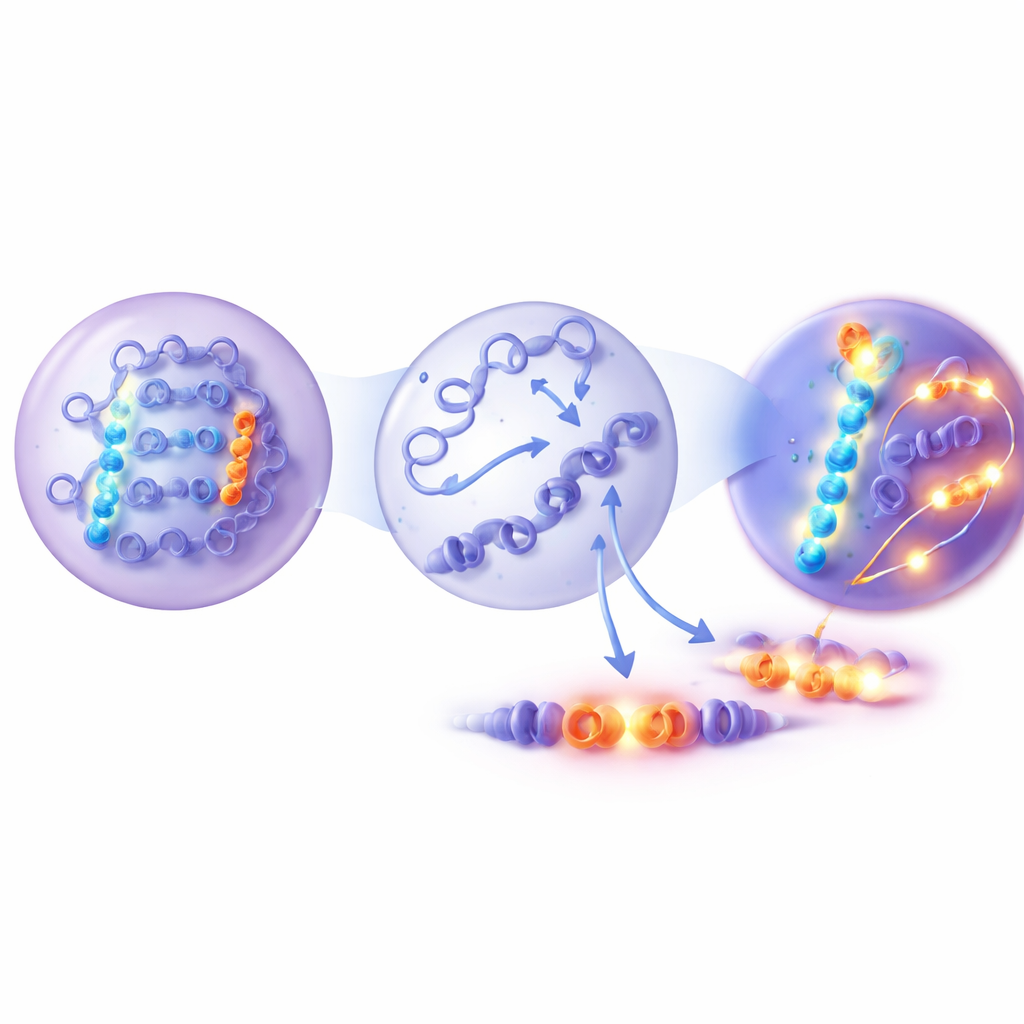
Genes do not act in isolation: they are controlled by how DNA folds inside the nucleus. Using a genome‑wide mapping technique, the team discovered that trisomy 8 reshaped this three‑dimensional folding pattern across nearly all chromosomes. Regions that became more “open” tended to host more active genes. Strikingly, a segment of the Y chromosome in male mice—containing several closely packed genes—shifted into a more active structural compartment. This change boosted the activity of Y‑linked genes, especially Uty, which encodes a protein that can remove a specific chemical tag (H3K27me3) from histone proteins and thereby loosen gene silencing. Similar structural changes and increased activity of the human UTY gene were seen in a male human leukemia cell line with trisomy 8, and higher UTY expression appeared in stem and progenitor cells from male MDS patients with trisomy 8.
How Y‑linked UTY helps drive disease
By mapping where UTY sits on DNA in human trisomy 8 leukemia cells, the researchers found that it binds near the control regions of important stem cell regulators, including RUNX1 and PU.1, and in places already marked as active by other chromatin signals. Many UTY‑bound genes overlapped with known targets of RUNX1 and of the PRC2 silencing complex. In trisomy 8 mouse stem cells and in human MDS samples, these shared targets—often involved in stem cell survival, differentiation, and cancer pathways—were more highly expressed. When the team used short hairpin RNAs to reduce UTY levels in a human trisomy 8 MDS cell line, the cells’ growth dropped sharply, even though a related gene on the X chromosome (UTX) was still present. This indicates that UTY itself, unleashed by the structural changes triggered by trisomy 8, becomes a driver of abnormal cell expansion.
Why RUNX1 mutations often join the mix
In patients, extra chromosome 8 commonly appears alongside mutations in genes such as RUNX1, an important controller of blood cell development. To probe this partnership, the scientists partially deleted Runx1 in trisomy 8 mouse stem cells using CRISPR editing and transplanted these cells into new mice. Rather than immediately causing leukemia, loss of Runx1 actually rescued some of the stem cells’ ability to persist in the bone marrow and toned down a portion of the excessive inflammatory gene activity. At the same time, gene sets controlled by UTY and stem‑cell programs became more active. The result was not full cancer, but a more competitive, pre‑malignant clone—mirroring how RUNX1 mutations may help trisomy 8 clones outcompete normal cells in human bone marrow while setting the stage for later progression.
What this means for patients and future therapies
This work paints trisomy 8 not as a simple “extra dose” of one dangerous gene but as a broad disruptor of how DNA is folded and read in blood stem cells. In male cells, these structural changes inadvertently switch on a Y‑linked regulator, UTY, which in turn helps activate networks of genes tied to stem cell survival, inflammation, and leukemia. On its own, trisomy 8 mainly weakens normal blood production and creates a smoldering, pre‑cancerous state. When combined with additional hits—such as mutations in RUNX1—it can promote the emergence of dominant, abnormal stem cell clones that resemble early MDS. By tracing this chain from extra chromosome to altered chromatin to misregulated genes, the study highlights UTY and related chromatin‑modifying pathways as potential future targets for preventing or treating trisomy 8–associated blood disorders.
Citation: Bai, J., Araki, K., Kurotaki, D. et al. Trisomy 8 alters chromatin conformations and activates Y chromosome genes in stem cells to drive a pre-leukemic state. Oncogene 45, 1675–1687 (2026). https://doi.org/10.1038/s41388-026-03763-3
Keywords: trisomy 8, myelodysplastic syndrome, blood stem cells, chromatin structure, Y chromosome genes