Clear Sky Science · en
Partial truncation of the C-terminal domain of PTCH1 in cancer promotes tumourigenesis by non-canonical activation of a GLI-PI3K loop
Why a tiny protein change matters in colon cancer
Colon cancer usually arises from a slow build-up of genetic mishaps. This study zooms in on a surprisingly small alteration in a cell-surface protein called PTCH1 and shows how trimming off part of its tail can help colon cancer cells grow faster, spread more easily, and potentially resist some existing drugs. Understanding this hidden growth switch could open the door to new, more precise treatments for a subset of patients.
A cell’s gatekeeper with a hidden side job
PTCH1 is best known as the gatekeeper of the Hedgehog pathway, a communication line cells use during development and tissue repair. In its classic role, PTCH1 keeps a partner protein, Smoothened, under control and thereby regulates a family of DNA controllers called GLI. But PTCH1 also has a long, floppy tail that hangs inside the cell, acting as a docking strip for other proteins that influence cell death, recycling of cellular components, and more. Earlier work showed that some colon, stomach and womb cancers carry mutations that chop off part of this inner tail. Those mutations did not appear to break the classic Hedgehog switch but did make cancer cells better at surviving stress, hinting that this tail segment quietly contributes to PTCH1’s tumour-suppressing role.
Engineering cancer cells to test the impact
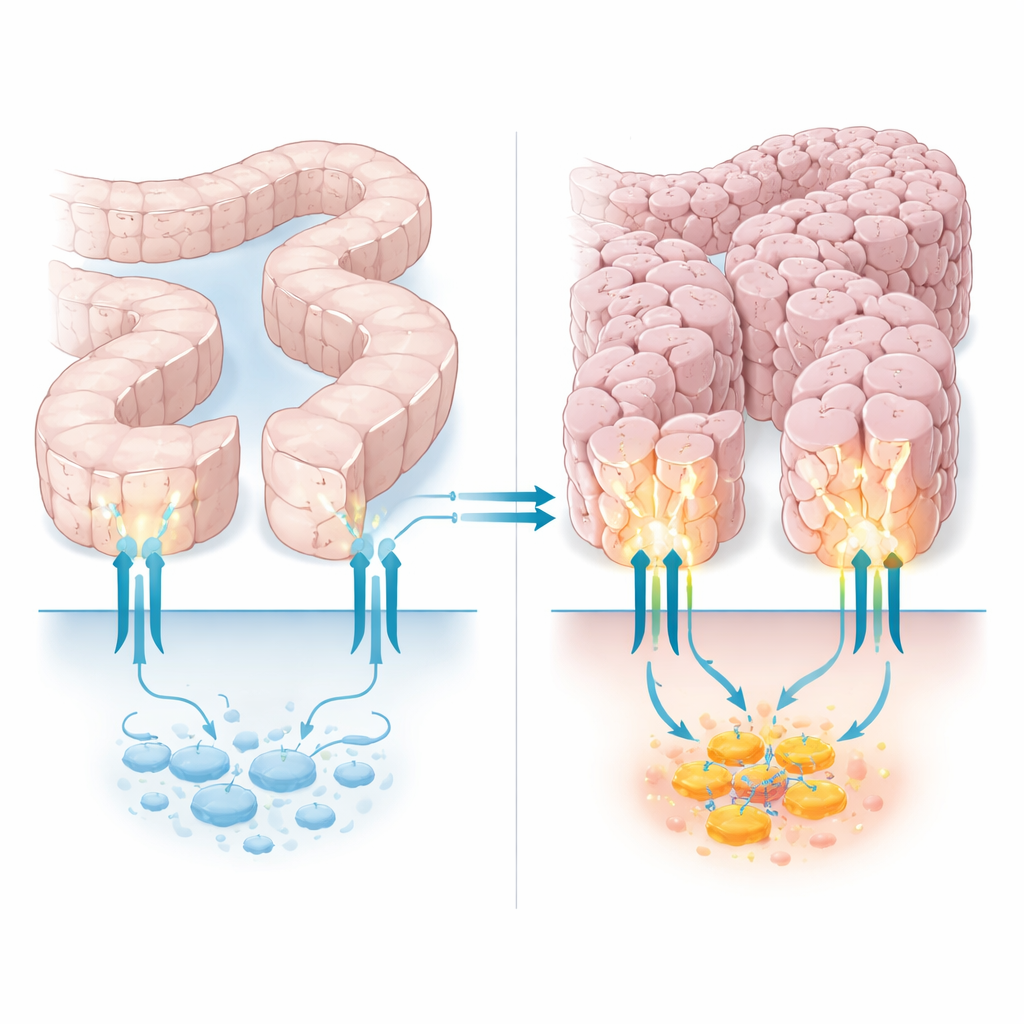
To see what these tail-shortening mutations really do, the researchers used CRISPR/Cas9 gene editing to recreate them in a colon cancer cell line. They compared two edited clones, each with a different truncation in the PTCH1 tail, to otherwise identical cells carrying normal PTCH1. The mutant cells divided faster, formed far more colonies, and thrived even when they had to grow without attachment—a behavior linked to the ability to spread in the body. When implanted into mice, the tail-mutant cells produced much larger tumors in a few weeks, with more cells caught in the act of dividing. Importantly, the edited cells still produced PTCH1 and retained its main gatekeeping function, showing that the extra aggressiveness comes from losing the tail’s specialized internal duties, not from simply removing PTCH1 altogether.
A surprising shortcut to a powerful growth switch
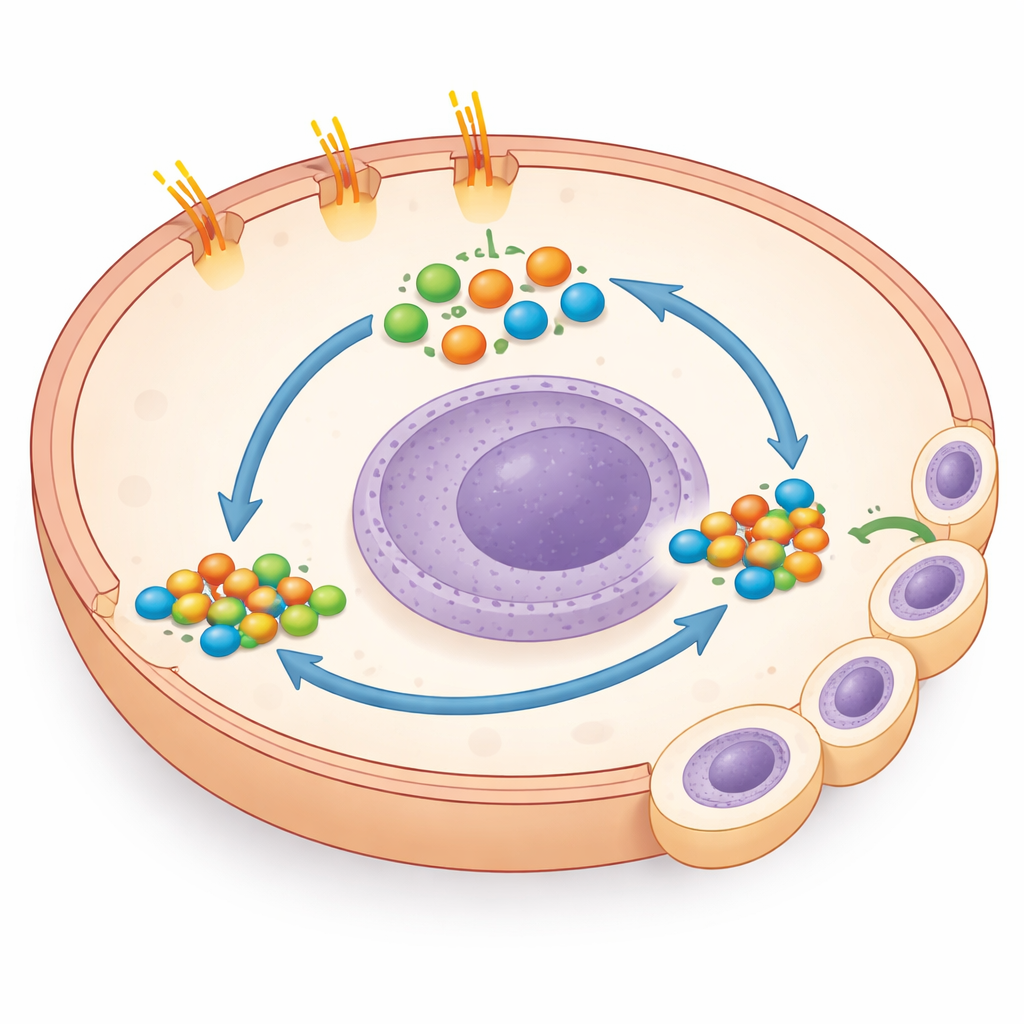
Digging into the underlying biology, the team made an unexpected discovery: the tail-truncated cells had greatly increased levels of GLI1 and GLI2, key drivers of gene programs that promote growth and survival. Normally, GLI activity rises when Smoothened is unleashed, but blocking Smoothened had no effect here. Instead, directly blocking GLI with a small molecule, or lowering GLI1 with genetic tools, sharply reduced the growth of the mutant cells in dishes and in additional colon cancer cell lines that naturally carry PTCH1 tail mutations. This showed that the tail loss activates GLI through a “non-canonical” route that bypasses the usual Hedgehog switch, and that the cancer cells become heavily dependent on this shortcut for their aggressive behavior.
Multiple growth circuits light up, but one loop dominates
By sequencing RNA from the cells, the researchers found thousands of genes whose activity changed when the PTCH1 tail was truncated. Many belonged to well-known cancer circuits, including those controlled by epidermal growth factor receptor (EGFR), Ras, and signaling systems that regulate cell metabolism and stem-like properties. The mutant cells showed increased activity of EGFR and its ligands and higher activity in two major downstream routes: the MAPK and PI3K/Akt pathways. Yet, when the scientists blocked EGFR or its MAPK branch, the mutant cells only partly slowed down. In contrast, low doses of PI3K inhibitors strongly curtailed their growth and colony formation and reduced GLI1 levels, highlighting PI3K/Akt as a critical partner in this new GLI-activating mechanism.
A self-reinforcing loop that fuels tumor growth
Further experiments revealed a feedback cycle: truncating PTCH1’s tail boosts GLI activity; GLI, in turn, helps keep PI3K/Akt signaling high; and PI3K/Akt helps stabilize and activate GLI. Disrupting either GLI or PI3K broke this loop and stripped the mutant cells of their growth advantage, whereas simply cranking up PI3K/Akt could not overcome direct GLI blockade. The cells also showed dampened activity of PKA, an enzyme that normally tags GLI proteins for inactivation, which likely further tilts the balance toward GLI-driven programs.
What this may mean for future treatment
For patients, the key message is that some colon cancers carry PTCH1 tail mutations that quietly wire a GLI–PI3K positive feedback loop, helping tumors grow and evade drugs that target the more familiar Hedgehog switch or the EGFR–MAPK route. These tumors may instead be especially vulnerable to treatments that shut down GLI directly or hit PI3K/Akt. The work suggests that sequencing PTCH1 in colon tumors—especially those from the right side of the colon, where such mutations are more frequent—could help identify patients who might benefit from PI3K or GLI-targeted strategies, turning a subtle protein trimming into a useful therapeutic clue.
Citation: Caballero-Ruiz, B., Bordone, R., Coni, S. et al. Partial truncation of the C-terminal domain of PTCH1 in cancer promotes tumourigenesis by non-canonical activation of a GLI-PI3K loop. Oncogene 45, 1013–1025 (2026). https://doi.org/10.1038/s41388-026-03698-9
Keywords: colon cancer, Hedgehog signaling, PTCH1 mutations, GLI transcription factors, PI3K Akt pathway