Clear Sky Science · en
Comparing affective bias modification by first- and second-generation antidepressants in male rats using a translational behavioural task
Why this research matters
Many people with depression notice that the world seems tilted toward the negative: bad memories feel sharper, and good experiences do not seem to stick. This study explores how different antidepressant drugs shift that emotional tilt in the brain, using a carefully designed test in rats that mirrors how humans learn and remember positive and negative events. Understanding these hidden "biases" may help explain why some medications act faster than others and why certain drugs may work better for particular patients.
Looking at mood through thinking patterns
Instead of focusing only on outward symptoms like low mood or poor sleep, the researchers zoom in on how the brain processes emotional information. People with depression often pay more attention to upsetting events, interpret neutral situations as negative, and more readily recall bad memories. This pattern, called a negative affective bias, can trap people in a cycle where every new experience feels like more proof that things are hopeless. A growing theory suggests that antidepressants may first work by quietly shifting these mental habits toward a more balanced or positive view, even before someone notices a clear change in mood.
A rat task that mirrors human emotional choices
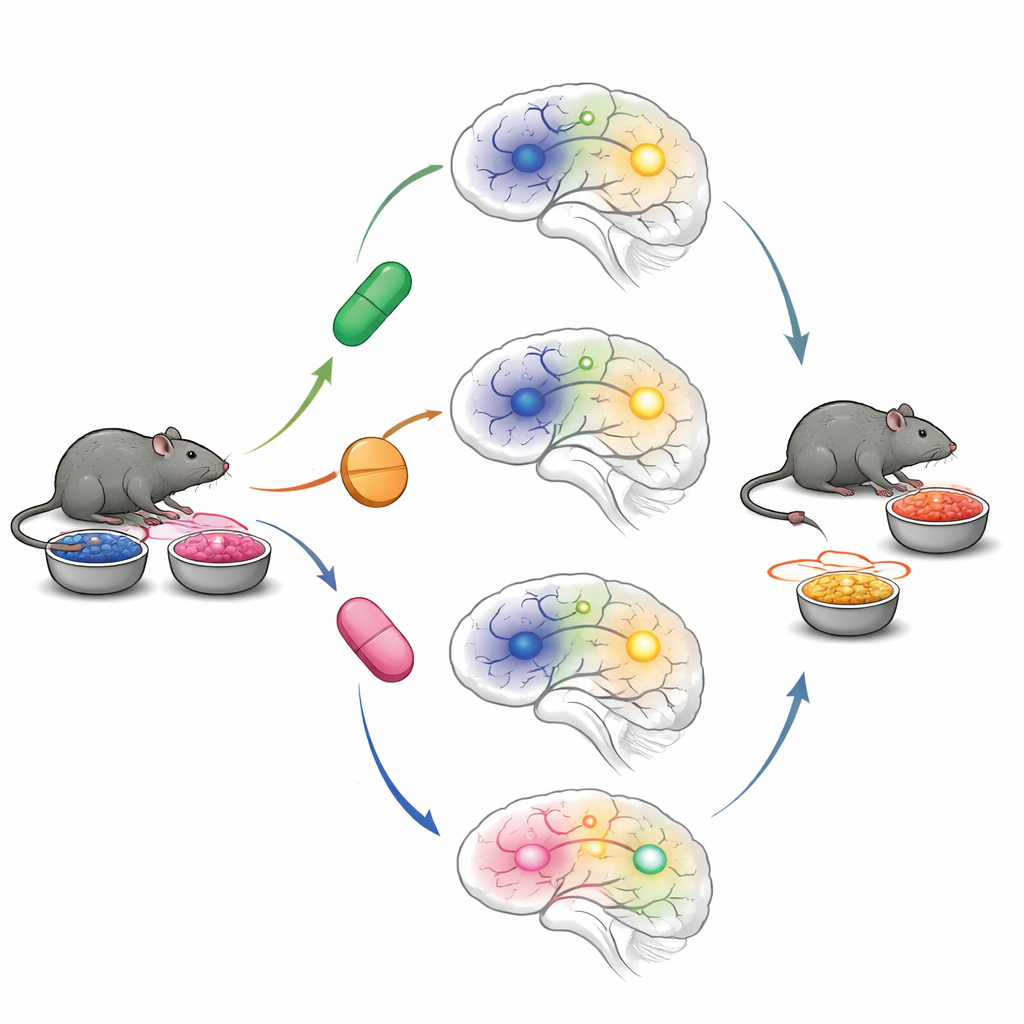
To study these hidden biases in a controlled way, the team used the Affective Bias Test, a learning task for rats inspired by human psychology experiments. Rats were trained to dig in bowls filled with different textures to find treats. By pairing certain textures with either a neutral state or a drug-altered emotional state, the researchers could later ask the rat to "choose" between two equally rewarding options and see which one it preferred. A consistent choice for one texture over the other reveals an emotional bias linked to how the memory was formed or recalled. A second task, the Reward Learning Assay, served as a control to check that any effects were truly about emotional bias, not general memory problems or sluggishness.
Comparing three common antidepressant types
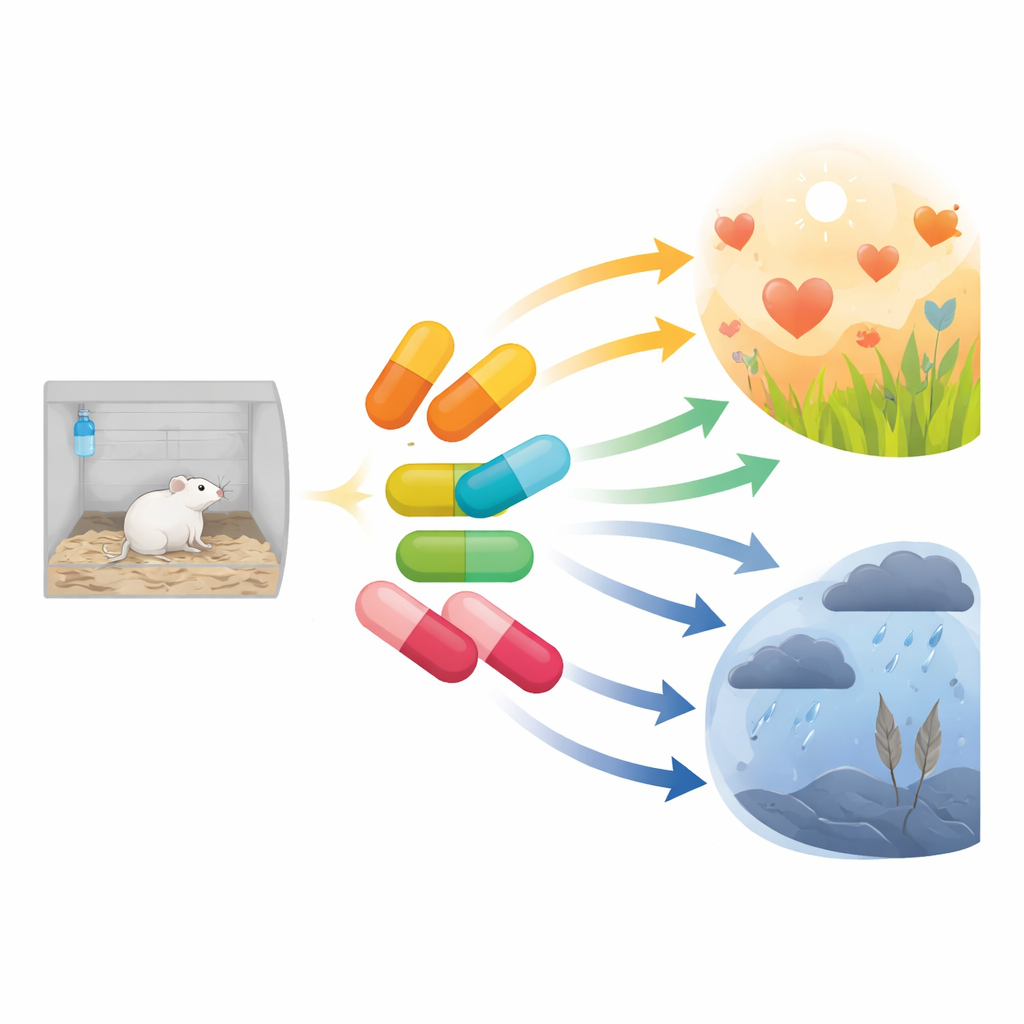
The study compared three well-known antidepressant classes: a tricyclic drug (amitriptyline), a monoamine oxidase inhibitor (moclobemide), and a selective serotonin reuptake inhibitor (sertraline). First, the team examined how these drugs influenced the formation of new reward-related memories. At certain low to moderate doses, all three drugs made rats more likely to favor the bowl linked to the drug condition, suggesting a shift toward more positive learning. However, higher doses of some drugs actually pushed the bias in a negative direction, echoing the early jittery or anxious feelings that some patients report when starting treatment.
Changing how old negative memories feel
The scientists then turned to a tougher question: can these drugs soften the emotional punch of an existing bad memory? To create a negative bias, rats first experienced reward learning under the influence of a compound that induces an anxious-like state. Later, the researchers gave antidepressants either shortly before or a day before the memory was tested. Amitriptyline and, at specific doses, sertraline reduced the animals’ tendency to favor the cue linked to the earlier negative state, both within hours and 24 hours after dosing. In other words, these drugs appeared to neutralize the pull of a bad emotional association. Moclobemide, in contrast, did not alter these already biased memories, even though it could make new learning more positive. Importantly, when the same doses were tested in the reward-only control task, none of the drugs disrupted basic learning or memory, showing that their effects were specific to emotional bias.
What this means for understanding antidepressants
For a lay reader, the key message is that not all antidepressants work on emotional thinking in the same way. Some drugs mainly make new experiences feel a bit more positive, which may help over time as a person accumulates better memories. Others, like amitriptyline and certain doses of sertraline in this study, can also dampen the grip of already negative memories, which may contribute to faster or stronger relief. These findings support the idea that the brain’s emotional filter changes early in treatment, before mood fully improves, and that drug choice and dosing matter for how that filter shifts. In the long run, mapping these subtle differences could help clinicians match medications to the cognitive-emotional needs of individual patients, potentially leading to quicker and more reliable recovery from depression.
Citation: Kamenish, K.A., Cahill, E.N. & Robinson, E.S.J. Comparing affective bias modification by first- and second-generation antidepressants in male rats using a translational behavioural task. Neuropsychopharmacol. 51, 1056–1064 (2026). https://doi.org/10.1038/s41386-026-02376-4
Keywords: affective bias, antidepressants, emotional learning, major depressive disorder, rat behavioural models