Clear Sky Science · en
Transcriptional profiles of antidepressant resistance across the corticolimbic pathway of chronically stressed mice
Why some depression treatments stop working
Treatment-resistant depression affects many people who try more than one medicine without feeling better. This study uses mice to explore why some brains stay stuck in a low mood state while others bounce back, even after the same antidepressant drugs. Understanding these hidden differences may one day help doctors match patients to treatments that are more likely to work for them.
How scientists modeled tough-to-treat depression
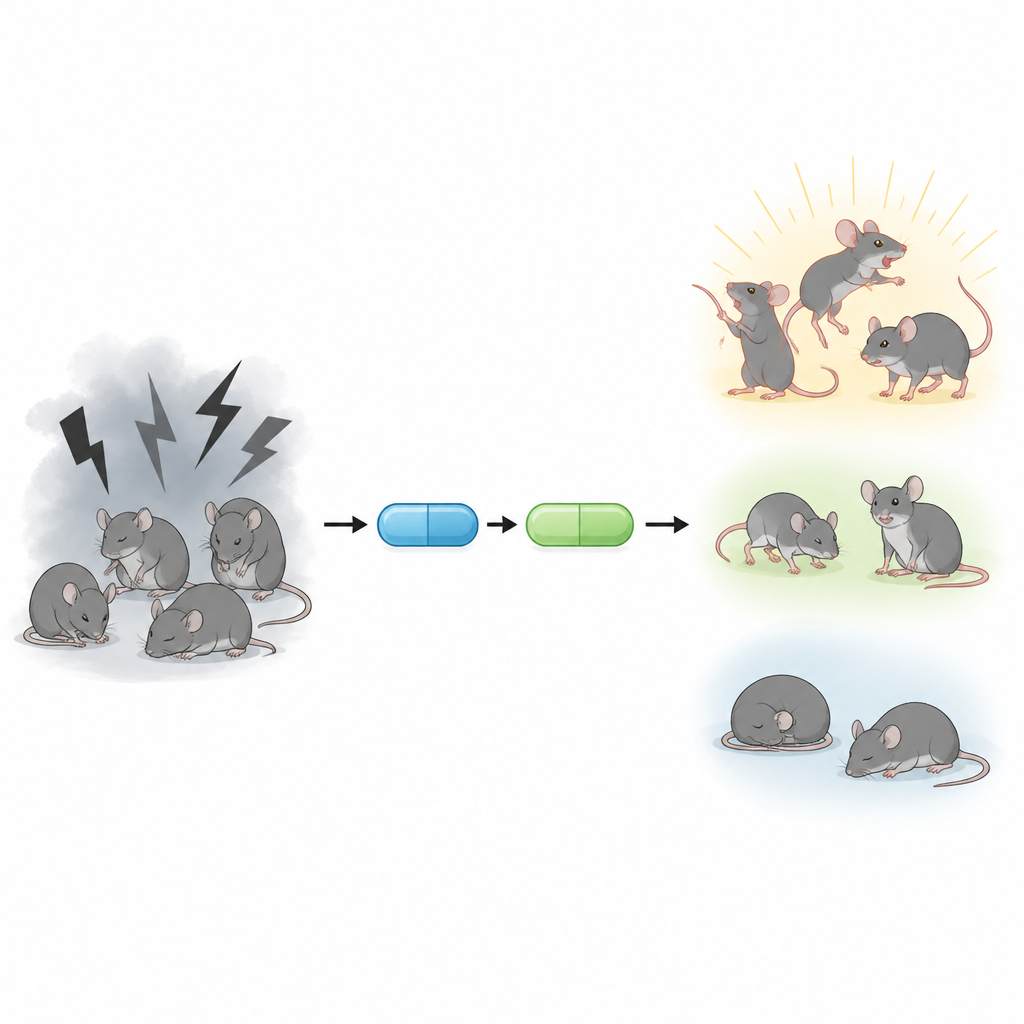
The researchers began by exposing male mice to repeated social defeat, a stressful experience that reliably produces withdrawal from other mice. Using a standard social interaction test, they labeled animals that avoided others as stress susceptible and those that remained sociable as resilient. Only the susceptible mice went on to receive antidepressant treatment, allowing the team to focus on brains that had clearly been pushed into a depression-like state.
Two-step treatment with common and fast-acting drugs
Susceptible mice were first given fluoxetine, a widely used antidepressant, in their drinking water for four weeks. About two thirds became more social and were considered fluoxetine responders, but roughly one third showed little change and were labeled non-responders. Those non-responders then received a single injection of ketamine, a fast-acting antidepressant used in difficult human cases. Strikingly, about half of these previously unhelped mice improved after ketamine, while the rest remained withdrawn, even though all had followed the same treatment schedule.
Listening in on brain cells after treatment
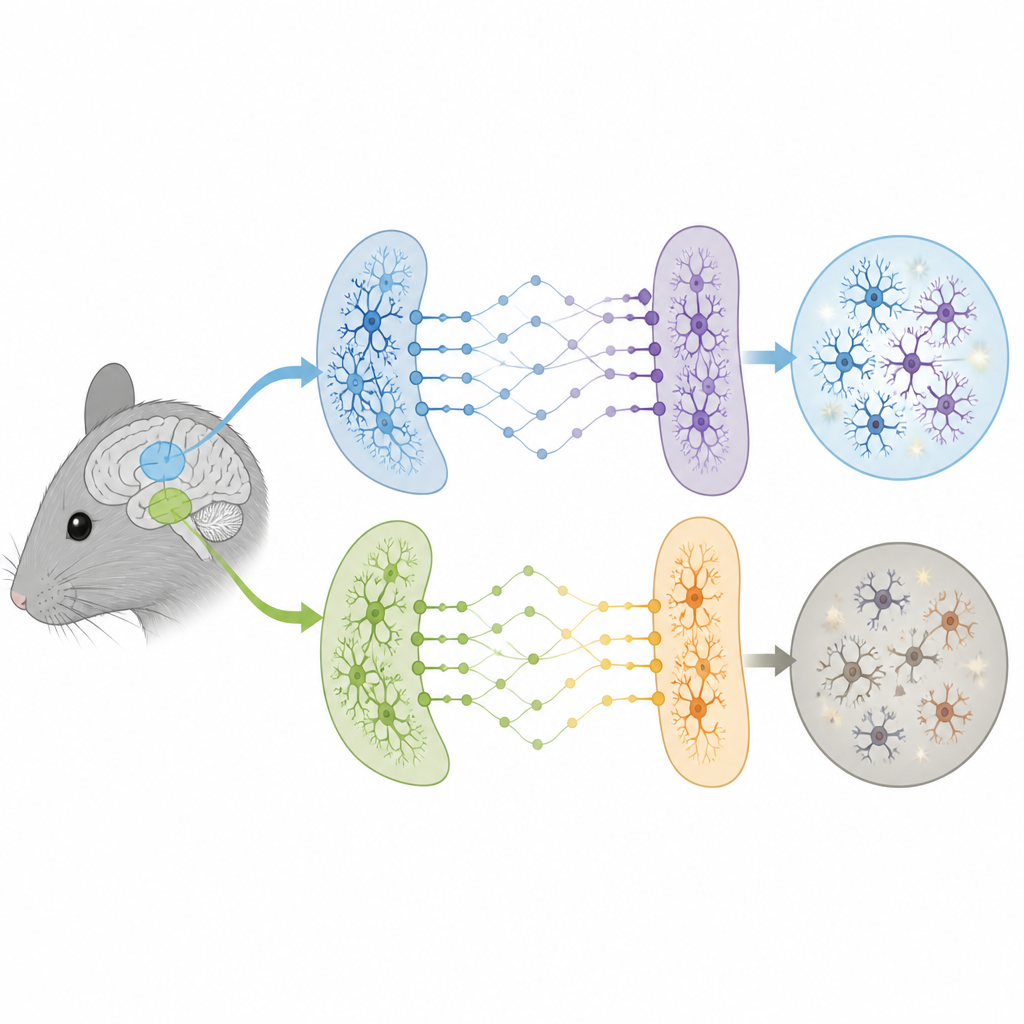
To see what differed inside these animals, the team analyzed gene activity in two brain regions tied to mood and motivation, the nucleus accumbens and the prefrontal cortex. They measured which genes were turned up or down in each treatment group. Chronic stress alone produced large shifts in gene activity. Both fluoxetine and ketamine altered these patterns, often pushing them in the opposite direction from stress, even in mice whose behavior did not improve. This suggests that drugs can strongly reshape the brain’s molecular landscape without always producing visible relief.
Distinct molecular paths to resistance and response
By grouping genes that changed together, the researchers found networks linked specifically to successful treatment or to ongoing resistance. In the prefrontal cortex, both ketamine-treated groups shared many changes, hinting that this region reacts strongly to the drug regardless of outcome. In the nucleus accumbens, however, some gene networks stayed abnormally active only in the non-responsive mice. These networks centered on genes that help nerve cells release chemical signals, pointing to possible bottlenecks in communication between brain cells that block recovery.
What this means for future depression care
Overall, the study suggests that a failed antidepressant trial does more than simply leave the brain unchanged. Prior exposure to fluoxetine, even when it did not improve behavior, seemed to prepare some mice to benefit from later ketamine, while others followed a different molecular path that kept them stuck. For people with persistent depression, this work supports the idea that resistance may arise from missing or misdirected adaptive changes in brain cells, rather than from a complete lack of drug effect, and that mapping these changes could guide more personalized and effective treatment plans in the future.
Citation: Gyles, T.M., Parise, E.M., Estill, M. et al. Transcriptional profiles of antidepressant resistance across the corticolimbic pathway of chronically stressed mice. Neuropsychopharmacol. 51, 1279–1289 (2026). https://doi.org/10.1038/s41386-026-02366-6
Keywords: treatment-resistant depression, antidepressant response, fluoxetine, ketamine, gene expression