Clear Sky Science · en
Task-guided accelerated cTBS simultaneously treats depression and social dysfunction in patients with major depressive disorder: a randomized clinical trial
Why this matters for everyday life
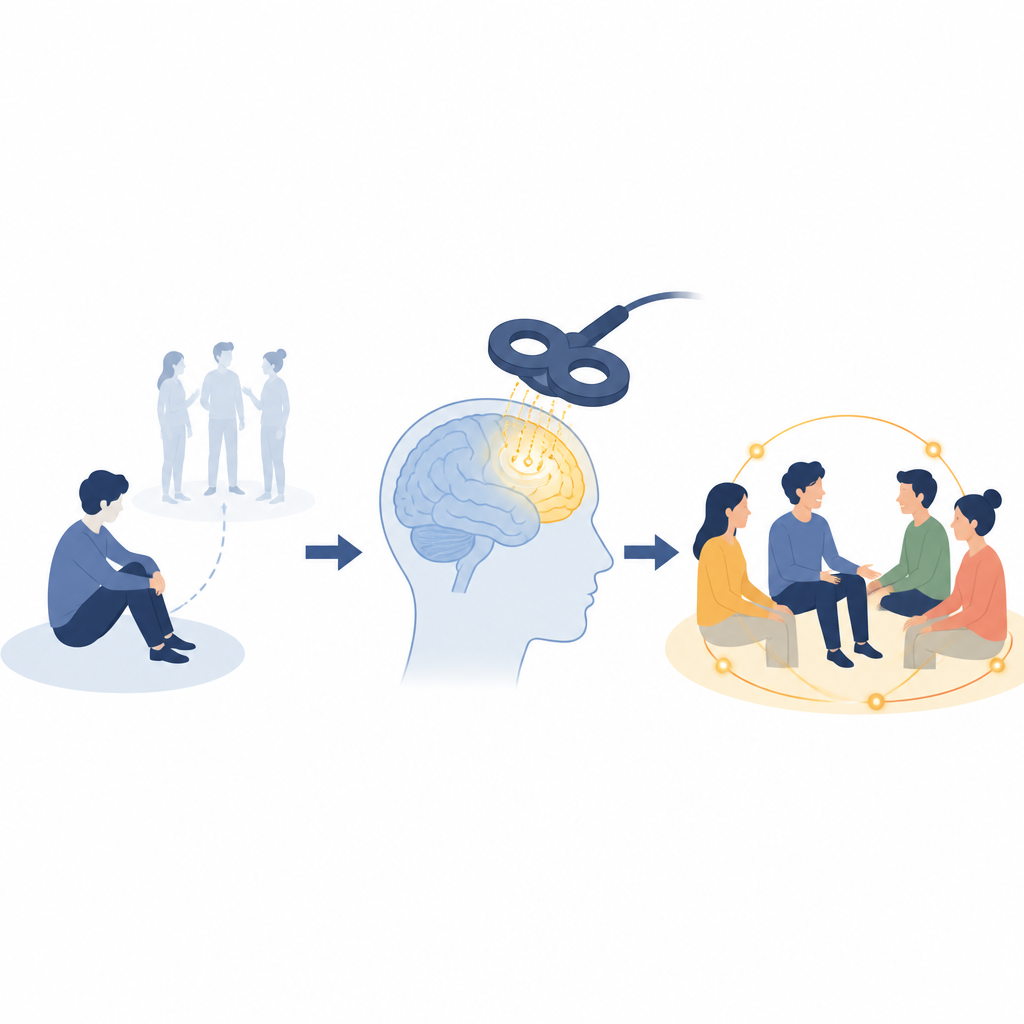
Depression is often described in terms of low mood and lost interest, but its quieter damage shows up in relationships: pulling away from friends, finding it hard to trust others, and feeling stuck in unfair situations. This study tested a brain stimulation approach designed not only to lift mood but also to help people function better in social life, using a game about fairness to guide where in the brain to stimulate.
A new way to guide brain stimulation
The researchers focused on a noninvasive method called continuous theta burst stimulation, a rapid form of magnetic stimulation applied to the scalp. Instead of using the same preset spot on everyone’s head, they tailored the target for each patient in the right side of the frontal lobe, an area involved in controlling behavior and judging fairness. To find the best spot, patients lay in an MRI scanner and played the Ultimatum Game, where they could accept or reject fair or unfair money offers. The brain area that lit up most strongly when facing unfair offers was chosen as that person’s stimulation target.
How the trial was carried out
Seventy adults with major depression, none currently on antidepressant or antipsychotic medication, were randomly assigned to receive either real or sham (placebo) stimulation over two weeks. Both groups came to the clinic for ten weekdays and received three short sessions per day, but in the sham group the coil produced the same clicking sound without delivering a real magnetic field. Neither the patients nor the staff assessing them knew who was in which group. Before and after treatment, the team measured depression and anxiety, overall daily functioning, behavior in the fairness game, and brain activity and communication among key regions that process social information.
Improvements in mood and social behavior
Compared with the sham group, people who received real stimulation showed a much larger drop in depression and anxiety scores and a greater rise in general functioning after two weeks. Nearly two thirds of them showed a strong clinical response in depression ratings, and about two in five reached remission, rates higher than those seen with many standard, longer treatment courses. In the fairness game, the real-stimulation group became more willing to accept offers, including unfair ones, and a modeling analysis showed that they updated their expectations about fairness more quickly, suggesting more flexible social learning. The sham group changed little or even worsened on this learning measure.
What changed inside the brain
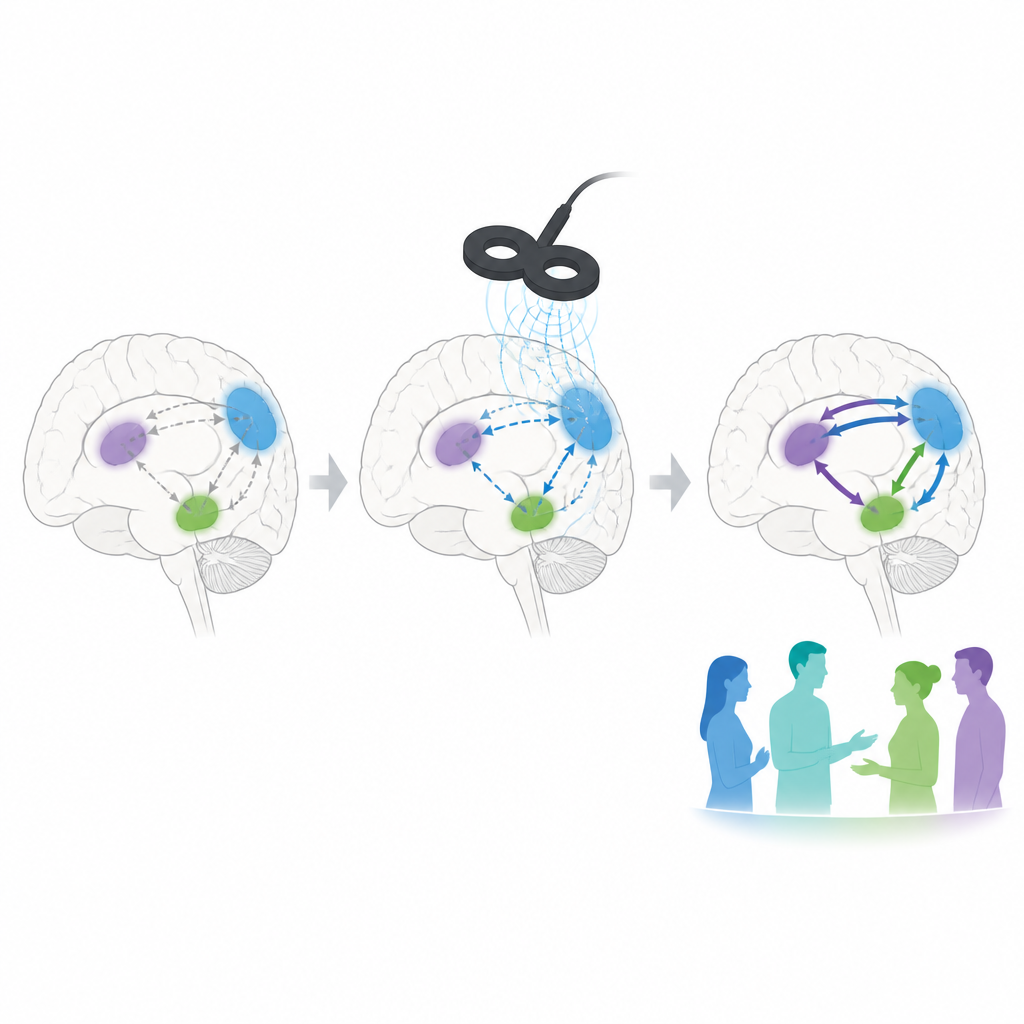
Brain scans during the game showed that stimulation influenced how several regions talked to each other, especially the targeted right frontal area, the insula, and a midline region called the anterior cingulate cortex. After treatment, the pathway from the right insula, which helps detect important emotional and social signals, to the right frontal control area strengthened in the active group but not in the sham group. Another pathway between the anterior cingulate and the left insula stayed stable with real stimulation while weakening with sham treatment. These shifts suggest that the therapy may work by supporting healthier communication in networks that link feeling, thinking, and decisions about fairness.
What this could mean for people with depression
To a lay reader, the bottom line is that a brief, precisely aimed brain stimulation course helped people with depression feel better, worry less, and handle social situations more adaptively, with few side effects. By using a simple fairness game to locate each person’s most relevant brain spot, the approach tried to match treatment to the individual’s social decision circuits. Although longer follow up and broader testing are still needed, the study points toward future treatments that address not only how depressed people feel, but also how they connect, cooperate, and rebuild their lives with others.
Citation: Jin, J., Wang, Y., Wang, P. et al. Task-guided accelerated cTBS simultaneously treats depression and social dysfunction in patients with major depressive disorder: a randomized clinical trial. Neuropsychopharmacol. 51, 1290–1299 (2026). https://doi.org/10.1038/s41386-026-02365-7
Keywords: major depression, brain stimulation, social functioning, ultimatum game, theta burst stimulation