Clear Sky Science · en
Incentive salience, not psychomotor sensitization or tolerance, drives escalation of cocaine self-administration in heterogeneous stock rats
Why some brains chase drugs harder
Why do some individuals slide into heavy drug use while others exposed to the same drug do not? This study in rats asks whether rising cocaine intake is driven more by how the body adapts to the drug itself, or by how powerfully the drug and its cues come to grab the animal’s attention and desire. The answer sheds light on early warning signs of addiction risk and suggests new ways to track motivation for drugs over time. 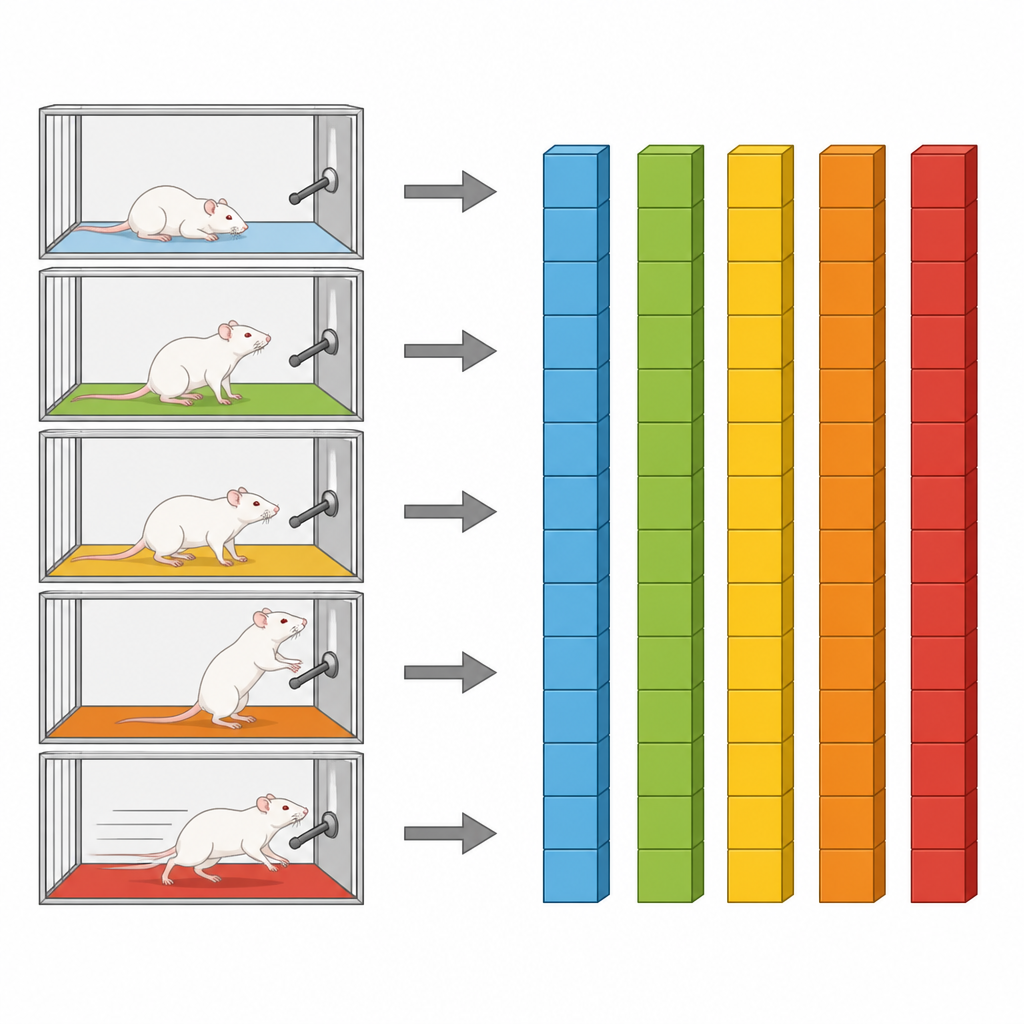
Two competing ideas about addiction
For decades, scientists have focused on two opposite-seeming changes that follow repeated drug use. One is tolerance, where the same dose has less effect, which might push people to take more. The other is sensitization, where certain drug effects grow stronger with experience, especially bursts of movement seen with stimulants like cocaine. A different line of work highlights “incentive salience,” the growing pull of drug-related sights, sounds, and places that become increasingly “wanted” even if the drug is not more pleasant. This study directly compared these forces in the same animals to see which one actually predicts a climb in cocaine use.
Watching rats before they could take cocaine
Researchers trained genetically diverse rats to press a lever for intravenous cocaine across many weeks. Some days they had short sessions and other days much longer access, mimicking casual versus extended use. The team filmed the animals and used advanced pose-tracking software to follow nose and body positions. Crucially, they measured how the rats moved in the 15 minutes before the lever appeared, when no drug could yet be earned. How much the rats roamed and how often they entered the space in front of the active lever gave a window into their eagerness and focus on drug-associated cues before any dose was taken. 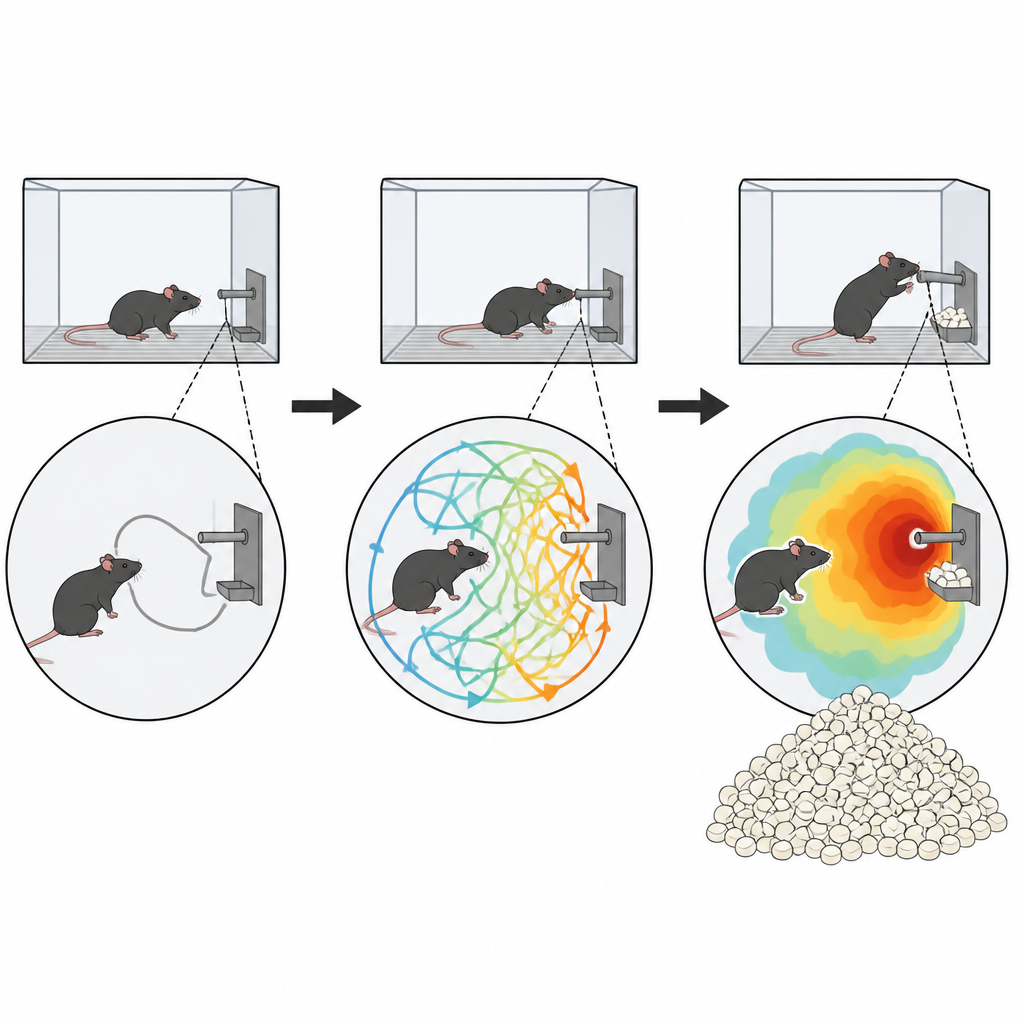
Body reactions change, but do not drive use
On separate test days, rats received a single automatic cocaine infusion while their movement was recorded. Some animals gradually moved more after these fixed doses, a sign of psychomotor sensitization, while others moved less, which looked like tolerance. Surprisingly, these differences did not predict how much cocaine the rats later self-administered, either across whole sessions or in the early “loading” phase when intake peaks. In other words, how strongly the body revved up or calmed down in response to cocaine, at least as measured by movement after a fixed injection, did not explain why some rats escalated their drug use.
Craving before the first hit tells the story
Pre-session behavior painted a very different picture. Over time, rats showed more movement before the lever appeared and made more entries into the active lever zone per meter walked. These measures rose further after two to three days without cocaine, echoing the idea that craving can “incubate” during abstinence. Early in training, animals with high pre-session activity consumed more cocaine during long-access days and also showed more seeking of the lever zone even when no lever was present. Yet rats that initially showed little pre-session interest did not stay protected. With continued exposure, their pre-session activity and cocaine intake rose until both groups reached similarly high levels of use.
What this means for understanding addiction
The findings point to incentive salience, reflected here in restless, cue-focused behavior before any drug is available, as a key driver of escalating cocaine use. In contrast, simple body-level sensitization or tolerance to the drug’s effects did not forecast who would take more. Importantly, low-risk animals could acquire strong incentive salience with enough exposure, ending up as heavy users like their initially more responsive peers. Measuring how strongly individuals are drawn toward drug-linked places or objects before use may therefore offer a practical behavioral marker of addiction vulnerability and a tool for testing treatments that aim to reduce the motivational grip of drug cues.
Citation: Ramborger, J., Mosquera, J., Brennan, M. et al. Incentive salience, not psychomotor sensitization or tolerance, drives escalation of cocaine self-administration in heterogeneous stock rats. Neuropsychopharmacol. 51, 1176–1187 (2026). https://doi.org/10.1038/s41386-026-02350-0
Keywords: cocaine self administration, incentive salience, addiction vulnerability, rat behavior, drug seeking cues