Clear Sky Science · en
Large-scale behavioral characterization of oxycodone self-administration in heterogeneous stock rats reveals initial analgesic effects are associated with addiction-like behaviors
Why pain relief and addiction risk matter
Prescription painkillers like oxycodone can be a lifeline for people in severe pain, but they also carry a serious risk: some individuals slide into compulsive use and addiction, while others do not. This study set out to understand why, using a large population of genetically diverse rats to model the many ways people respond to opioids. By tracking how much oxycodone the animals chose to take, how their pain sensitivity changed, and how hard they were willing to work for more of the drug, the researchers uncovered patterns that may mirror human vulnerability and resilience to opioid use disorder.
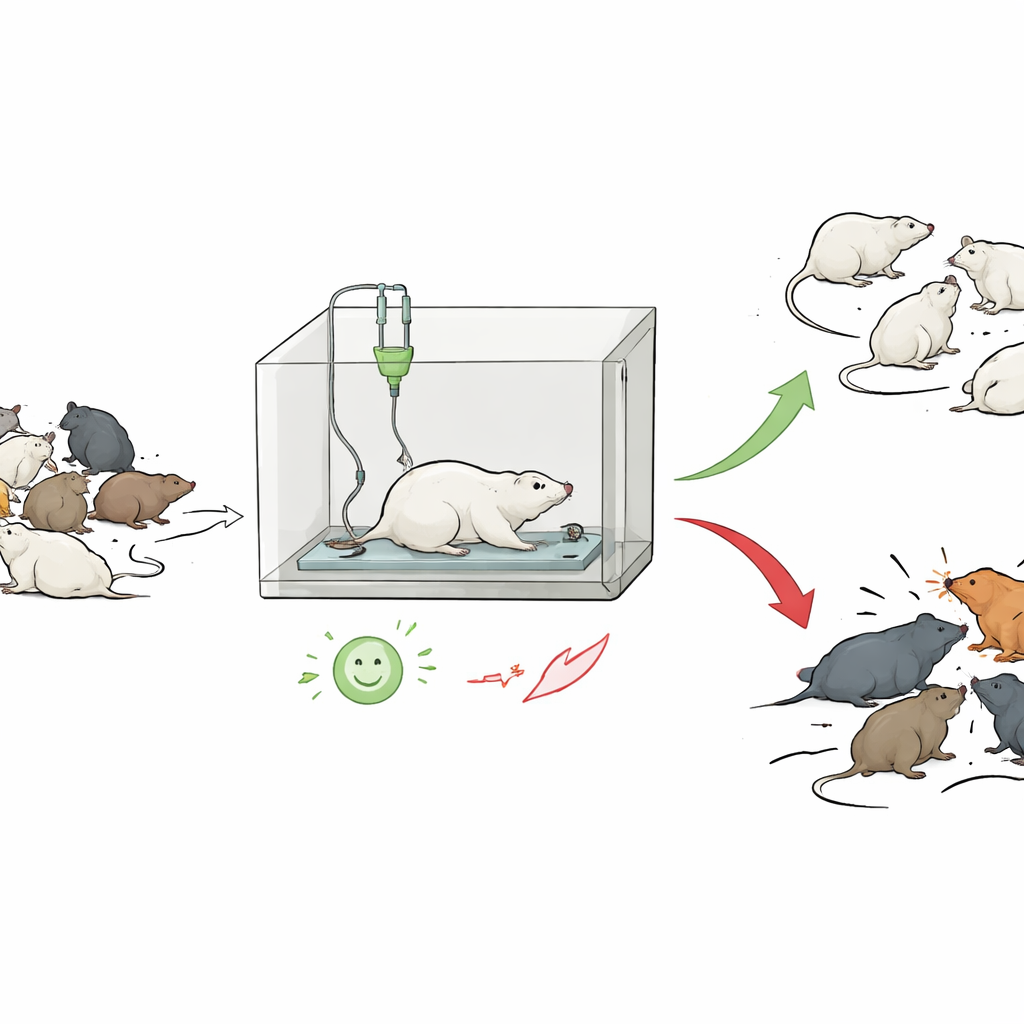
Many different rats, many different responses
The team worked with more than 500 “heterogeneous stock” rats, a population bred to contain a wide mix of genetic backgrounds, much like a human population. Each rat was given access to intravenous oxycodone in a controlled chamber where pressing a lever delivered a dose. At first, access was limited to short daily sessions, and then expanded to long sessions that more closely mimic heavy real-world use. This setup allowed the animals to freely choose how much drug to take, revealing enormous differences from one rat to another: some kept intake low and steady, while others rapidly ramped up their consumption.
Measuring craving, pain relief, and pain rebound
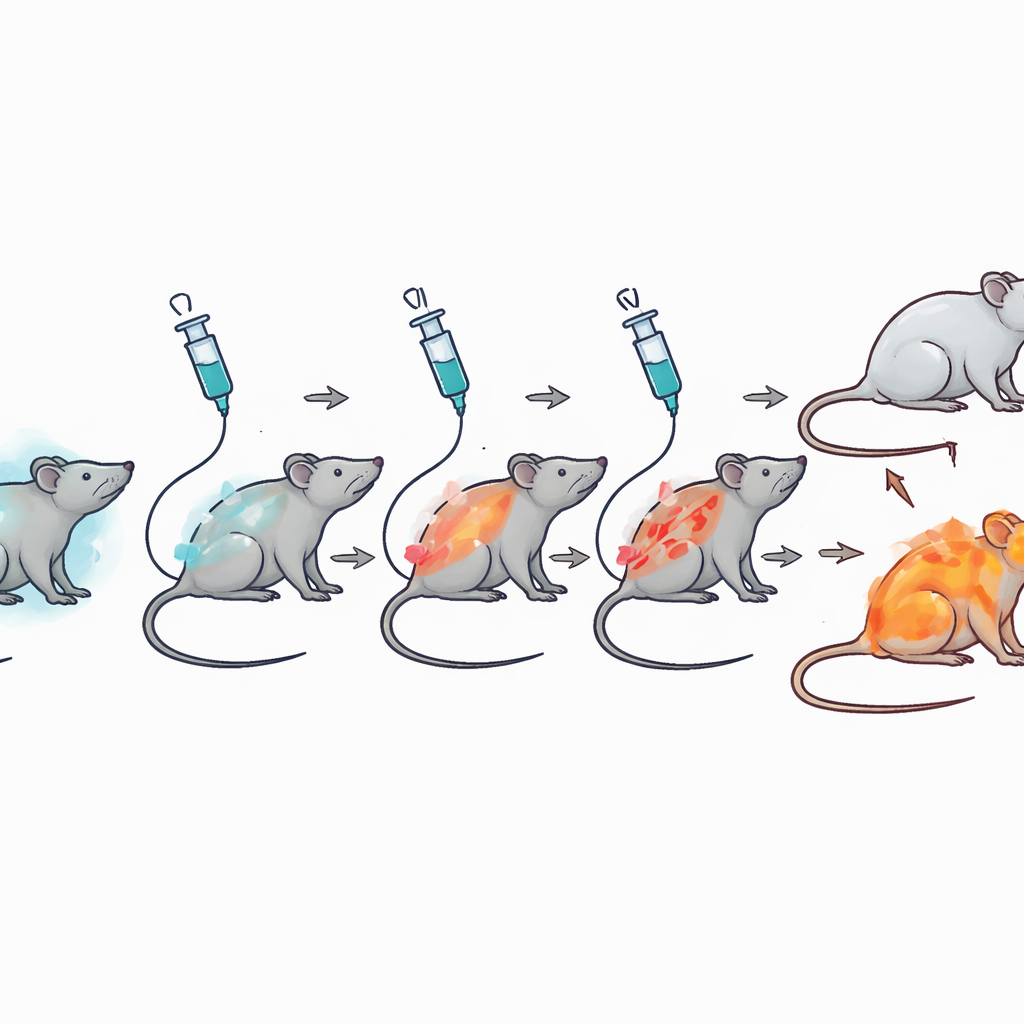
To capture the full picture of addiction-like behavior, the scientists went beyond counting doses. They measured how motivated each rat was to obtain oxycodone by gradually increasing the number of lever presses required for each infusion and seeing when the animal gave up. They also tested how strongly oxycodone reduced pain, using standard laboratory measures of sensitivity to heat and mechanical pressure, and then checked whether repeated use led to tolerance (weaker pain relief from the same dose) and to withdrawal-induced hyperalgesia, a rebound state where ordinary sensations feel more painful during early abstinence. Together, these measures linked drug taking, relief of discomfort, and the unpleasant aftereffects of stopping.
Building a single score of addiction risk
Because each animal was tested in multiple ways, the researchers created an “Addiction Index” that combined four traits: escalation of intake, willingness to work for the drug, development of tolerance, and withdrawal-driven pain. They carefully adjusted the data to remove technical differences between testing batches so that what remained reflected true biological variation. When rats were ranked by this index, they naturally fell into four groups: resilient, mild, moderate, and severe. Animals in the severe group took more oxycodone, were more willing to work for it, developed stronger tolerance, and showed more intense withdrawal pain than resilient animals, who maintained low use and showed little or no worsening of pain.
Sex differences and clues from early pain relief
Females and males started out similar during brief access, but once long access was allowed, females, on average, escalated their intake further and were more motivated to obtain the drug. However, sex explained only a small portion of the overall variation, meaning that individual differences within each sex were much larger than the average difference between sexes. One striking observation was that rats that would later develop the most severe addiction-like pattern initially experienced stronger pain relief from oxycodone. This early sensitivity was statistically linked to vulnerability, but only weakly; it raised risk without sealing fate, suggesting that many other biological and behavioral factors shape the path to compulsive use.
What this means for understanding opioid addiction
By systematically tracking how genetically varied rats use oxycodone, how their pain changes, and how they respond during withdrawal, this work shows that addiction-like behavior is not a single trait but a syndrome made up of both compulsive drug seeking and physical dependence. The finding that higher initial pain relief is associated with greater eventual vulnerability, yet accounts for only a small share of the risk, mirrors the complexity seen in people who take opioids for pain. Most importantly, because these animals are well suited for genetic analysis, the study lays the groundwork for pinpointing specific gene variants and biological pathways that make some individuals more resilient and others more vulnerable, ultimately guiding more personalized and safer use of opioid pain medications.
Citation: Kallupi, M., de Guglielmo, G., Carrette, L.L.G. et al. Large-scale behavioral characterization of oxycodone self-administration in heterogeneous stock rats reveals initial analgesic effects are associated with addiction-like behaviors. Neuropsychopharmacol. 51, 1074–1083 (2026). https://doi.org/10.1038/s41386-026-02348-8
Keywords: oxycodone addiction, pain and opioids, genetic vulnerability, rat self-administration, opioid withdrawal