Clear Sky Science · en
Inactivation of NMDAR and CaMKII signaling within the prelimbic cortex blocks incubated cocaine- and sucrose-craving
Why cravings get stronger over time
Many people who quit drugs or try to cut back on sweets find that cravings can actually grow stronger the longer they stay away. This puzzling effect, called incubation of craving, raises an important question: what changes inside the brain over weeks of abstinence that makes cues like a song, a place, or the sight of dessert so hard to ignore? This study used rats to peer into a key brain region and identify molecular switches that help turn on, and temporarily turn off, these delayed surges of desire for both cocaine and sugary food. 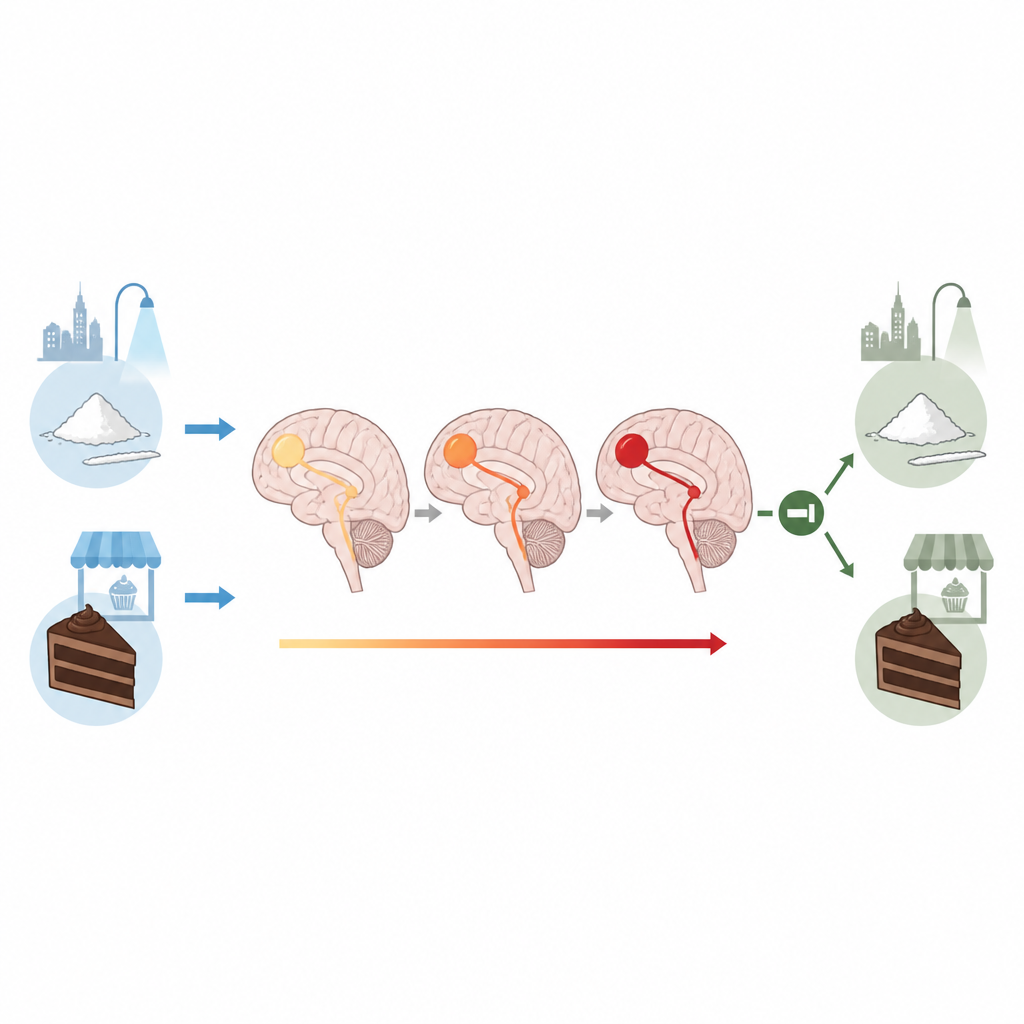
A brain hub that links cues to action
The researchers focused on the prelimbic cortex, a small part of the frontal lobe in rats that roughly parallels areas in humans involved in planning and self-control. Rats were trained either to self-administer cocaine through an intravenous line or to work for sucrose pellets, each paired with lights and sounds that became cues. After this training, the animals were kept away from cocaine or sucrose for short or long periods and then tested: pressing a lever now produced only the cue, not the reward. As in people with addiction, rats pressed the lever more vigorously after a month of abstinence than after just a day or two, showing incubated craving for both cocaine and sugar.
Molecular switches inside craving circuits
To see what was different in the brain after cravings had incubated, the team measured proteins involved in glutamate signaling, a major chemical messenger linked to learning. They studied two key players: NMDA receptors, which sit on nerve cells and sense glutamate, and CaMKII, an enzyme inside cells that acts like a memory switch once activated by calcium. For cocaine, the pattern was strikingly simple: in the prelimbic cortex of both male and female rats, the “on” form of CaMKII was higher after a month of withdrawal, matching the time when cue-driven cocaine seeking was strongest. Total NMDA receptor levels in this region, however, did not change much, suggesting that how the system was used mattered more than how many receptors were present.
Different signatures for sugar in males and females
Sucrose produced a more complicated picture. Rats still showed incubated sucrose craving, but the underlying protein changes in the frontal cortex were highly dependent on sex and on the specific subregion examined. In general, females had lower amounts of several NMDA subunits and CaMKII than males. After prolonged abstinence from sucrose, some NMDA subunits went down in certain areas in one sex but not the other, and CaMKII activity shifted in opposite directions in males and females. These patterns were clearly different from those seen with cocaine, underscoring that the brain does not treat all rewards the same way, even when the behavior on the surface looks similar.
Turning craving down with targeted blockers
Finding correlations is only half the story, so the scientists next asked whether interfering with these molecules could actually change behavior. They infused tiny amounts of an NMDA receptor blocker (D-AP5) or a CaMKII blocker (myr-AIP) directly into the prelimbic cortex just before cue tests. In rats that had gone through long withdrawal, either blocker sharply reduced incubated seeking for both cocaine and sucrose, without noticeably affecting behavior in control conditions. Combining both blockers produced an even stronger and slightly longer lasting reduction in cocaine seeking, hinting that CaMKII can be driven by NMDA receptors and by other calcium sources as well. Importantly, these treatments did not erase craving permanently; when the drugs wore off, the heightened responding returned. 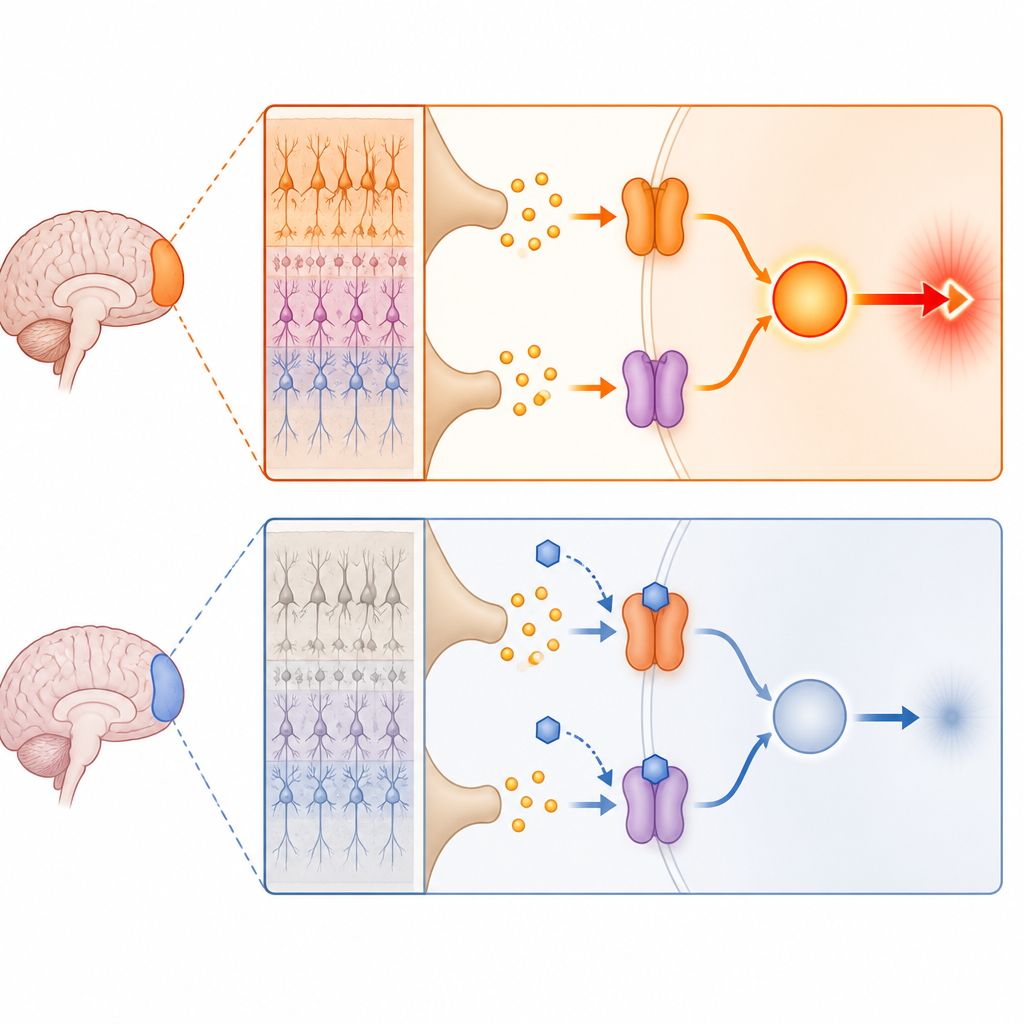
What this means for future treatments
For a lay reader, the key message is that the same small patch of frontal cortex uses related chemical switches to power delayed surges of craving for both a drug and a sweet reward, even though the detailed wiring differs for each. By dialing down NMDA receptors or CaMKII in this region, scientists could temporarily quiet these amplified cue responses in rats. While this work is still far from clinic-ready, it sharpens the search for anti-craving medications toward specific signaling pathways in prefrontal circuits that govern how powerful cues become after weeks of abstinence.
Citation: Huerta Sanchez, L.L., Siao, N.M., Chaudhari, S.R. et al. Inactivation of NMDAR and CaMKII signaling within the prelimbic cortex blocks incubated cocaine- and sucrose-craving. Neuropsychopharmacol. 51, 1197–1206 (2026). https://doi.org/10.1038/s41386-025-02310-0
Keywords: cocaine craving, sucrose craving, prefrontal cortex, NMDA receptor, CaMKII