Clear Sky Science · en
Cross-Platform and cross-species lipidomic profiling identifies promising biomarkers for adolescent major depressive disorder
Why Teen Depression Needs Better Tests
Depression in teenagers affects school, friendships, and family life, yet doctors still rely mostly on interviews and questionnaires to diagnose it. This study explores whether tiny fat molecules in the blood and brain can act as measurable signs of depression in adolescents. By looking at these molecules in both teens and rats, the researchers hope to move closer to simple blood tests that could support earlier and more accurate diagnosis.
Looking for Clues in Blood Fats
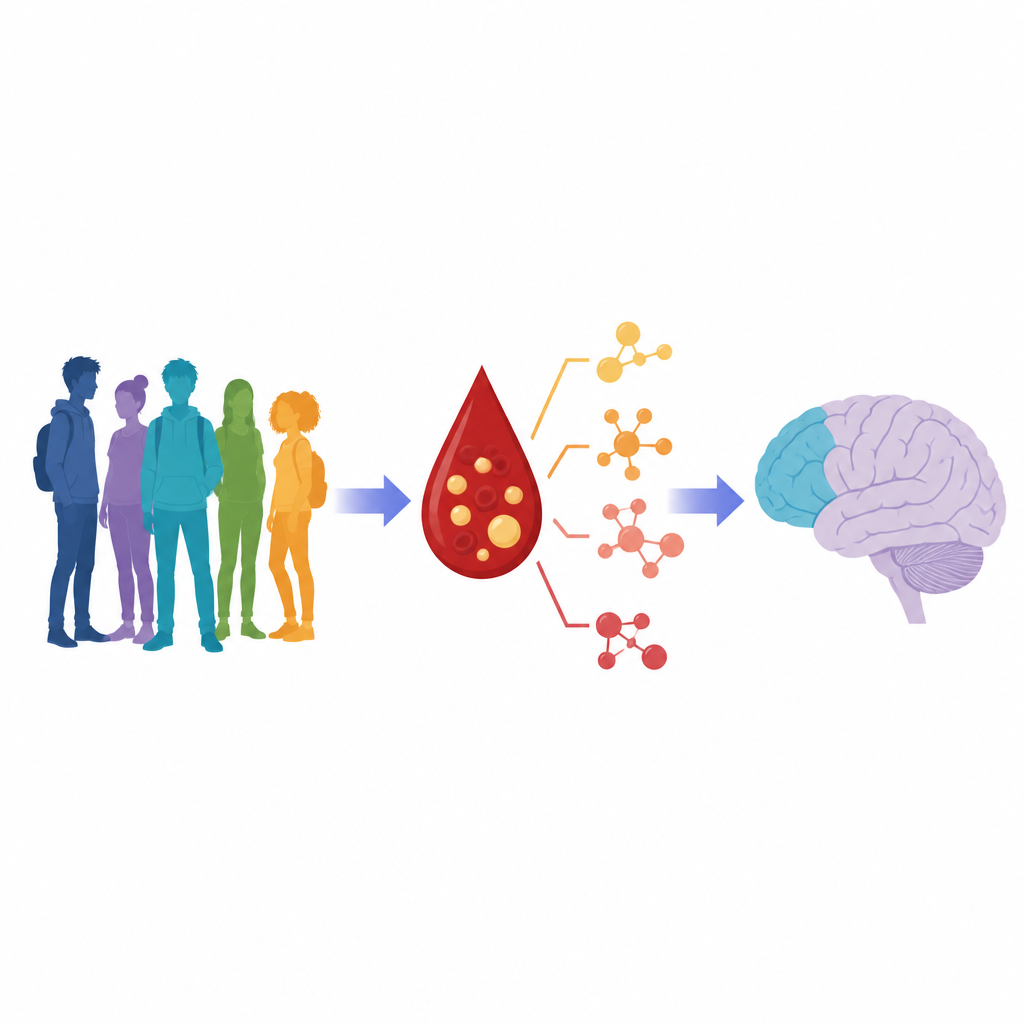
Our bodies contain many types of fats, or lipids, that help build brain cells and carry messages between them. The team collected blood samples from two groups of adolescents: one with newly diagnosed, untreated major depression and one without depression. Using advanced laboratory machines, they measured more than a thousand different lipids in the blood. They then used statistical tools to find which lipids best separated teens with depression from those without it.
A Shortlist of Lipid Signals
Out of all the measured lipids, 244 showed clear differences between depressed teens and healthy peers, especially in families of fats that help form cell membranes and send signals in the brain. From these, the researchers built smaller sets of lipids that could act as practical diagnostic panels. A panel of 29 lipids correctly classified teens as depressed or not about nine times out of ten. When the list was trimmed to only seven lipids, accuracy slightly improved, suggesting that a compact set of markers may work as well as a large one.
Testing the Findings in New Groups and in Rats
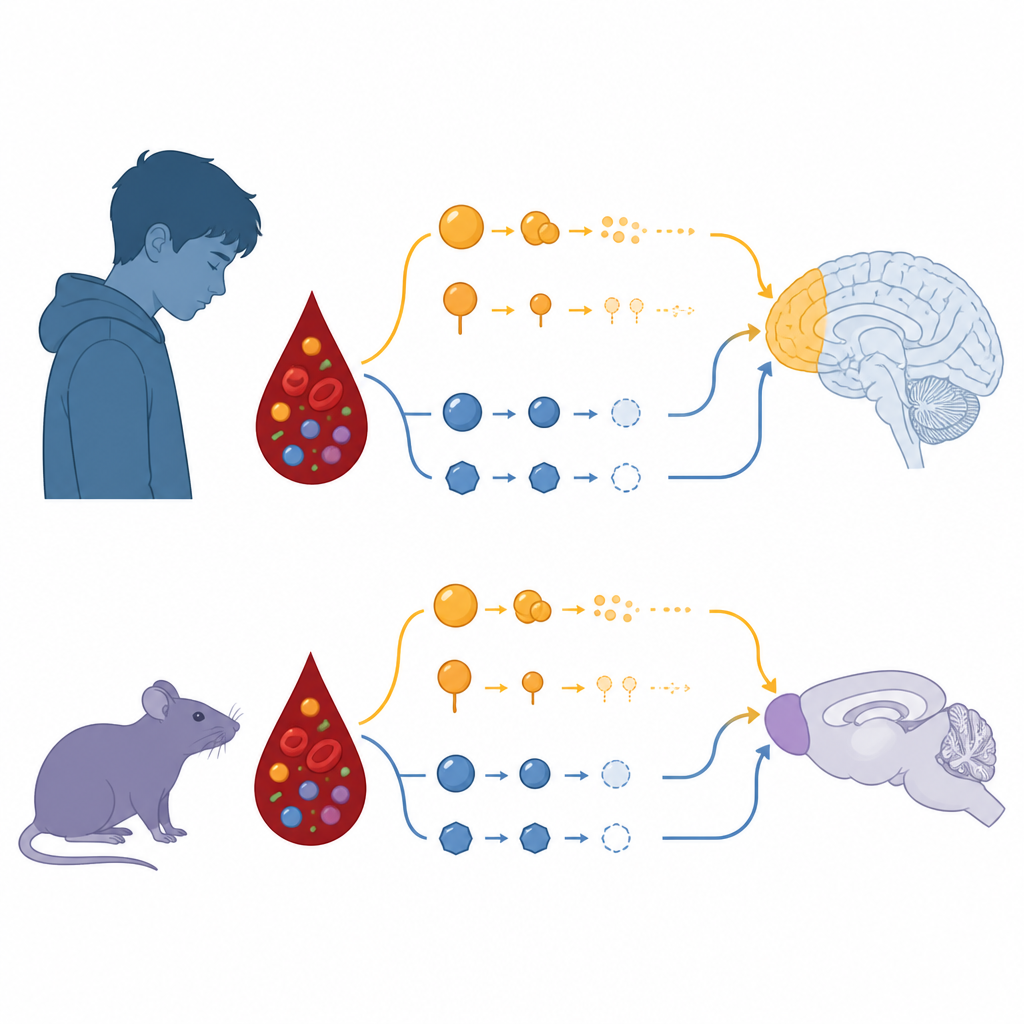
To see whether these signals would hold up beyond the original group, the scientists tested them in an independent set of adolescents using a different measuring platform. Here, a panel of eight lipids still separated depressed teens from others, though with lower accuracy. A striking result was that only two lipids together still performed reasonably well. To check if these changes were tied to the biology of depression rather than just to one group of people, the team turned to a rat model exposed to long lasting mild stress, which produced behavior similar to depression. They measured lipids in rat blood and in several brain regions, including the prefrontal cortex, a key area for mood and decision making.
Shared Changes Across Species
When they compared the teen and rat data, two lipids stood out as changing in the same direction in both species. One, named SPH(d16:1), was lower in the blood of both depressed teens and stressed rats. The other, a form of LPC(16:0), was reduced in rat prefrontal cortex and also showed changes in human blood. Both belong to lipid families involved in building and renewing cell membranes and in controlling inflammation. Pattern analysis pointed to disturbed handling of certain membrane fats and omega-3 related molecules, hinting that the balance of these lipids may be important for healthy mood during adolescence.
What This Could Mean for Future Care
To a non-specialist, these results suggest that some blood fats may mirror changes in the teen brain during depression. While this research is still at an early stage and the tests are not ready for clinics, it shows that a small set of carefully chosen lipids might help support diagnosis and shed light on how depression affects the developing brain. In the long run, such markers could contribute to more objective testing and guide research on new treatments tailored to young people.
Citation: Gao, Y., Dong, T., Baranova, A. et al. Cross-Platform and cross-species lipidomic profiling identifies promising biomarkers for adolescent major depressive disorder. Mol Psychiatry 31, 3576–3586 (2026). https://doi.org/10.1038/s41380-026-03486-7
Keywords: adolescent depression, lipid biomarkers, blood lipids, brain metabolism, lipidomics