Clear Sky Science · en
Spatial transcriptomic profiling uncovers the molecular effects of the neurotoxicant polychlorinated biphenyls (PCBs) in the brains of adult mice
Hidden chemicals and the aging brain
Polychlorinated biphenyls, or PCBs, are man‑made chemicals that linger in air, water, and soil long after their use was banned. They build up in our bodies and have been found in human brains, raising concern that everyday environmental exposure could quietly influence how our memory and thinking change with age. This study uses advanced brain mapping tools in mice to ask a simple but important question: how do realistic PCB mixtures that resemble what is found in people alter the brain’s biology and memory?
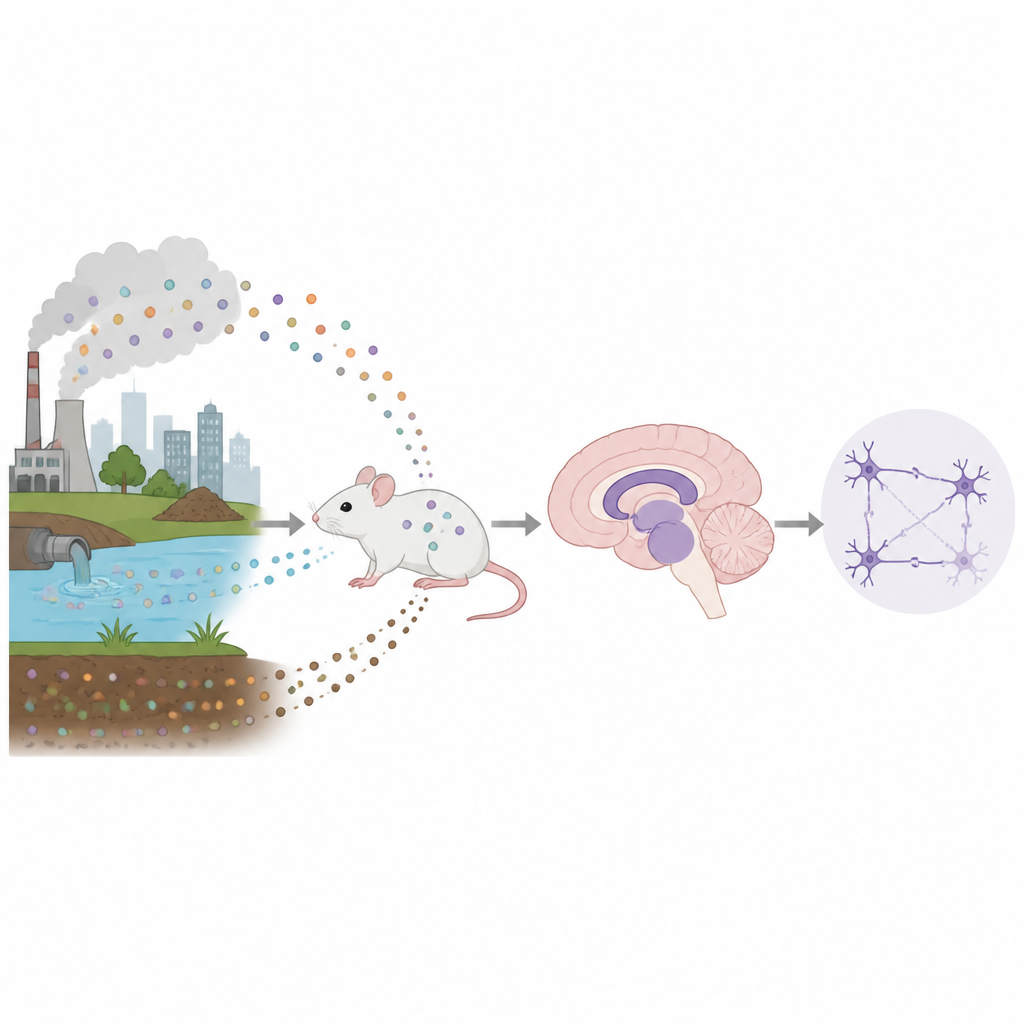
From daily exposure to memory problems
The researchers gave adult male mice a carefully designed PCB mixture that closely matched the pattern of PCBs measured in human brains. Animals received small daily doses by mouth for seven weeks, a schedule meant to mimic ongoing exposure rather than a single large hit. The team then tested the animals in a spatial object recognition task, a standard way to measure long term spatial memory that depends strongly on the hippocampus and its connections to the cortex. Both PCB exposed and control mice moved normally and showed no signs of increased anxiety, so basic activity and fear did not explain any differences. However, when one familiar object was moved to a new location a day after training, control mice clearly preferred to explore the moved object, while PCB exposed mice did not, revealing a specific deficit in long term spatial memory.
What builds up inside the brain
To see what was actually accumulating in the brain, the team measured individual PCB components using sensitive chemical analysis. They found 69 different PCB variants in the mouse brains, with a strong enrichment of heavily chlorinated forms that are known to break down slowly. Lower chlorinated PCBs were largely absent, suggesting they were more easily cleared or metabolized. The total PCB burden in the brain reached several thousand nanograms per gram of tissue, dominated by a few high chlorinated congeners that are also common in human samples. A small fraction of the mixture had “dioxin like” activity, a property used in risk assessments, but the pattern of gene changes suggested that other, non dioxin like mechanisms may be more important for the brain effects observed here.
Reading the brain’s molecular map
The heart of the study used spatial transcriptomics, a technique that measures which genes are switched on or off while preserving their precise location in the brain. One hour after the memory test, brains were collected and thin sections spanning the hippocampus and neighboring regions were placed on special slides. This allowed the team to track gene activity across five areas: the hippocampus, neocortex, thalamus, caudoputamen, and fiber tracts. Each region showed its own pattern of change after PCB exposure, with the thalamus and fiber tracts having the largest number of altered genes. Many areas showed increased activity of genes involved in building ribosomes, the cell’s protein factories, hinting at a broad shift in how brain cells manage protein production. At the same time, genes that help maintain the cell skeleton and control electrical signaling, such as those tied to potassium channels and ion pumps, were often reduced, especially in the hippocampus and thalamus.
Key genes linking pollution and memory
Because the hippocampus and neocortex are central to spatial memory and vulnerable in dementia, the researchers focused on genes that changed in these regions. They identified several memory related genes that were dialed down after PCB exposure. One, Dpysl2, helps shape and maintain the tiny spines on neurons where synapses form, and its loss in mice is known to impair spatial memory. Another, Tcf4, is crucial for synaptic plasticity and memory consolidation and was reduced specifically in the hippocampus. A third gene, Spock1, is tied to the health of the blood brain barrier, the protective wall between blood vessels and brain tissue. In contrast, a detoxification gene called Gstp1 was switched on in multiple regions, consistent with the brain sensing and trying to counteract the presence of toxic compounds. Network analysis that linked brain PCB levels to gene activity suggested that many of these changes were associated with higher chlorinated PCBs that persist in tissue.
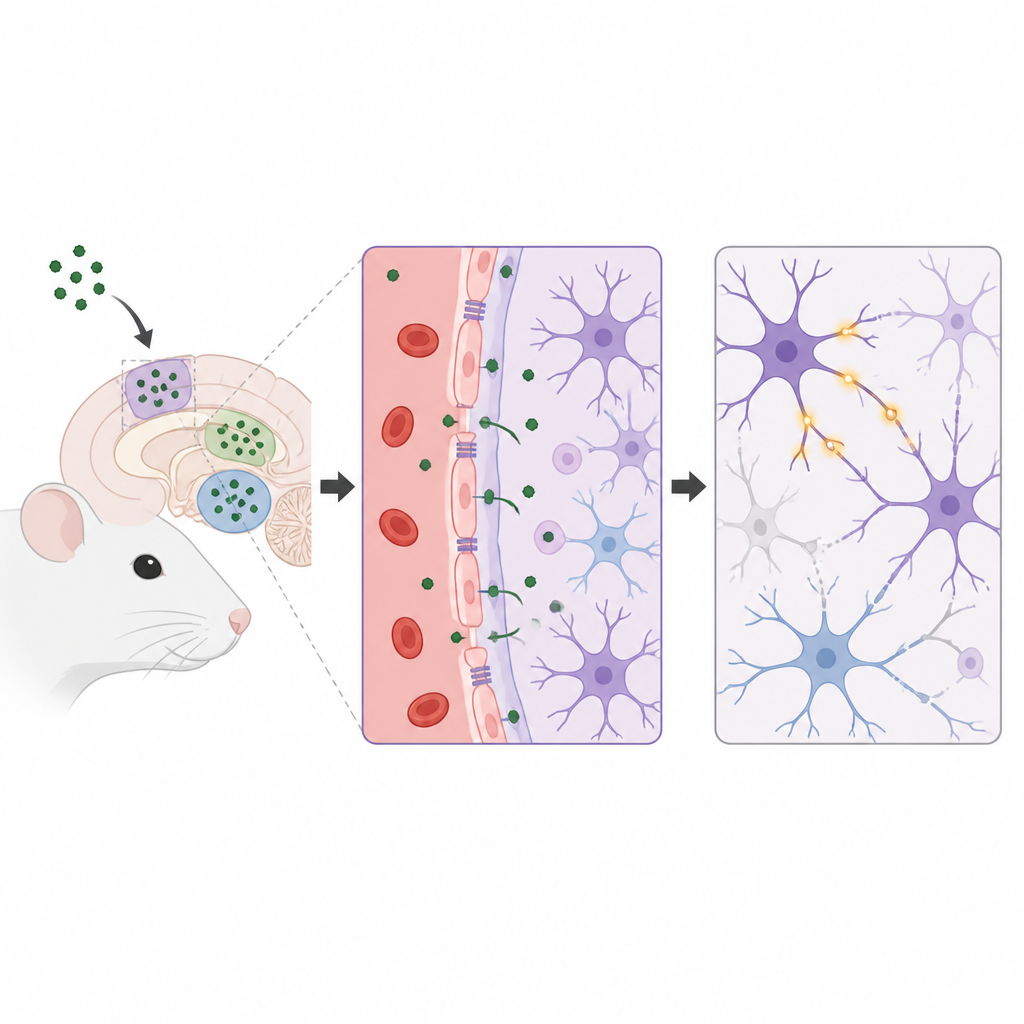
Breaching the brain’s protective wall
To test whether PCB exposure actually weakened the blood brain barrier, the team measured key tight junction proteins that help seal the barrier. In whole brain samples from PCB exposed mice, protein levels of Occludin and Afadin, two important junction components, were significantly reduced, while several other barrier proteins remained unchanged. This selective loss supports the idea that PCB mixtures can subtly erode barrier integrity, potentially allowing more harmful molecules or immune cells to enter the brain and further disturb neural circuits involved in memory.
What this means for people
Taken together, the results show that a human like PCB mixture can impair long term spatial memory in adult mice, while leaving general movement and anxiety intact. Inside the brain, persistent high chlorinated PCBs accumulate, trigger stress related detox responses, alter genes that are vital for synapses and electrical signaling, and weaken elements of the blood brain barrier. For a lay reader, the message is that long lived pollutants do not simply sit harmlessly in the environment or in our bodies; they can reshape the brain’s molecular landscape in ways that echo features of age related memory disorders, underscoring the importance of reducing exposure and better understanding how such chemicals interact with the brain over a lifetime.
Citation: Basu, B., Breese, N.M., Lombardi, S. et al. Spatial transcriptomic profiling uncovers the molecular effects of the neurotoxicant polychlorinated biphenyls (PCBs) in the brains of adult mice. Mol Psychiatry 31, 3257–3270 (2026). https://doi.org/10.1038/s41380-026-03466-x
Keywords: polychlorinated biphenyls, spatial memory, mouse brain, blood brain barrier, gene expression