Clear Sky Science · en
A genetic atlas of relationships between circulating metabolites and liability to psychiatric conditions
Why blood chemistry and the mind are linked
Many people with mental health conditions also struggle with heart disease, diabetes, and other metabolic problems. This study asks a simple but powerful question: are some of the chemicals that circulate in our blood actually tied, through our genes, to the risk of psychiatric illness? If so, those everyday molecules might help predict who is at risk and even point toward new ways to treat or prevent mental disorders.
Mapping signals in blood and brain
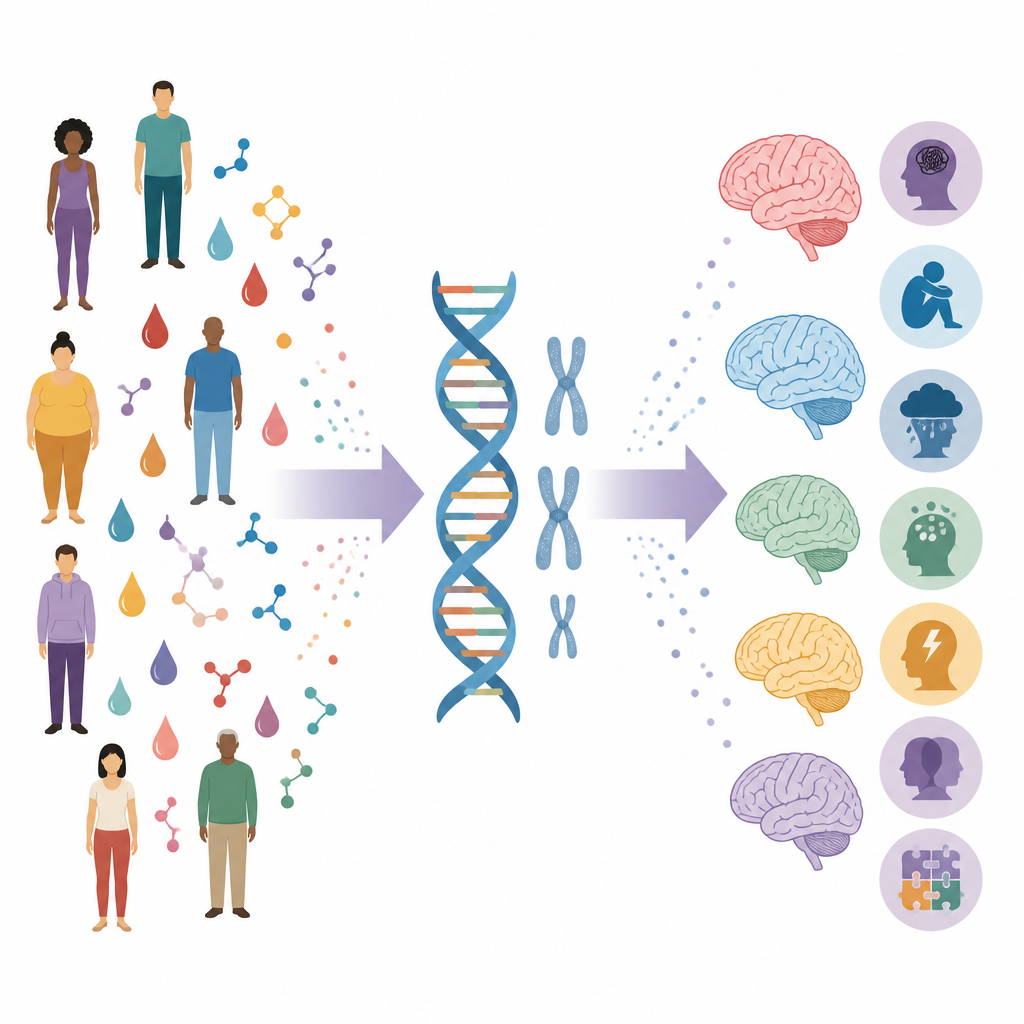
To explore this, the researchers built a large genetic map that connects blood chemistry with mental health. They drew on genome wide association studies, which scan the DNA of huge numbers of people to find genetic variants linked to traits. One set of data covered 249 different circulating metabolites, including fats, fatty acids, cholesterol carrying particles, amino acids and sugar related molecules, measured in hundreds of thousands of volunteers. Another set covered the genetic risk for ten psychiatric conditions, such as major depression, schizophrenia, bipolar disorder, post traumatic stress disorder, anorexia nervosa, attention deficit hyperactivity disorder and others. Using statistical tools, they asked where the genetic fingerprints of blood molecules and psychiatric conditions overlapped.
Patterns of shared genetic risk
The team found more than a thousand pairings in which a blood metabolite and a psychiatric condition shared common genetic influences. Many of these links involved fats and fat carrying particles in the blood, especially lipoproteins, triglycerides and fatty acids. For example, certain fat related traits tended to be genetically higher in people with depression, ADHD and post traumatic stress disorder, but lower in those with anorexia, obsessive compulsive disorder and schizophrenia. These opposite patterns suggest that different clusters of mental health conditions may sit at different points along a shared metabolic landscape.
Clues to cause, not just correlation
Finding overlap is one thing; showing that one trait may help cause another is much harder. The researchers used two advanced methods to test whether changes in specific blood metabolites might push risk for a psychiatric condition up or down, rather than simply moving in parallel. They found signs that some very specific fat features carried in the blood could influence the likelihood of major depression, post traumatic stress disorder, obsessive compulsive disorder and ADHD. The most striking signal pointed to properties of high density lipoprotein, often called the “good cholesterol” particle, that appeared to increase the risk of developing anorexia nervosa. Importantly, this pattern held even after accounting for genes related to body weight, which is closely tied to anorexia diagnoses.
Links to brain structure and shared genes
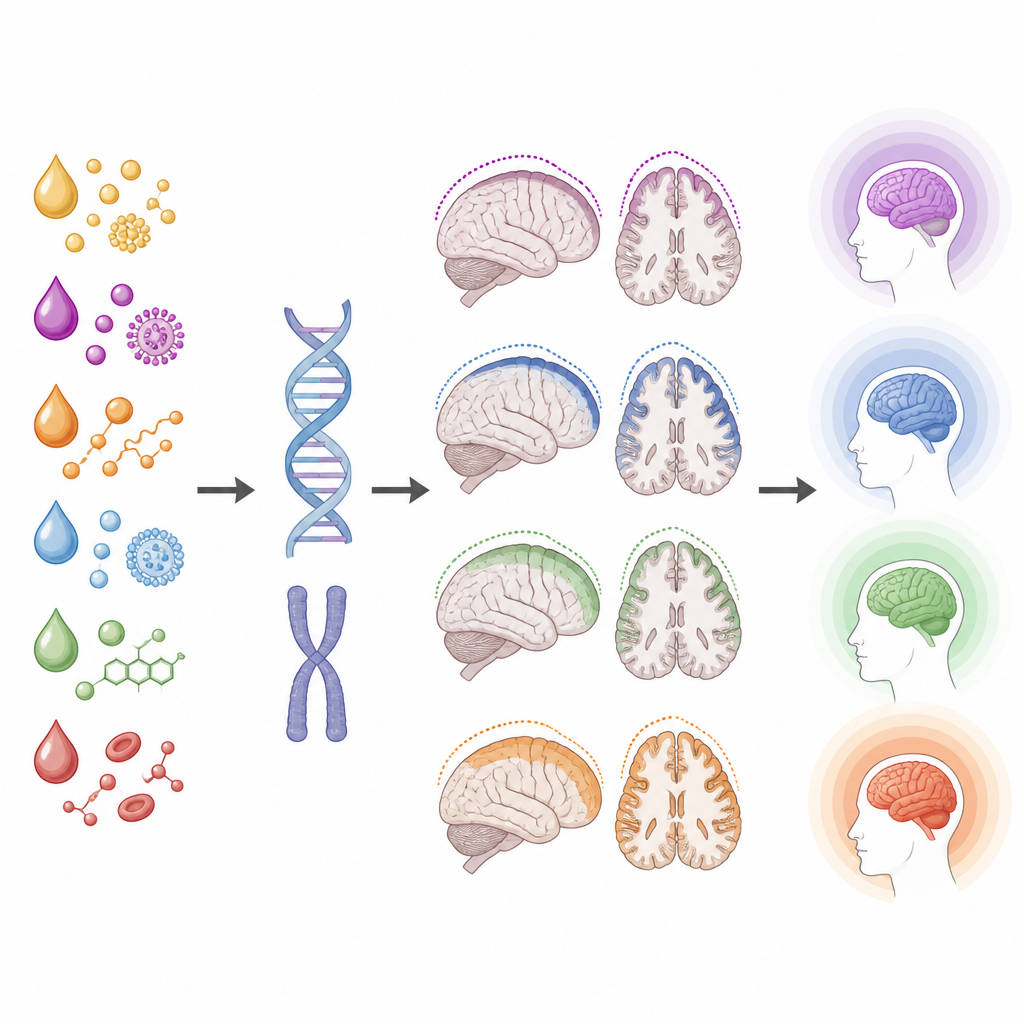
Because psychiatric conditions are also associated with subtle differences in brain anatomy, the study checked whether the same blood metabolites that showed possible causal effects on mental health were genetically tied to the thickness and surface area of the cerebral cortex. Several metabolites, including some linked to depression and ADHD, showed genetic relationships with specific brain regions. In one case, part of the connection between a fat rich blood particle and depression seemed to pass through the surface area of a region in the temporal lobe, hinting at a chain from blood chemistry to brain structure to mood. The team also zoomed in on genes that affected both blood metabolites and psychiatric conditions, revealing shared influences involved in nerve cell communication, brain development, energy use and immune function.
What this means for patients and care
For a lay reader, the key takeaway is that certain everyday molecules in the blood, especially those involved in fat transport, are not just bystanders but may be woven into the genetic fabric of mental health. The work does not prove that changing your diet or cholesterol will prevent or cure psychiatric illness, but it highlights specific blood markers that could one day help doctors flag higher risk, track illness, or tailor treatments. It also points scientists toward biological pathways where drugs that adjust blood lipids or related processes might influence conditions like anorexia, depression, PTSD, OCD and ADHD. In short, the study turns the messy overlap of heart health and mental health into a clearer map of genetic connections that future research and clinical trials can follow.
Citation: Kiltschewskij, D.J., Reay, W.R. & Cairns, M.J. A genetic atlas of relationships between circulating metabolites and liability to psychiatric conditions. Mol Psychiatry 31, 3345–3359 (2026). https://doi.org/10.1038/s41380-026-03464-z
Keywords: psychiatric genetics, blood metabolites, lipids, anorexia nervosa, major depression