Clear Sky Science · en
Translational reprogramming of dentate gyrus peptidergic circuitry gates antidepressant efficacy
Why timing matters for antidepressants
Many people who start antidepressant medications feel frustrated that mood improvements lag behind the quick chemical changes in the brain. This study looks inside a small but important brain region called the dentate gyrus to ask why benefits emerge only after weeks of treatment, and how this delay is tied to subtle changes in specific cells and signaling molecules, especially in females.
A closer look inside the brain’s mood gate
The dentate gyrus is part of the hippocampus, a structure involved in memory, emotion, and stress responses. Within this region, two main types of nerve cells, mossy cells and granule cells, work together to shape how we react to stress. The researchers focused on fluoxetine, a widely used antidepressant, and asked which of these cell types actually changes its protein-making activity during long-term treatment. They found that after two weeks of daily fluoxetine, mossy cells showed a strong rise in protein production, while neighboring granule cells did not, suggesting mossy cells are a key control point for delayed antidepressant effects. 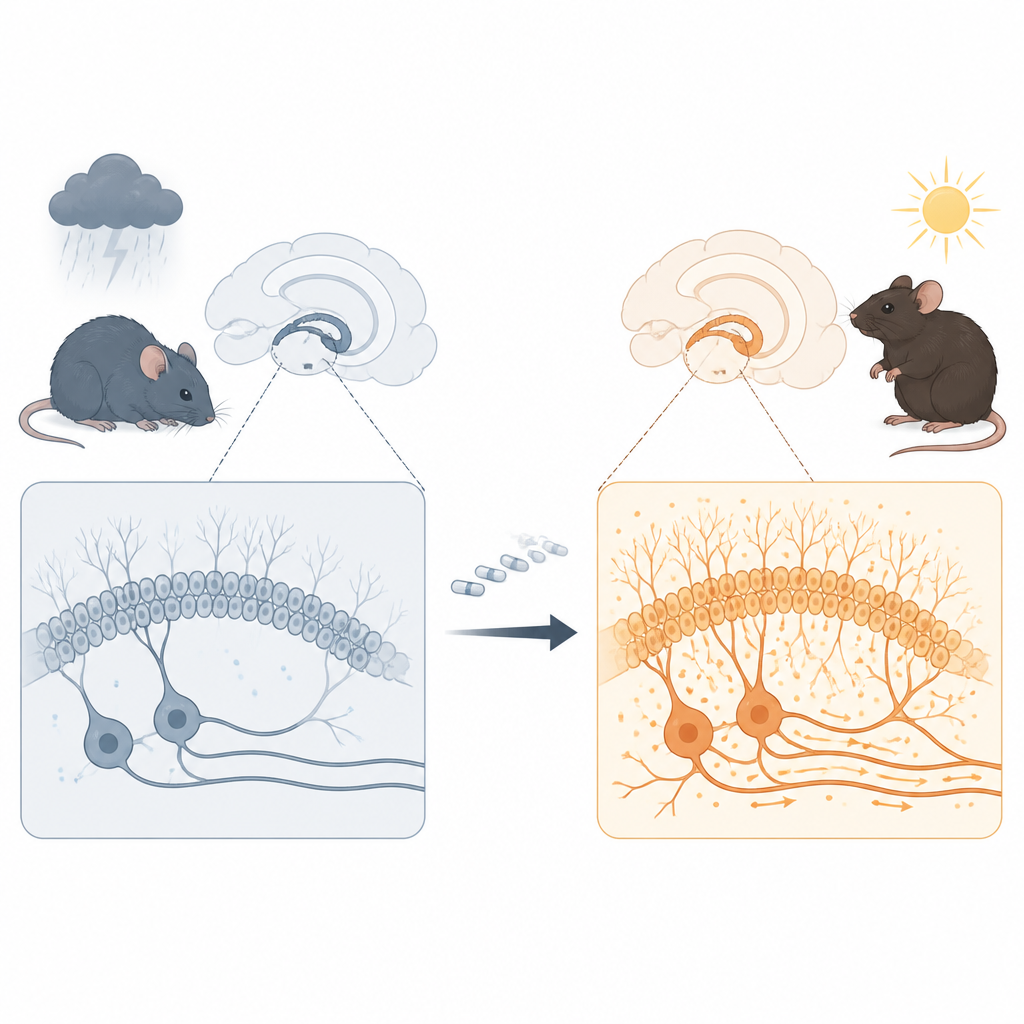
Reading the active messages inside cells
To understand what these cells were making more of, the team used a technique that pulls out only the messages currently being translated into new proteins. This allowed them to compare the active genetic programs of mossy cells and granule cells with and without fluoxetine. Even at baseline, the two cell types showed very different patterns: mossy cells were specialized for sending and receiving chemical messages, while granule cells were more enriched for genes linked to growth and metabolism. After chronic fluoxetine, both cell types changed, but in strikingly different ways, revealing that the drug does not act as a broad switch, but instead rewires each cell population in its own way.
Neuropeptide signals as hidden messengers
One of the most important shifts involved small protein messengers called neuropeptides, which fine-tune how brain circuits respond to stress. Fluoxetine boosted the translation of several neuropeptides in mossy cells, and adjusted the abundance of their matching receptors on both mossy and granule cells. Among these, a peptide called PACAP stood out. Its genetic blueprint was already concentrated in mossy cells, and long-term fluoxetine increased its translation into protein without raising the amount of underlying RNA, pointing to a control point at the level of protein synthesis rather than gene switching. Granule cells, in turn, were rich in the PACAP receptor PAC1, positioning them as the main targets of this enhanced signal. 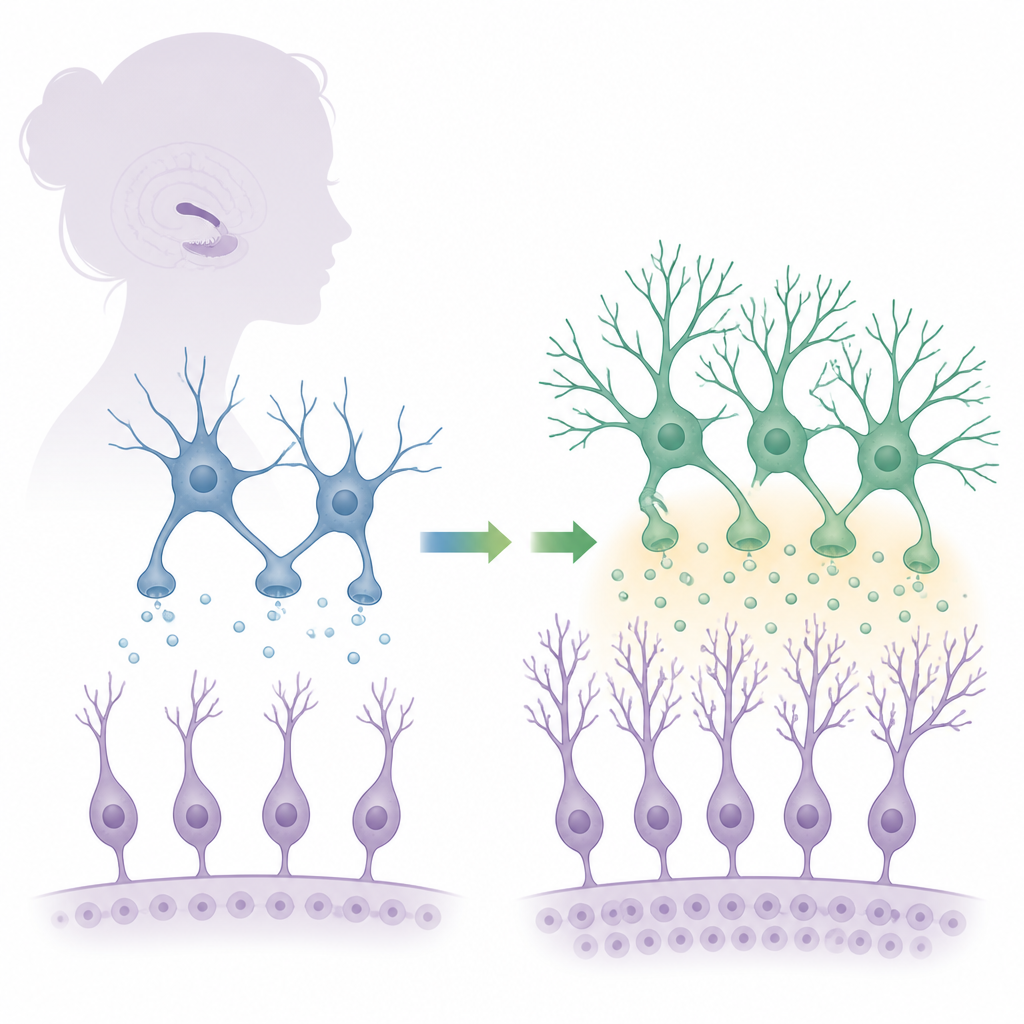
From cell changes to behavior and new neurons
The authors then tested whether PACAP from mossy cells actually mattered for behavior. They used a virus-based approach to reduce PACAP production specifically in the ventral portion of the dentate gyrus, an area strongly linked to emotion, and exposed mice to chronic stress before giving fluoxetine. In female mice, but not in males, losing PACAP in mossy cells largely erased the usual antidepressant-like effects of the drug: females no longer showed reduced despair-like behavior, and they failed to gain the typical increase in newly born neurons in the dentate gyrus that often accompanies long-term antidepressant use. Moreover, the drug’s ability to dampen overactivation of granule cells during an unpleasant experience was also lost when PACAP was reduced, again mainly in females.
What this means for understanding depression
Together, these findings suggest that the delayed benefits of fluoxetine depend in part on a carefully tuned boost in PACAP signaling from mossy cells to granule cells in the dentate gyrus, and that this pathway is especially important in females. Rather than working only through fast changes in serotonin, the drug gradually reprograms how select cells translate existing messages into proteins, reshaping peptidergic circuits that govern stress responses, new neuron growth, and mood-related behavior. This cell- and sex-specific view of antidepressant action may help explain why treatment responses vary so widely and could ultimately guide more tailored therapies.
Citation: Oh, SJ., Jang, Jh., Roussarie, JP. et al. Translational reprogramming of dentate gyrus peptidergic circuitry gates antidepressant efficacy. Mol Psychiatry 31, 3385–3398 (2026). https://doi.org/10.1038/s41380-026-03461-2
Keywords: antidepressants, dentate gyrus, PACAP, mossy cells, sex differences