Clear Sky Science · en
Skin-like micropumps transform human motion into fluidic flow via morphing valves
Turning Everyday Motion into Gentle Fluid Control
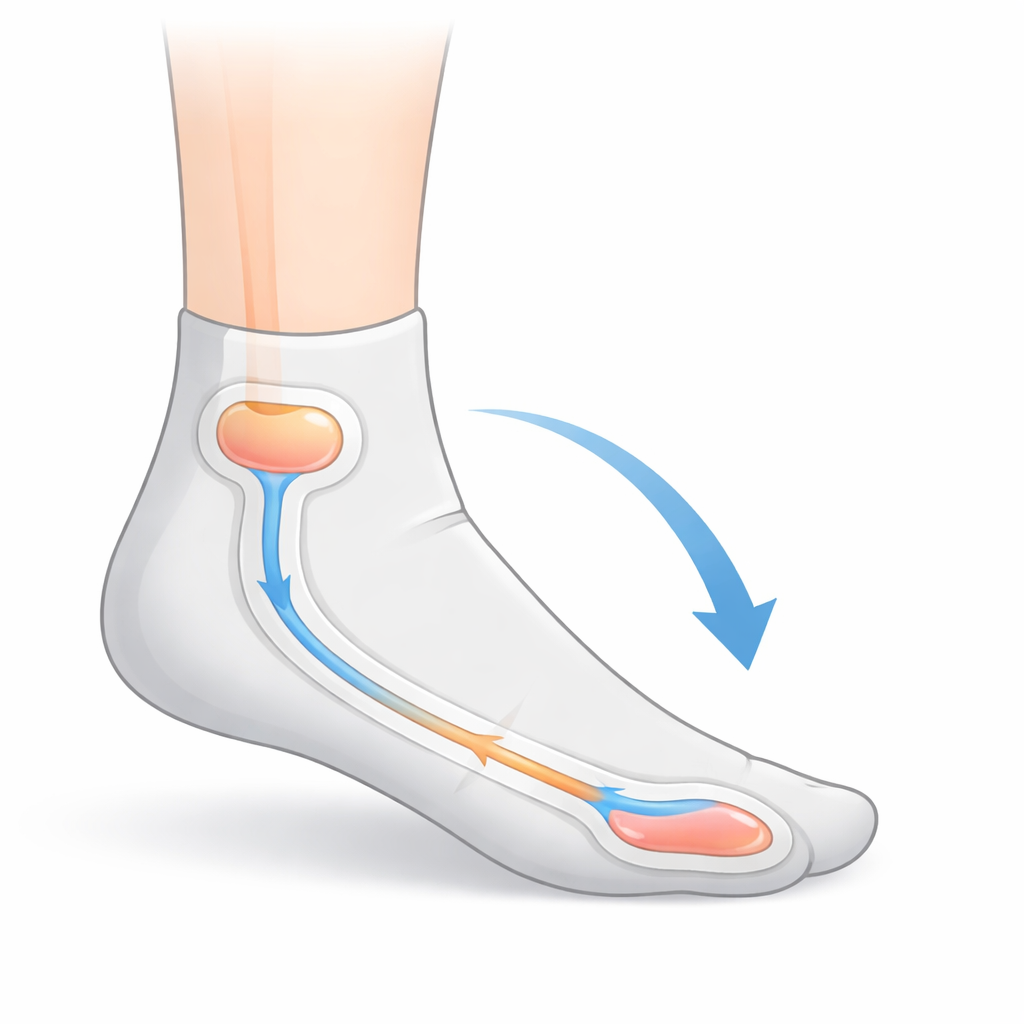
Imagine a bandage or sock that quietly moves medicine or draws out fluid from a wound every time you walk, flex your ankle, or bend your knee. This paper introduces a soft, skin-like pump that can do exactly that by using normal body motion as its only power source. The device aims to replace bulky, powered hospital pumps with thin, comfortable patches that can deliver or remove tiny amounts of liquid directly on the body during daily life.
Why Moving Fluids on the Body Is So Hard
Modern medicine often depends on precise control of liquids, from chemotherapy and dialysis to managing the fluid that seeps from chronic wounds. Today this control usually comes from rigid machines with tubing, electronics, and power supplies. These systems work well in clinics but are uncomfortable, hard to wear for long periods, and not suited to continuous treatment at home or during movement. Existing tiny pumps either need electricity, air pressure, magnets, or careful finger pressing, and many require complex valve structures that are difficult to build into soft, body-hugging materials.
A Soft Pump That Feels Like a Second Skin
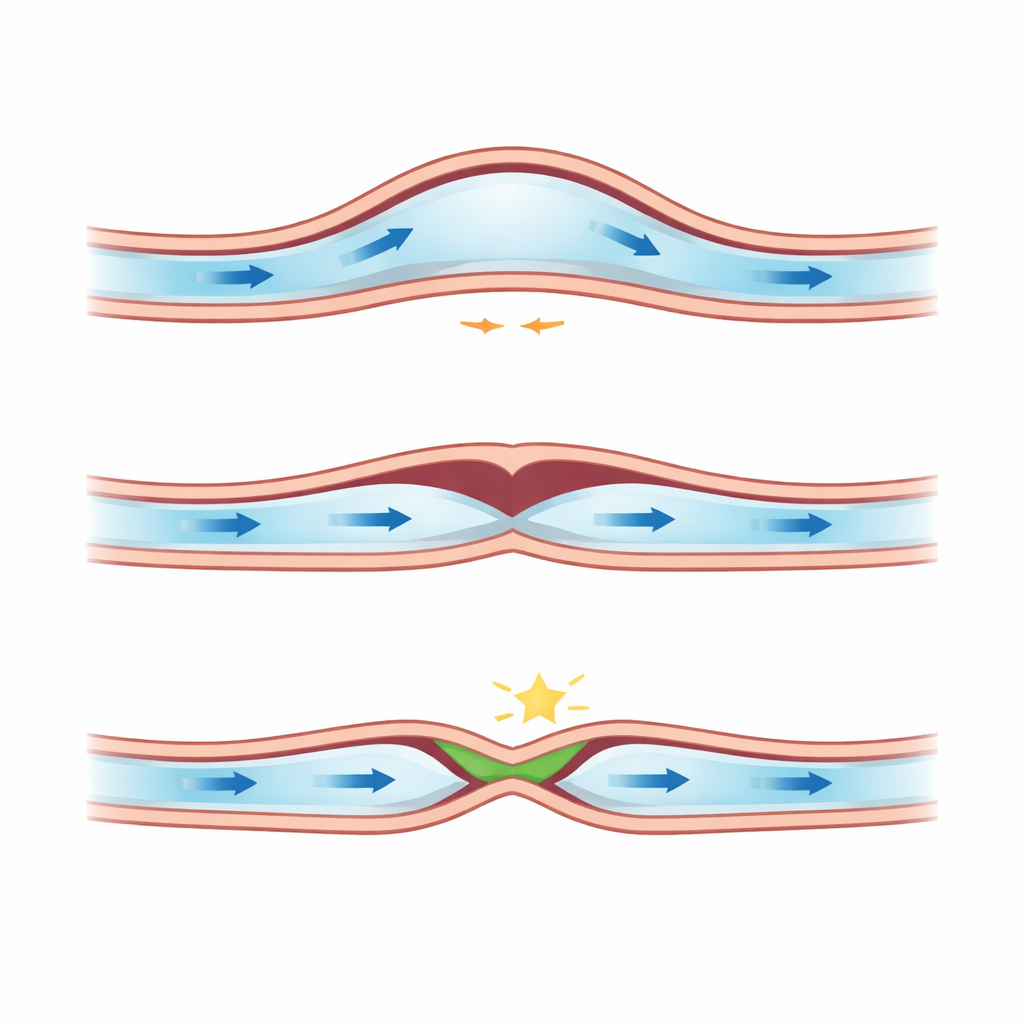
The researchers created a new device called OSMiPump, built entirely from soft silicone that bends and stretches with the skin. Inside the material sits a thin, arched microchannel shaped like a tiny wavy tube. Part of this tube acts as a central pumping chamber, while a nearby section acts as a built in one way valve. When the surrounding silicone is stretched, both regions gently flatten, squeezing the fluid inside and pushing it forward. When the stretch is released, the two regions recover in different ways, and this difference is what makes the liquid move in only one direction without any rigid parts or external power.
How Stretching Becomes One Way Flow
The heart of the design is the contrast between two shapes in the same channel. The pumping chamber is tuned to deform smoothly and then spring back to its original shape. The valve region, by contrast, is made thinner and taller so that it snaps between two shapes, a bit like a flexible dome that pops inside out. During stretching, both chamber and valve squeeze fluid forward toward the outlet. When the material relaxes, the chamber pulls fluid back from both sides, but the valve suddenly snaps into a state that blocks backward flow, making the outlet side much harder to reach. After a short waiting time, the valve snaps back again, ready for the next cycle. Repeating this stretch and release cycle steadily shifts liquid from the supply side to the outlet, giving a net forward flow.
Testing Performance in the Lab
To understand and tune this behavior, the team combined experiments with computer models that couple fluid motion and elastic bending. They varied the valve size, wall thickness, strain level, driving speed, and the resistance at the inlet and outlet. Devices with multiple small valves worked better than those with a single long valve, moving up to about 0.16 microliters of liquid per second at twenty percent stretch under low resistance. Even with narrow tubes or integrated channels that made flow harder, the pump still produced useful pressures, on the order of several kilopascals. The group also tested different liquids, from water like fluids to thick glycerin, and found that moderate viscosity can actually improve pumping by slowing the valve’s snap back just enough to strengthen one way flow. Orientation mattered too: the pump worked best when the main channel was roughly aligned with the direction of stretch, giving designers a way to control when and where it activates on the body.
From Lab Bench to Wearable Socks and Stickers
Beyond benchtop tests, the authors demonstrated the pump in realistic wearable formats. They embedded OSMiPumps into silicone socks, routing tubes so that ankle motion could either deliver colored fluid to a mock treatment site or pull simulated wound fluid away into an absorbent pad. Each plantar flexion step advanced the liquid front, and natural walking at typical ankle strain levels produced steady, repeatable transport. In a second format, the pump was bonded to a thin transparent medical film similar to a common hospital dressing and placed over the knee. Bending the knee repeatedly drove liquid along the channel in a controlled, one way fashion, showing that the same design can work like a sticker that can be placed on many body locations.
What This Could Mean for Future Care
Overall, the study shows that it is possible to turn ordinary body motion directly into controlled fluid movement using only soft materials and smart geometry. OSMiPump acts more like a gentle flow source than a high pressure pump, but it can be tuned to work with different loads, liquids, and motions. Because it needs no battery, motor, or rigid housing, it could enable new kinds of wearable systems for long term wound care, motion guided drug delivery, sweat or tissue fluid sampling, and even soft robotics. For patients, the promise is simple: treatment and monitoring that quietly happen in the background as they walk, exercise, or go about their day.
Citation: Altay, R., Olson, K., Brown, J. et al. Skin-like micropumps transform human motion into fluidic flow via morphing valves. Microsyst Nanoeng 12, 167 (2026). https://doi.org/10.1038/s41378-026-01286-1
Keywords: wearable microfluidics, skin-like micropump, motion-powered pumping, wound care devices, drug delivery