Clear Sky Science · en
Programmable viscoelastic hydrogels exhibit antimicrobial and regenerative properties to promote cell migration, wound healing, and tissue remodeling
Smarter Bandages for Tough-to-Heal Wounds
From chronic skin ulcers to surgical cuts that won’t quite close, stubborn wounds are a growing medical challenge—especially as antibiotic resistance rises. This study introduces a new kind of "smart" gel that can be printed into 3D shapes, gently cradles living cells, fights harmful microbes, and even helps skin regrow hair. The work points toward future bandages and lab-grown tissues that act less like passive coverings and more like active partners in healing and research.
Building a Gentle yet Tough Living Scaffold
At the heart of this research is a custom-made hydrogel—a soft, water-rich material—built from ingredients that already exist in our bodies plus a carefully chosen synthetic sugar. The team linked together hyaluronic acid (a natural lubricant in joints and skin), gelatin (a form of collagen that cells like to cling to), and oxidized dextran (a modified plant-derived sugar) in a double network. One set of chemical links is strong and permanent, giving the gel basic stability. A second set is reversible, allowing the network to break and reform under stress. This combination creates a viscoelastic material: it behaves partly like a solid and partly like a fluid, much like real living tissue. By adjusting how much of each component they mix and adding small adhesive peptides that mimic natural cell-binding sites, the researchers can finely tune how stiff, stretchy, and responsive the gel is.
Helping Cells Feel at Home in Three Dimensions
To test whether cells actually like living in this man‑made environment, the researchers embedded various cell types—including immune-modulating stem cells and mouse breast cancer cells—inside the hydrogel. They showed that the material is blood-compatible and largely non-toxic when the dextran chemistry is kept in a safe range. Within the gel, cells stayed highly viable, spread out, and formed long, fiber-like arrangements or compact spherical clusters, depending on the setup. The gel’s ability to relax stress over time and heal itself after deformation meant that the embedded cells could move and remodel their surroundings without the scaffold cracking apart. Using 3D printers and droplet generators, the team shaped the material into fine strands, grids, and uniform microbeads while preserving structure and cell health, suggesting that the gel is well suited as a printable "bio-ink" for building complex tissues in the lab.
Mini Tumors and Micro-Tissues in a Dish
One major goal of modern biomedicine is to grow tiny, organ-like structures—organoids—that mimic real tissues for drug testing and disease modeling. In this study, tumor cells grown in the new hydrogel formed larger and more dynamic spheroids than in typical commercial matrices. Gene analyses showed increased activity in pathways related to tissue remodeling, migration, and cell–matrix communication, implying that the gel stimulates behavior closer to what happens inside the body. Cells invaded the surrounding gel with long, branching structures, unlike in standard materials where they remained more compact. This suggests that the hydrogel can serve not only as a stand-in for animal-derived products like Matrigel but also as a more tunable platform to model cancer spread and guide regenerative growth. 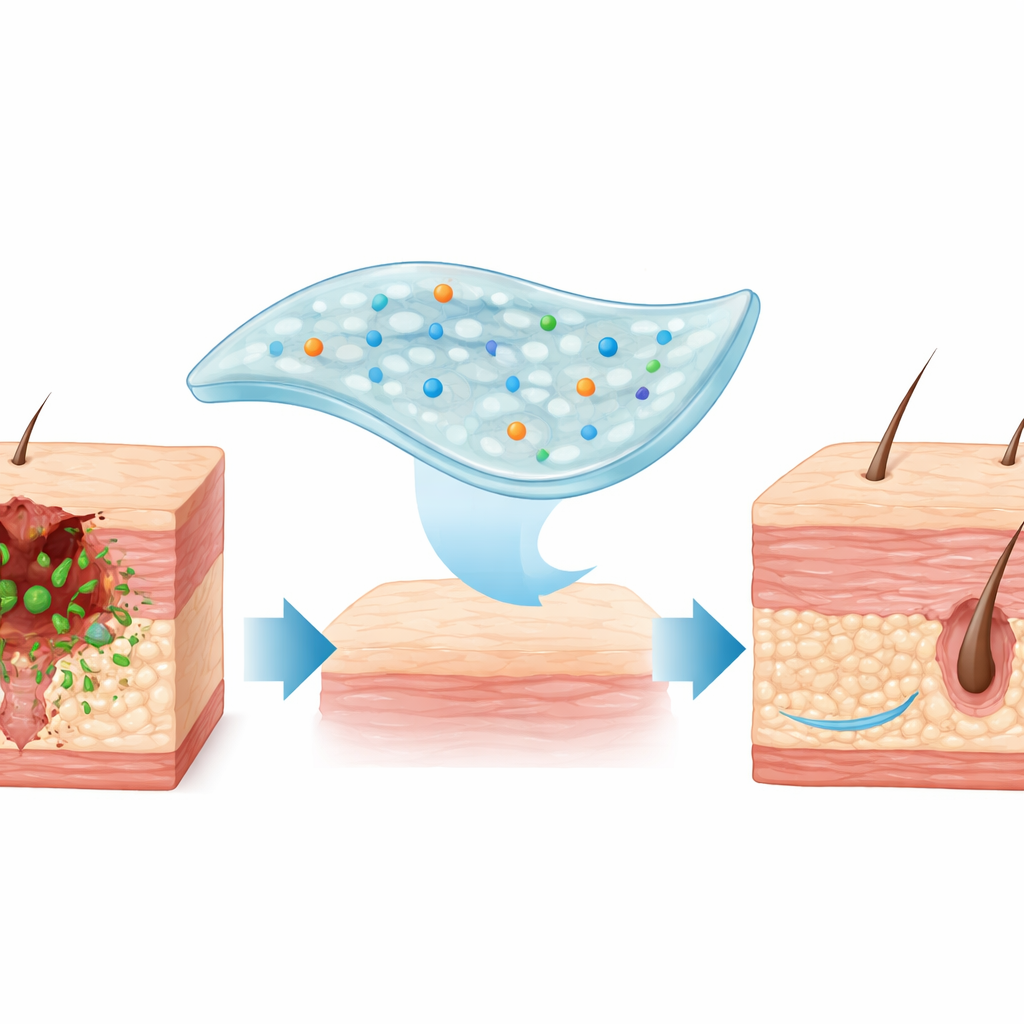
Fighting Germs While Guiding Skin Repair
Beyond the lab dish, the team asked whether their hydrogel could help real wounds heal. They tested the material, with and without added therapeutic stem cells, on full-thickness skin injuries in mice. Compared with untreated wounds or simple gelatin dressings, hydrogel-treated wounds closed faster, regenerated thicker skin, and produced many more new hair follicles. Microscopy revealed better blood vessel formation and more organized collagen in the repaired tissue. At the same time, versions of the gel carrying specific peptides showed the ability to slow down harmful bacteria and disrupt sticky biofilms formed by common skin microbes. When combined with a standard antibiotic, the gel helped lower the drug amount needed to halt bacterial growth, pointing to a way to boost antibiotics while potentially reducing side effects and resistance. 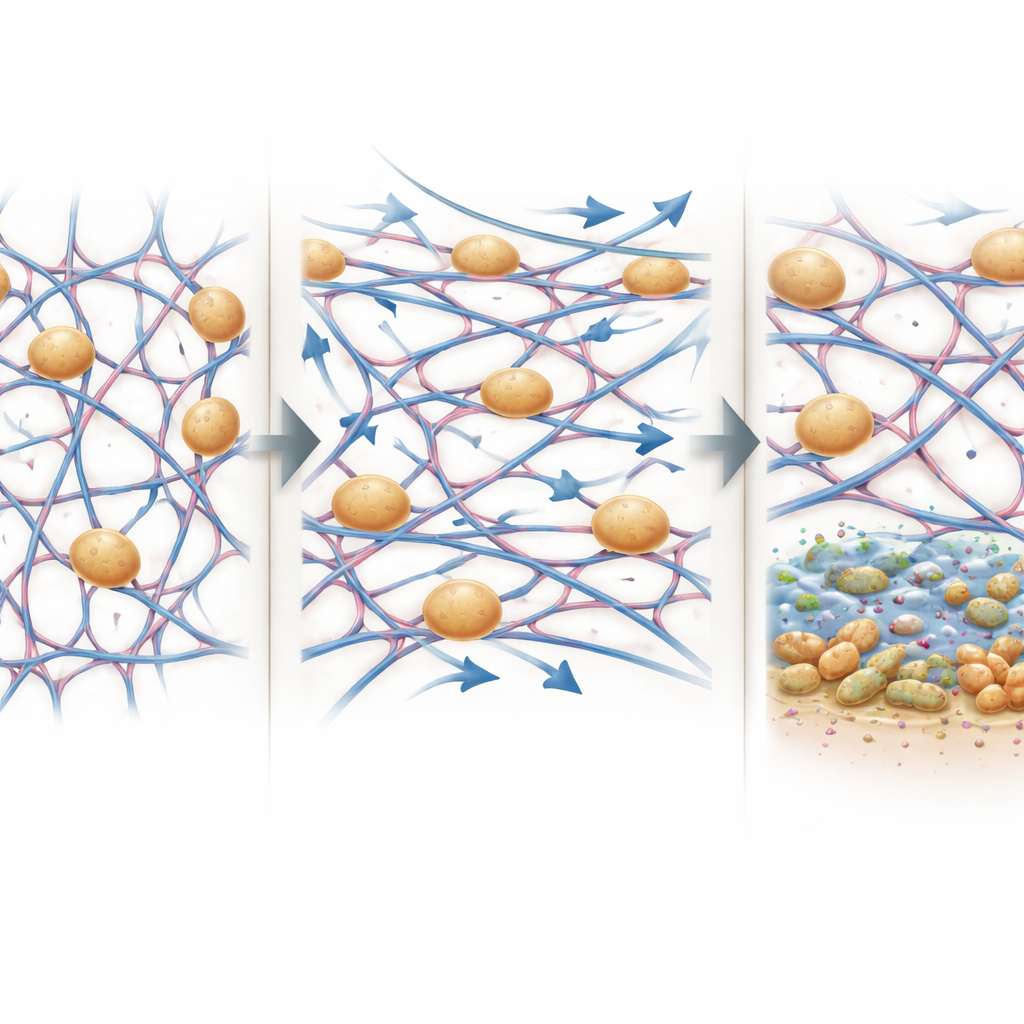
What This Could Mean for Future Medicine
In simple terms, this work describes a programmable, body-inspired gel that can be printed, seeded with helpful cells, and tailored to both fight infection and rebuild tissue. Because its ingredients and structure can be precisely controlled, it offers a reproducible and potentially cheaper alternative to animal-based products widely used today. With further refinement and safety testing, such hydrogels could evolve into advanced wound dressings for infected or hard-to-heal injuries, as well as customizable scaffolds for growing patient-specific mini-organs. The result is a versatile material that blurs the line between a dressing, a drug carrier, and a living tissue template.
Citation: Wang, J., Li, X., Nicolas, G.M. et al. Programmable viscoelastic hydrogels exhibit antimicrobial and regenerative properties to promote cell migration, wound healing, and tissue remodeling. Microsyst Nanoeng 12, 151 (2026). https://doi.org/10.1038/s41378-026-01233-0
Keywords: viscoelastic hydrogel, 3D bioprinting, wound healing, antimicrobial biomaterials, organoid culture