Clear Sky Science · en
Multifunctional bilayer radiative cooling dressing for regenerative wound healing under heat stress
Cooling Bandage for Hot Days
Anyone who has worn a bandage at the beach or on a hot hike knows how quickly skin under a dressing can feel sweaty and overheated. For an open wound, that trapped heat can do more than cause discomfort—it can slow healing and invite infection. This study introduces a new kind of bandage that acts like a tiny heat shield and medicine carrier in one, designed to keep wounds cool and protected even under strong sunlight.
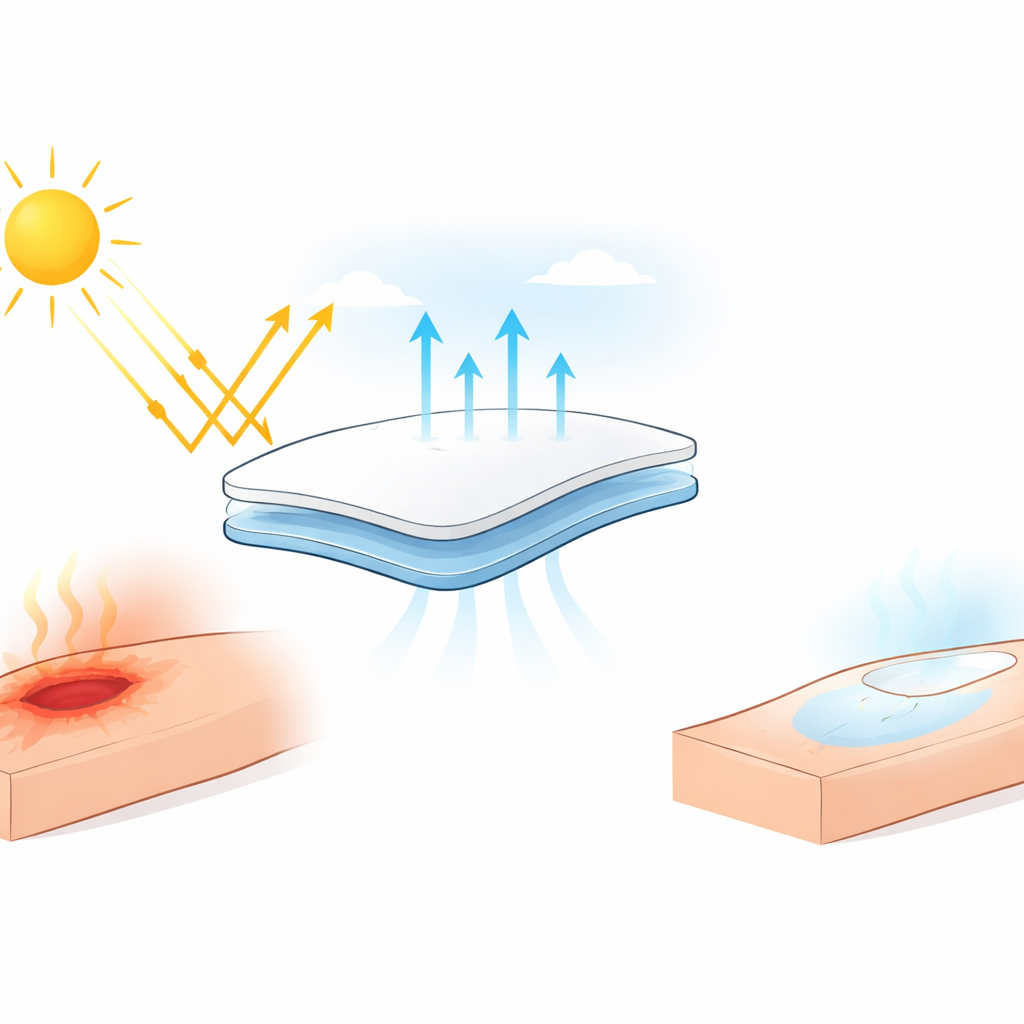
Why Heat Hurts Healing
Our skin is the body’s first line of defense, and when it is cut or burned, repair must move through a delicate sequence of clotting, inflammation, tissue growth, and remodeling. Outdoor conditions such as high temperature and intense sunlight can derail this sequence. Direct sun can raise wound temperatures above 40 °C, triggering excess inflammation, oxidative stress, and bacterial growth. Conventional dressings—like gauze pads and common adhesive bandages—mainly provide moisture retention and physical coverage. They do little to block heating sunlight or to actively combat the chemical and microbial stresses that slow repair.
A Two-Layer Shield with Built-In Helpers
The researchers designed a “radiative cooling dressing” made of two cooperating layers. The top layer is a white, fibrous film that bounces away most incoming sunlight and efficiently sheds heat as invisible infrared radiation into the sky, a natural cooling pathway used in advanced building materials. It is made from a water-soluble polymer filled with tiny silica particles that scatter light, plus a plant-derived oil that makes the surface bead up liquid water while still letting water vapor escape. Beneath this is a blue layer loaded with C-phycocyanin, a pigment from algae known for its antioxidant and antibacterial activity. This lower layer slowly releases its cargo into the wound environment, where it can neutralize harmful reactive molecules and discourage bacterial growth.
How the New Dressing Performs
Laboratory measurements showed that the white top layer reflects about 92 percent of sunlight and emits heat strongly in the infrared band where Earth’s atmosphere is most transparent. Computer simulations using real atmospheric data from cities around the world suggested that such a surface can passively cool itself below air temperature in many climates. The finished two-layer dressing kept these optical advantages while remaining flexible, easy to bend around joints, and naturally sticky to moist skin. Microscopic imaging revealed a highly porous network of fibers and embedded particles that not only enhance light scattering but also allow air and water vapor to pass. Tests confirmed that the dressing repels liquid water, transmits more vapor than standard gauze, and can soak up several times more fluid than common bandages, helping manage wound exudate without becoming soggy.
Built-In Defense Against Germs and Stress
To test the bioactive layer, the team exposed common wound bacteria to discs of the material. Samples containing higher amounts of C-phycocyanin produced larger clear zones where bacteria could not grow, showing strong antibacterial power. When the dressing was soaked in a fluid mimicking wound liquid, it released the pigment in a burst-and-slow pattern over several days, suggesting long-lasting delivery rather than a quick dump. In cell studies, skin-like cells exposed to chemical oxidative stress showed far fewer signs of damage when they were in contact with the C-phycocyanin layer, and cell survival stayed high, indicating that the material is gentle to healthy tissue.
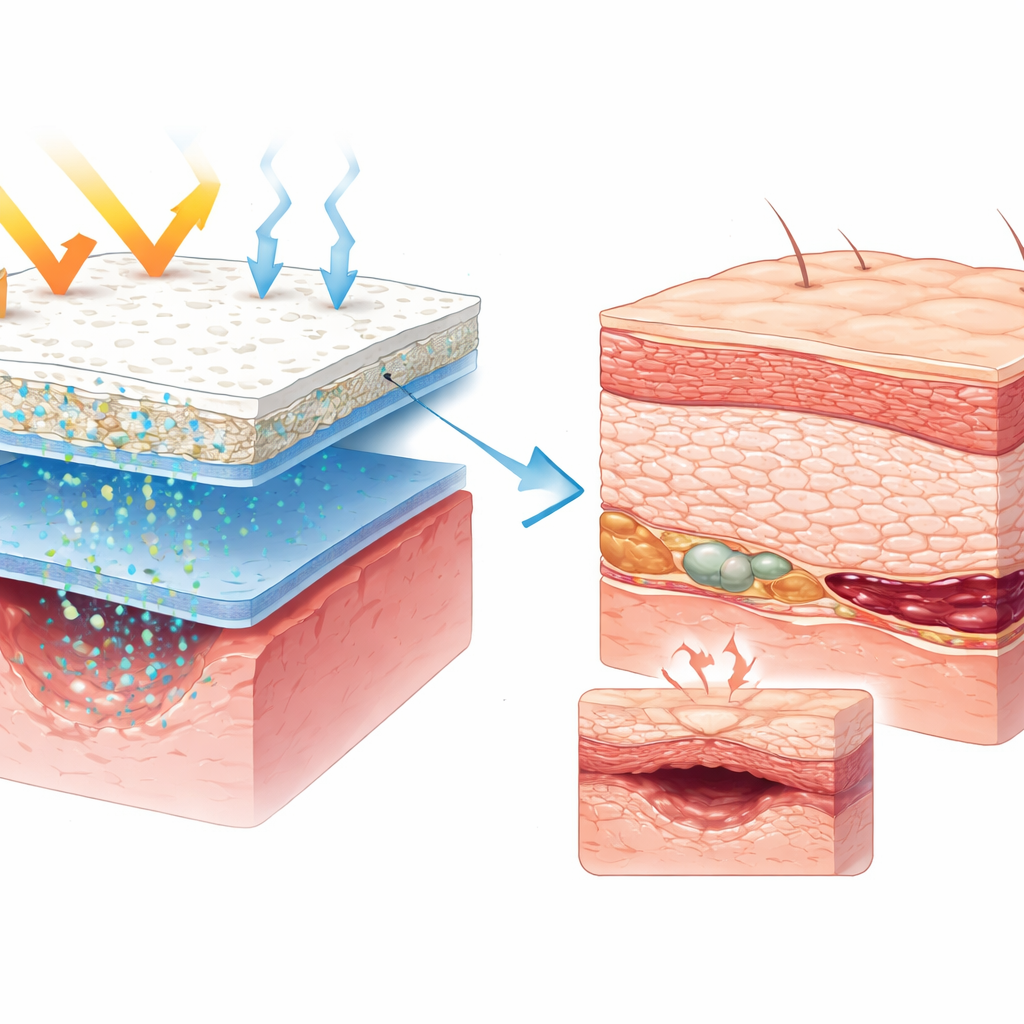
Putting the Bandage in the Sun and on Living Skin
The real test was whether this bandage could keep skin cool and speed healing under harsh light. On a rooftop setup using heated “artificial skin,” the new dressing held surface temperatures below 37 °C under strong midday sun, while bare skin, gauze, and commercial bandages shot above 50 °C. In a version of the test that reduced wind effects, the new material stayed as much as 15 °C cooler than the air. The researchers then moved to a mouse wound model exposed daily to a bright lamp that mimicked solar heat. Wounds covered with the radiative cooling dressing never exceeded normal skin temperature, whereas those left bare or covered with a typical bandage became overheated. After a week, wounds treated with the full two-layer dressing had shrunk by about 90 percent—nearly twice as much as those under a standard adhesive bandage—and tissue slices showed nearly restored skin structure with organized collagen and a smooth outer layer.
What This Could Mean for Everyday Care
In plain terms, the study shows that a cleverly engineered bandage that both reflects heat and slowly releases protective molecules can help wounds heal faster when conditions are hot and sunny. By preventing the wound from overheating while also fighting bacteria and chemical stress, the dressing creates a microclimate that more closely resembles healthy skin, even outdoors. If translated into practical products, such materials could make everyday wound care safer and more effective for people who work, exercise, or recover under intense heat, and may open the door to other medical devices that quietly cool and treat the body at the same time.
Citation: Hyeon, C., Lee, H., Kim, WS. et al. Multifunctional bilayer radiative cooling dressing for regenerative wound healing under heat stress. Microsyst Nanoeng 12, 128 (2026). https://doi.org/10.1038/s41378-026-01188-2
Keywords: radiative cooling, wound dressing, heat stress, skin regeneration, antibacterial biomaterials
See more on the researcher's website: https://bnsl.yonsei.ac.kr/welcome