Clear Sky Science · en
Reduced relapse in high risk acute myeloid leukemia and myelodysplastic neoplasms with permissive HLA-DPB1 mismatches and post-transplant cyclophosphamide
Why donor choice still matters after a stem cell transplant
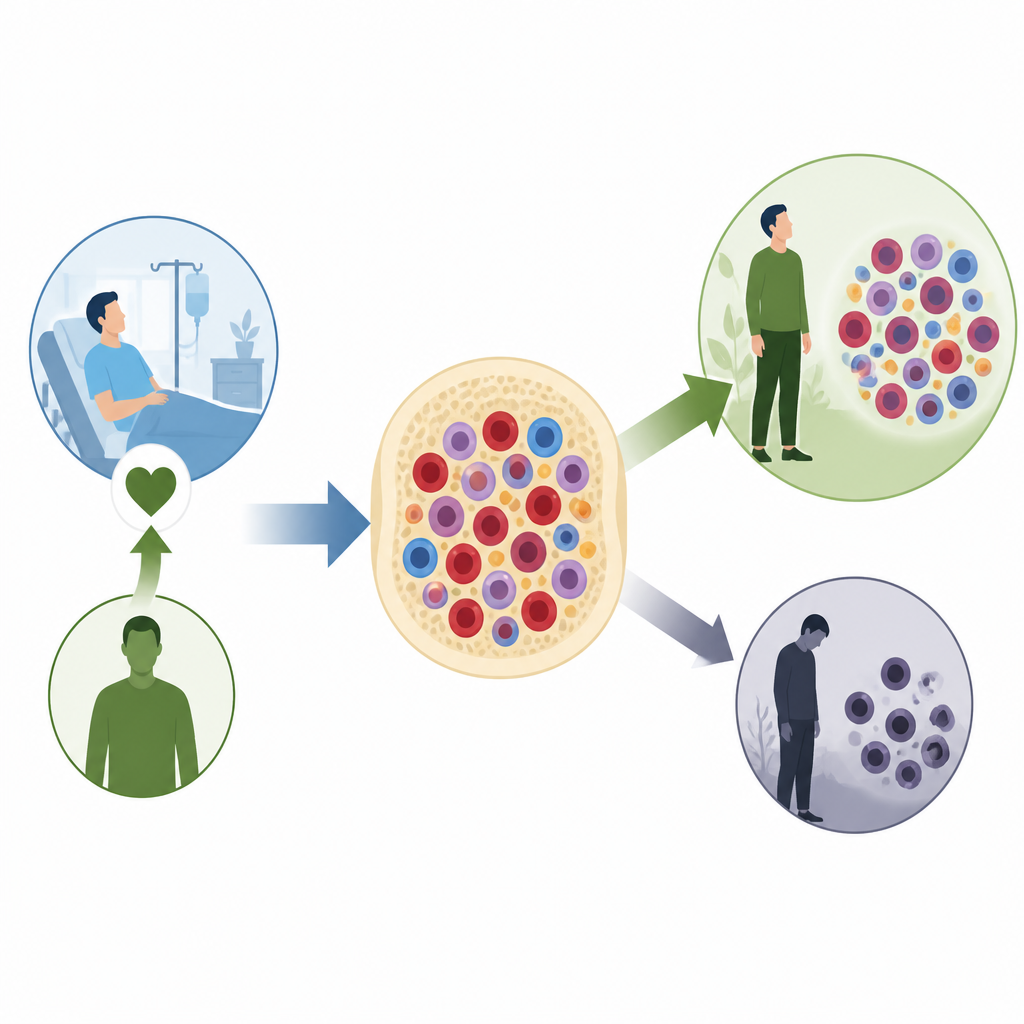
For people with aggressive blood cancers like acute myeloid leukemia (AML) or myelodysplastic syndromes (MDS), a stem cell transplant from a volunteer donor can offer a chance at long-term survival. Yet many patients still see their disease return. This study asks a practical question that matters to every future transplant patient and their family: when doctors pick between several compatible donors, can one subtle genetic difference tip the balance toward lower relapse without adding extra complications?
A closer look at immune matching
When doctors match a donor to a patient, they compare immune markers called HLA types, which help the body distinguish “self” from “foreign.” Even when a donor is very well matched overall, there is often variation at one particular HLA marker called DPB1. Past studies suggested that certain kinds of DPB1 differences might help the donor’s immune system better recognize and attack leftover cancer cells, but at the price of more graft-versus-host disease (GVHD), where donor cells damage the patient’s healthy tissues. Those earlier studies were done before a drug called post-transplant cyclophosphamide (PTCy) became a standard way to control severe GVHD. The new work asks whether DPB1 differences are still important now that PTCy is widely used.
How the study was done
Researchers at a single cancer center reviewed the records of 541 adults who received a transplant from an unrelated donor that matched at the main eight HLA markers. All patients had myeloid blood cancers and received the same style of GVHD prevention: PTCy combined with two other medicines. The team divided donor-patient pairs into four groups based on DPB1: fully matched, “permissive” mismatches expected to be relatively gentle, and two types of “non-permissive” mismatches expected to be more aggressive. They then tracked how often the cancer came back, how many patients developed GVHD, and how many died from causes other than relapse.
The key finding for high-risk patients
The most striking result appeared in patients with high-risk AML or MDS, whose cancers are more likely to return. In this group, those who received cells from a “permissively” mismatched DPB1 donor had roughly half the relapse risk of those with a fully matched DPB1 donor. Put another way, their chance of relapse over two years dropped to levels similar to patients with lower-risk disease. Importantly, this benefit held up even after taking into account how much leukemia was detectable before transplant using sensitive tests for minimal residual disease. Two other DPB1 patterns did not clearly help or hurt, making the permissive category stand out as the most favorable.
Safety, survival, and what drives risk
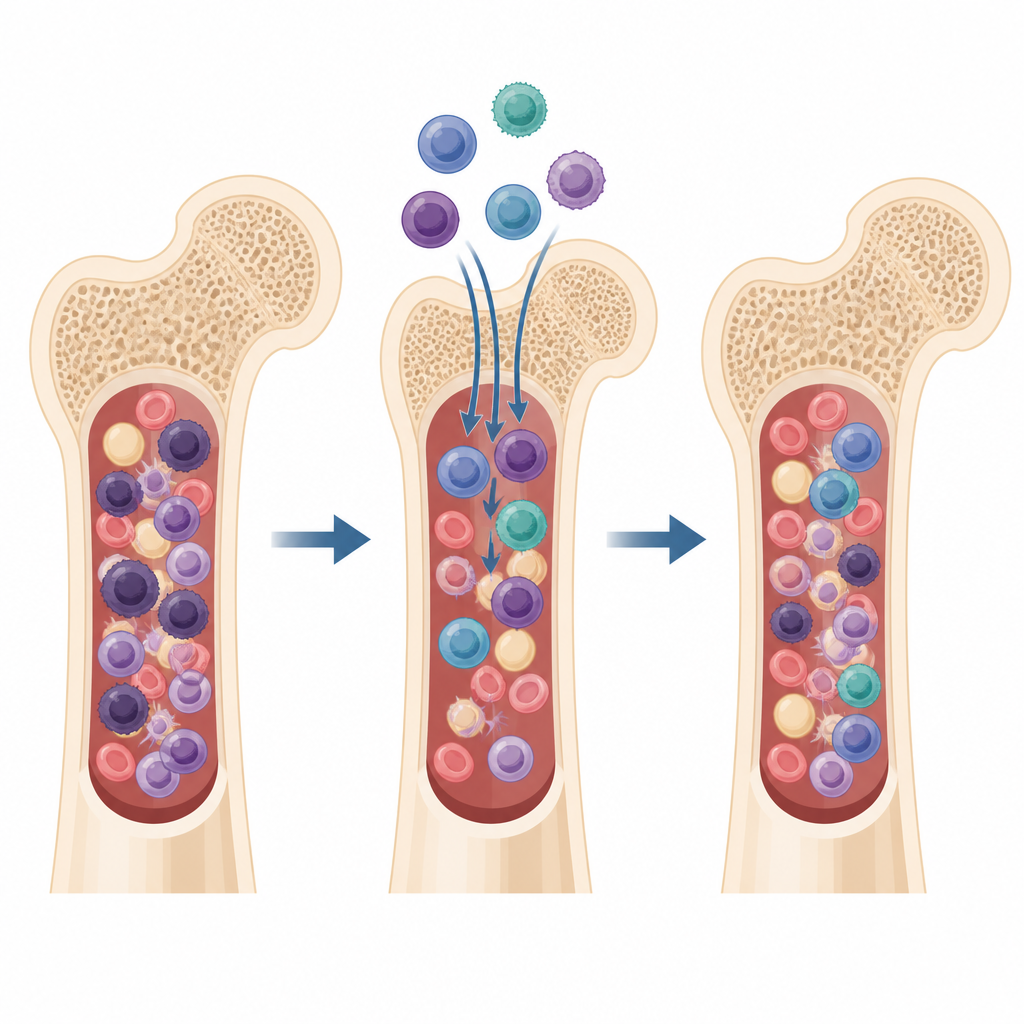
Crucially for patients, the lower relapse seen with permissive DPB1 mismatches did not come with more GVHD or more deaths from transplant complications. Rates of serious acute and chronic GVHD were low and similar across all DPB1 groups, suggesting that PTCy successfully reins in the harmful side of the donor immune response while preserving much of its cancer-fighting effect. Overall survival and time without relapse were not dramatically different between groups, largely because other factors played a bigger role: older age, other health problems, and whether any leukemia was still detectable at the time of transplant. These influences sometimes outweighed the benefit of better donor matching.
What this means for patients and doctors
For someone facing a high-risk AML or MDS transplant with several potential unrelated donors, this study suggests that choosing a donor with a permissive DPB1 mismatch can meaningfully cut the chance that the cancer will return, without raising the risk of severe GVHD. It will not remove the dangers of transplant, and long-term survival still depends on age, general health, and how well the disease is controlled beforehand. But because DPB1 typing is already part of routine testing, this insight offers a practical way to fine-tune donor selection so that more patients can benefit from the donor immune system’s cancer-fighting power while keeping side effects in check.
Citation: Smallbone, P., Cao, K., Saliba, R.M. et al. Reduced relapse in high risk acute myeloid leukemia and myelodysplastic neoplasms with permissive HLA-DPB1 mismatches and post-transplant cyclophosphamide. Leukemia 40, 934–945 (2026). https://doi.org/10.1038/s41375-026-02907-4
Keywords: acute myeloid leukemia, myelodysplastic syndromes, stem cell transplantation, HLA matching, graft versus leukemia