Clear Sky Science · en
Does stringent cytoreduction improve survival in advanced proliferative chronic myelomonocytic leukemia?
Why blood counts matter for patients with a rare leukemia
For people living with chronic myelomonocytic leukemia (CMML), a rare blood cancer of older adults, treatment decisions are often framed as either truly disease‑modifying or merely "palliative." This study asks a practical but crucial question: if doctors succeed in bringing very high white blood cell counts back toward normal, does that effort actually help patients live longer, no matter which drug is used?
A cancer of crowded blood and restless cells
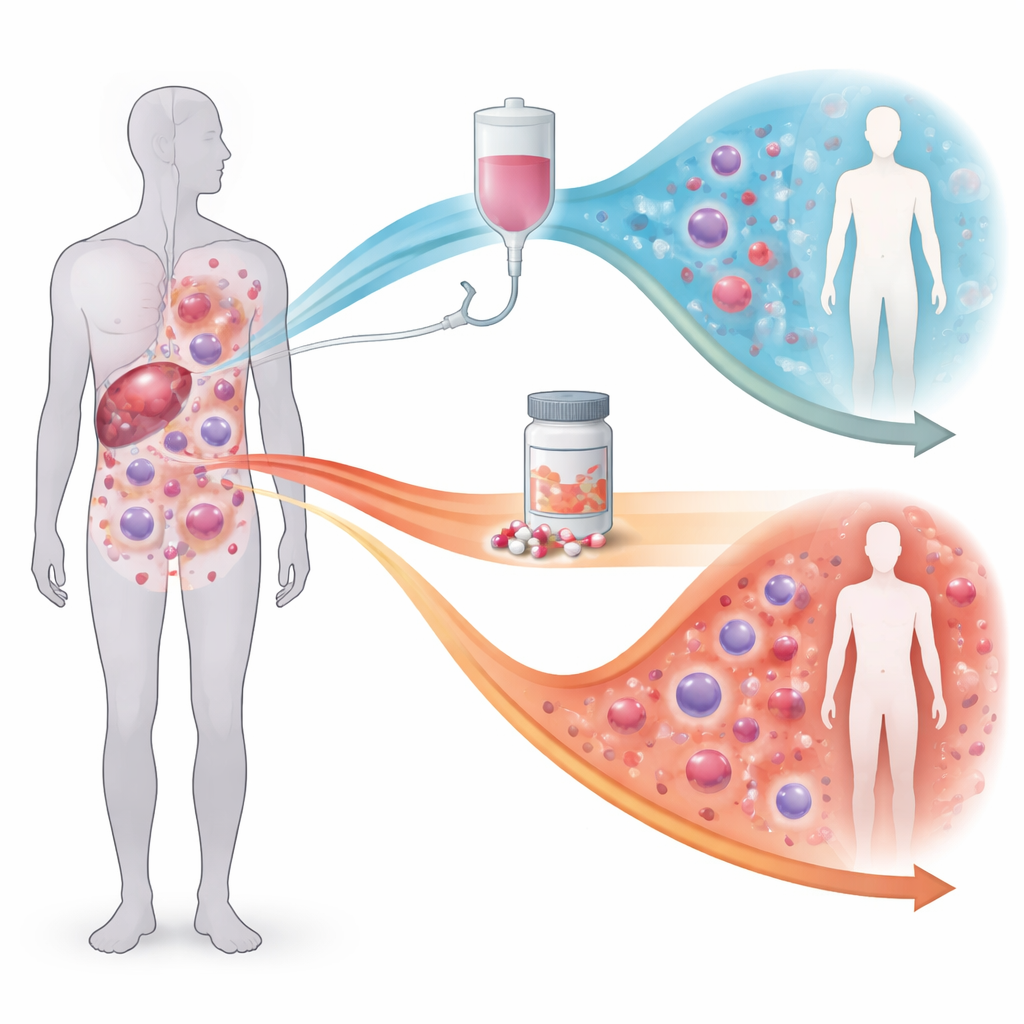
CMML is a disorder in which the bone marrow produces too many white blood cells, especially a type called monocytes, along with immature precursor cells that should normally stay in the marrow. These surplus cells spill into the bloodstream, contribute to inflammation, and can signal a higher risk of progression to acute leukemia. Doctors already know that patients who start out with very elevated white blood cell counts generally do worse, but it has been unclear whether later lowering those counts with treatment actually changes the course of the disease.
Two different drugs, one key question
The researchers analyzed 120 patients with an advanced, more proliferative form of CMML who were enrolled in a randomized clinical trial called DACOTA. Patients received either decitabine, a drug that alters DNA chemistry and is thought to target the disease at its roots, or hydroxyurea, an older medicine that mainly suppresses the overproduction of blood cells. After three and six treatment cycles, everyone had standard blood counts checked, and many also had a more detailed flow‑cytometry analysis that can distinguish finer subtypes of white blood cells circulating in the blood.
When high counts stay high, outcomes suffer
The team focused on simple thresholds that hematologists already use in everyday practice: white blood cell counts above 10 billion per liter and monocyte counts above 1 billion per liter. If either of these two measures was still above its cutoff after six cycles of therapy, patients were much more likely to die sooner or develop acute leukemia, regardless of whether they had been treated with decitabine or hydroxyurea, and regardless of how their bone marrow blast cells looked under the microscope. Patients whose counts were brought below both cutoffs had a median survival of almost three years from that time point, compared with a little over one year for those whose counts remained high.
Zooming in on specific troublemaker cells
Using flow cytometry, the investigators went further and separated circulating white cells into classical monocytes and immature granulocytes, two populations that laboratory studies suggest may actively drive disease progression and inflammation. They translated these patterns into absolute numbers in the blood. After just three cycles of therapy, patients who still had elevated counts of either classical monocytes or immature granulocytes faced significantly shorter overall and leukemia‑free survival, again independent of which drug they were receiving. Those whose levels of both cell types fell below pre‑defined cutoffs lived markedly longer, indicating that watching these particular subsets can provide an earlier warning signal than waiting for six‑cycle blood counts alone.
Why bringing numbers down may change the disease
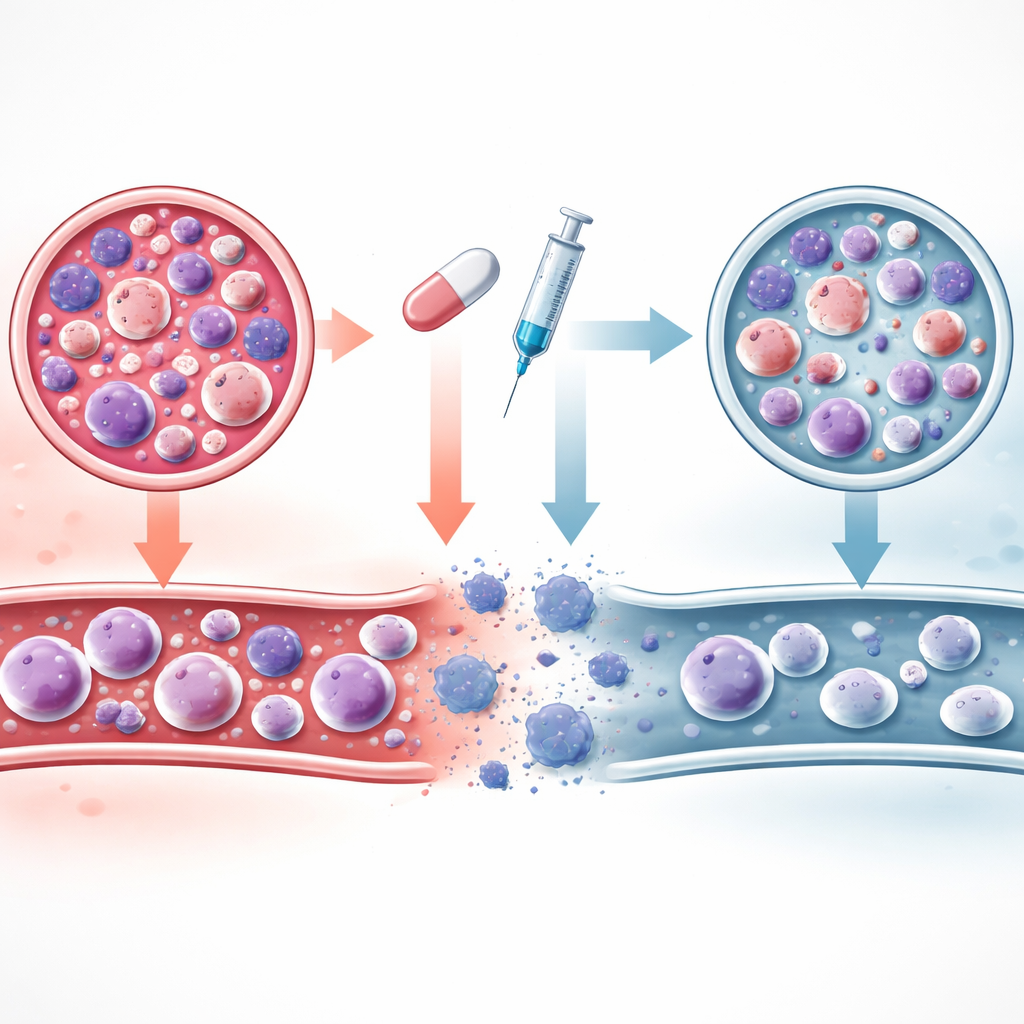
The findings suggest that strict control of myeloproliferation—the overgrowth of certain white blood cells—could do more than just relieve symptoms such as an enlarged spleen or fatigue. By pruning back classical monocytes and immature granulocytes, treatment may dial down inflammatory signals in the bone marrow environment that favor leukemia cells over normal stem cells. Notably, hydroxyurea, often considered purely palliative, appeared to confer similar survival benefits to decitabine when it succeeded in pushing blood counts below the key thresholds, hinting that tighter cytoreduction with this inexpensive drug might meaningfully alter outcomes for some patients.
What this means for patients and future trials
For patients with proliferative CMML, this work reframes those “routine” blood counts as powerful predictors of what lies ahead. If high white blood cell or monocyte levels persist despite treatment, or if troublesome subtypes remain abundant on flow cytometry, the risk of earlier death or transformation to acute leukemia is substantially higher. Conversely, achieving and maintaining lower levels of these cells—what the authors call stringent cytoreduction—is linked to longer survival, no matter which of the two studied drugs is used. While these results need confirmation in future trials and should not yet dictate care on their own, they support a simple idea that patients can readily grasp: in this rare leukemia, getting certain blood numbers down, and keeping them down, may itself be an important part of changing the disease’s trajectory.
Citation: Selimoglu-Buet, D., Chevret, S., Santini, V. et al. Does stringent cytoreduction improve survival in advanced proliferative chronic myelomonocytic leukemia?. Leukemia 40, 806–815 (2026). https://doi.org/10.1038/s41375-026-02901-w
Keywords: chronic myelomonocytic leukemia, white blood cell counts, hydroxyurea, decitabine, flow cytometry biomarkers