Clear Sky Science · en
How do patients with primary hypertension assess different endpoints of their treatment? a survey using analytic hierarchy process
Why this matters for people with high blood pressure
High blood pressure is common, long‑lasting, and often silent—yet it raises the risk of heart attacks, strokes, and early death. Doctors rely on clinical trials to judge which medicines work best, but those trials rarely ask a simple question: which outcomes do patients themselves most want to avoid? This study set out to give patients with primary hypertension a structured voice in that conversation, showing how their priorities could reshape both everyday treatment choices and broader health policy.

Asking patients what really counts
Researchers in Germany invited adults with primary (non‑secondary) high blood pressure, already taking blood‑pressure medicines, to take part in a detailed interview. To keep the focus on high blood pressure alone, they excluded people who had already suffered a heart attack or stroke, or had other serious heart and brain blood‑vessel diseases. This way, the answers would reflect what people feared and valued before such life‑changing events actually happened, rather than reactions shaped by past crises.
A structured way to weigh tough choices
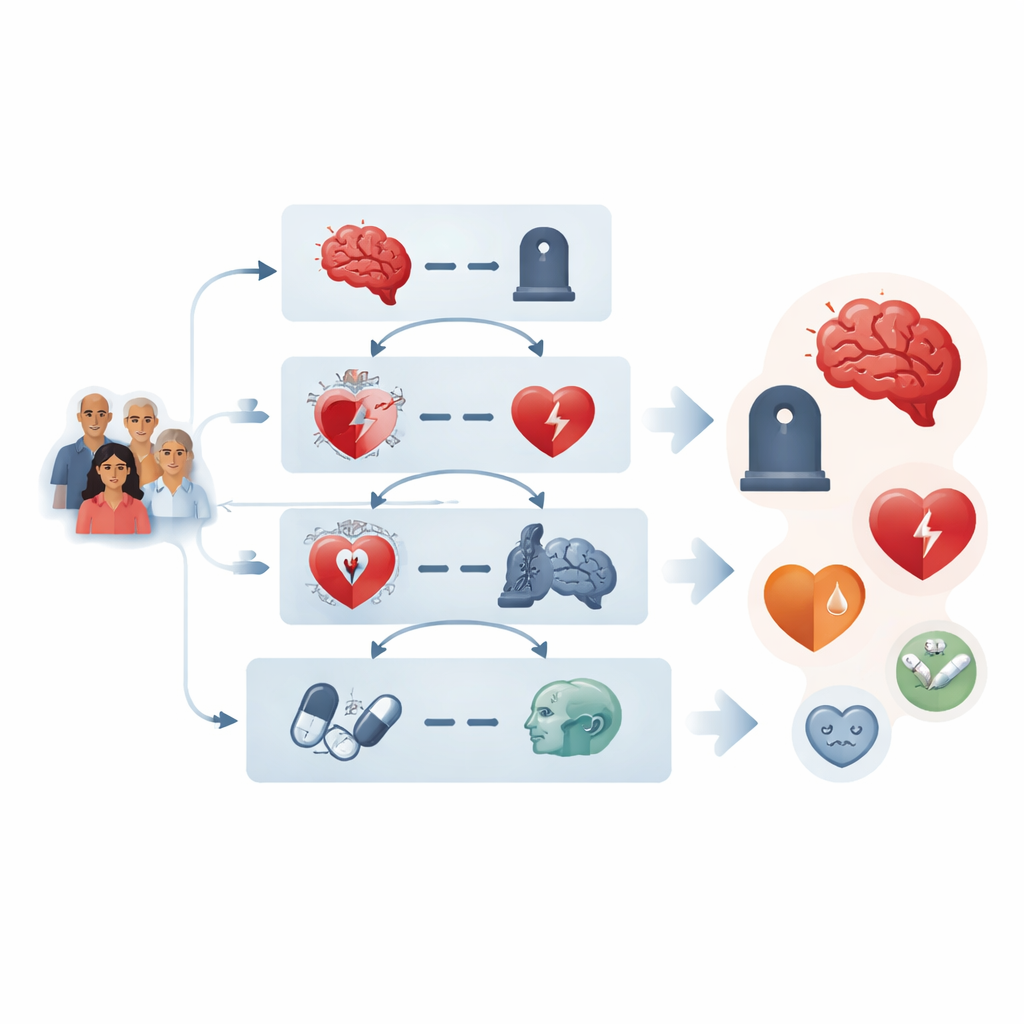
The team used a decision tool called the Analytic Hierarchy Process, adapted into plain language. Instead of asking vague questions like “What worries you most?”, patients compared pairs of concrete outcomes: death, heart attack, stroke, heart failure, and medicine side effects such as breathlessness, pain, swelling, and cough. In each pair, they indicated which outcome they more strongly wanted to avoid, and by how much. Behind the scenes, these pair‑by‑pair judgments were translated into numerical “weights” that show the relative importance of each outcome for each person and for the group as a whole.
Stroke rises to the top
When the researchers combined all 26 patients’ answers, a clear pattern emerged. On average, stroke received the highest weight, slightly ahead of death. Next came heart attack and then heart failure. Side effects of treatment, while not ignored, were rated far lower than the major disease events. Among side effects, difficulty breathing and pain stood out as more troubling than swelling or cough. These findings suggest that many patients view the possibility of living with severe disability after a stroke as at least as frightening as, or even worse than, death itself—especially because stroke can strip away independence and quality of life.
Diverse views behind the averages
Despite the strong group pattern, individual priorities varied widely. Some patients feared death far more than stroke; others put heart failure above heart attack; a few gave medication side effects nearly as much weight as the major life‑threatening events, likely reflecting their own treatment experiences. The study also examined how logically consistent people were when comparing many pairs of outcomes. Around half of the participants made comparisons that did not fully line up with one another—something that often happens when people face complex trade‑offs. Factors such as gender, how long someone had been on treatment, and whether they used one drug or a combination seemed to influence how consistent their answers were, although the small sample size means these patterns are best viewed as hints rather than firm rules.
From research findings to real‑world decisions
The results show that it is both possible and practical to capture what patients with high blood pressure value most, using a structured yet understandable approach. For policy makers and health technology assessors, the group‑level weights can guide which outcomes should carry most influence when judging the benefits and risks of new drugs. For doctors and patients, the individual‑level weights offer a way to move beyond one‑size‑fits‑all care. By explicitly discussing whether a particular patient is more worried about stroke, death, heart failure, or side effects, treatment plans can be tailored to what matters most to that person—bringing truly patient‑centered care closer to everyday practice.
Citation: Dintsios, CM., Chernyak, N. How do patients with primary hypertension assess different endpoints of their treatment? a survey using analytic hierarchy process. J Hum Hypertens 40, 333–341 (2026). https://doi.org/10.1038/s41371-026-01135-8
Keywords: hypertension, patient preferences, stroke, treatment decisions, analytic hierarchy process