Clear Sky Science · en
Associations between pulse pressure amplification and inflammation in young adults according to body composition: The African-PREDICT study
Why this matters for young adults
Many people think of heart disease and stiff arteries as problems of old age, but this study shows that the way blood pulses through the body can already be altered in healthy young adults. By looking at how body weight and low-level inflammation relate to the "bounce" of blood pressure as it travels from the heart to the arm, the researchers reveal an early warning sign that extra body fat may quietly change blood vessels long before symptoms appear. 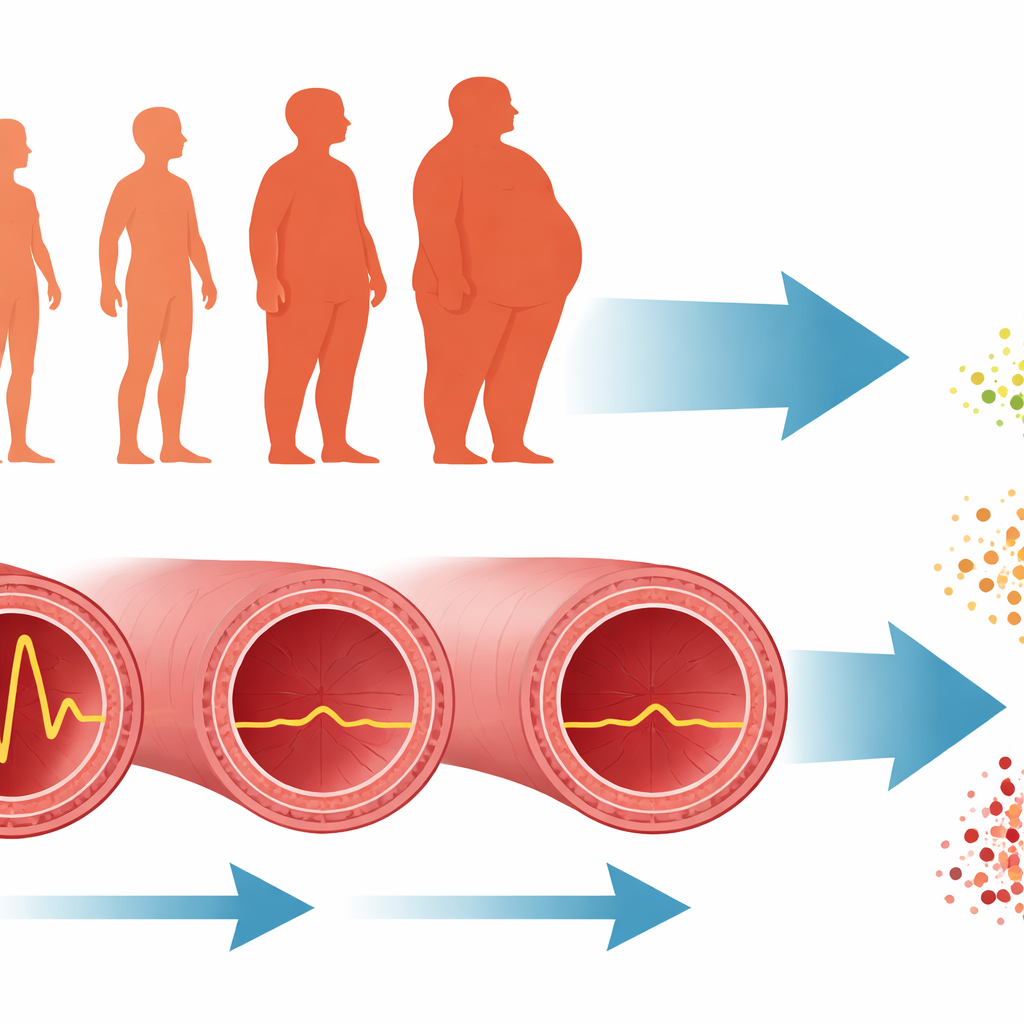
How the pulse wave tells a hidden story
Every time the heart beats, it sends a pressure wave through the arteries. This wave is strongest near the heart and usually grows a bit higher as it moves out to the arm, a phenomenon called pulse pressure amplification. In healthy, flexible arteries this amplification follows a normal pattern. The authors studied more than 1,200 men and women aged 20 to 30 in South Africa to see whether this pulse pattern changes with body size and subtle signs of inflammation in the blood. They focused on the ratio between pulse pressure at the arm and at the center of the body, using it as a window into how well the arteries were functioning.
Weight, waistlines, and early artery changes
Participants were grouped using body mass index into underweight, healthy weight, overweight, and obese categories. As expected, people in the heavier groups had larger waistlines and somewhat higher blood pressure, even though all were free of diagnosed chronic disease. The key finding was that pulse pressure amplification was lower in the overweight and obese groups than in leaner peers. This suggests that the normal boost in pulse pressure from the heart to the arm was already blunted, hinting that the arteries in these young adults were behaving less like supple tubes and more like vessels under early strain, even though a more direct measure of stiffness, pulse wave velocity, had not yet changed.
Inflammation as the missing link
The team also measured several substances in the blood that signal low-grade inflammation and activity of fat tissue, including leptin, C-reactive protein, tumour necrosis factor-alpha, and adiponectin. Overweight and obese participants showed a more troublesome pattern: higher levels of the pro-inflammatory markers and lower levels of adiponectin, which usually has protective, calming effects on blood vessels. When the researchers ran detailed statistical analyses that accounted for age, sex, ethnicity, cholesterol, blood sugar, smoking, and alcohol use, they found that worse pulse pressure amplification was tied to these inflammatory markers only in the heavier groups. In other words, among young adults carrying extra fat, more inflammation went hand-in-hand with a less favorable pulse pattern, while this link did not appear in leaner individuals. 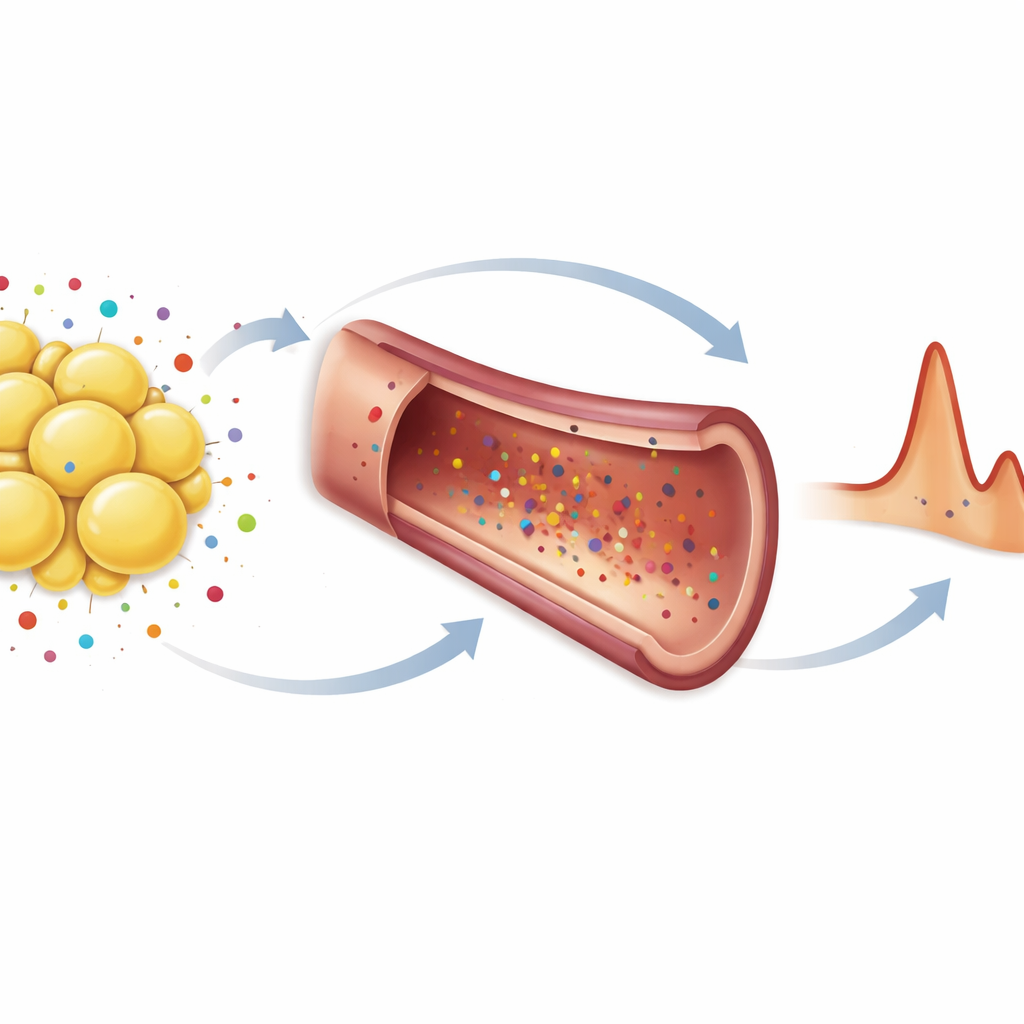
Beyond the scale: where fat is stored
Because not all body fat is equal, the investigators repeated their analyses using waist-to-height ratio, a way to capture belly fat more specifically. The results were strikingly similar: young adults with larger waists relative to their height had lower pulse pressure amplification and higher levels of inflammatory markers. Again, the associations between the altered pulse pattern and inflammation showed up mainly in the group with greater abdominal fat. This consistency suggests that it is not only how heavy someone is, but how much fat is stored around the middle, that may help drive early changes in artery behavior.
What this means for future heart health
Taken together, the findings point to a subtle but important message: in young adults, especially those who are overweight or obese, low-grade inflammation linked to excess body fat may already be nudging arteries away from their ideal function. The fact that these changes show up in pulse pressure amplification before obvious stiffness is detected suggests a window for early detection and prevention. For lay readers, the takeaway is that maintaining a healthy weight and waistline in the twenties is not just about appearance or long-term risk; it may help keep the body’s pulse wave lively and the arteries resilient, reducing the chances of more serious heart and vessel problems later in life.
Citation: Breet, Y., Delles, C., Welsh, P. et al. Associations between pulse pressure amplification and inflammation in young adults according to body composition: The African-PREDICT study. J Hum Hypertens 40, 281–287 (2026). https://doi.org/10.1038/s41371-026-01126-9
Keywords: obesity, inflammation, arterial health, young adults, blood pressure