Clear Sky Science · en
Hemodynamic factors primarily impact on carotid IMT in young adults of African Ancestry in Sub-Saharan Africa
Why blood vessel health matters early in life
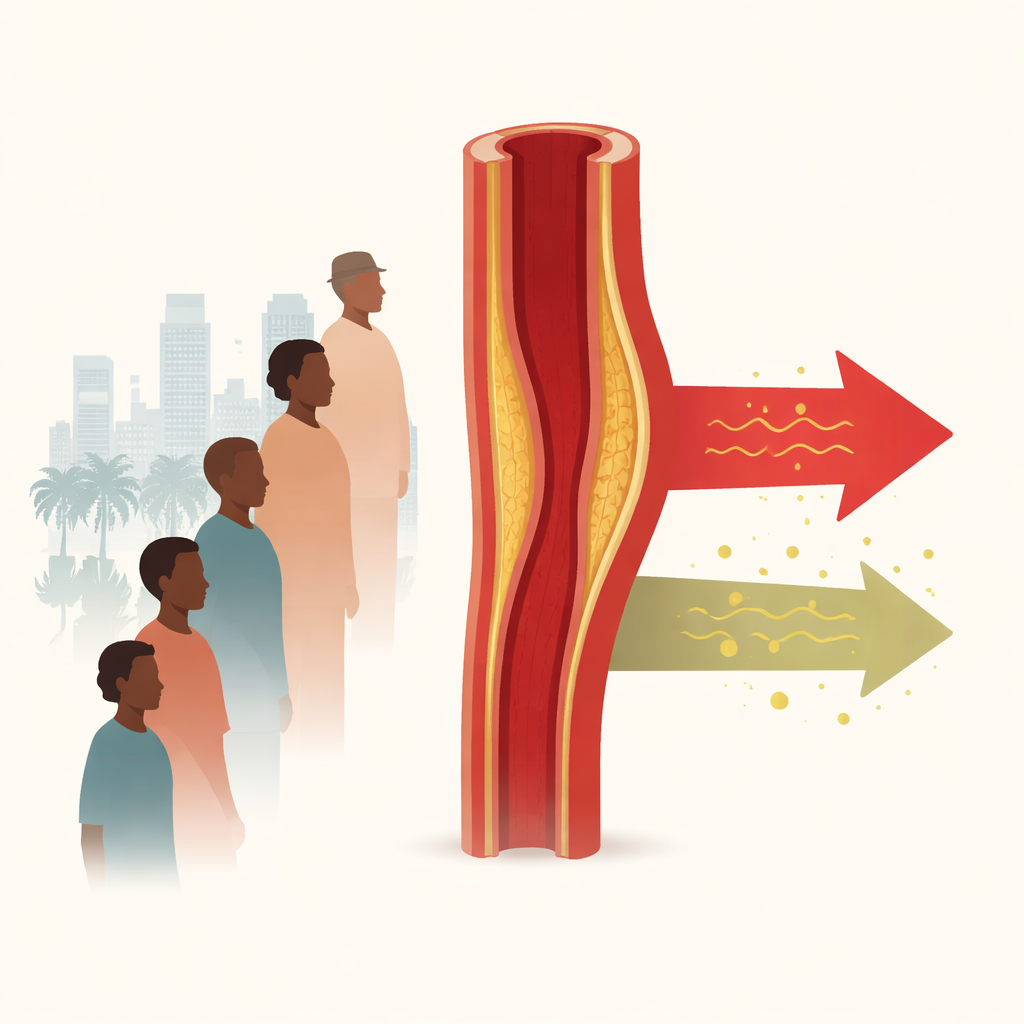
Heart attacks and strokes often seem like problems of old age, but for many people in Sub-Saharan Africa they are striking one to two decades earlier than in Europe. This study asks a crucial question: in adults of African ancestry living in South Africa, what really drives early damage to the neck arteries that feed the brain? Is it the familiar story of “bad cholesterol,” or are blood-pressure-related forces on the artery wall more important, especially in young adults?
A closer look at the neck’s key artery
The researchers focused on the common carotid artery, a major blood vessel in the neck. Using ultrasound, they measured the thickness of the artery’s inner lining, called intima-media thickness (IMT). A thicker wall usually signals early artery disease long before symptoms appear. They examined 573 men and women of African ancestry from a Johannesburg township, grouping them into young (<35 years), middle-aged (35–59 years), and older (≥60 years). Alongside IMT, they collected detailed information on weight, blood pressure, blood sugars, cholesterol, smoking and alcohol use, and sophisticated measures of how blood flows and pulses through the arteries.
Blood pressure forces versus blood fats
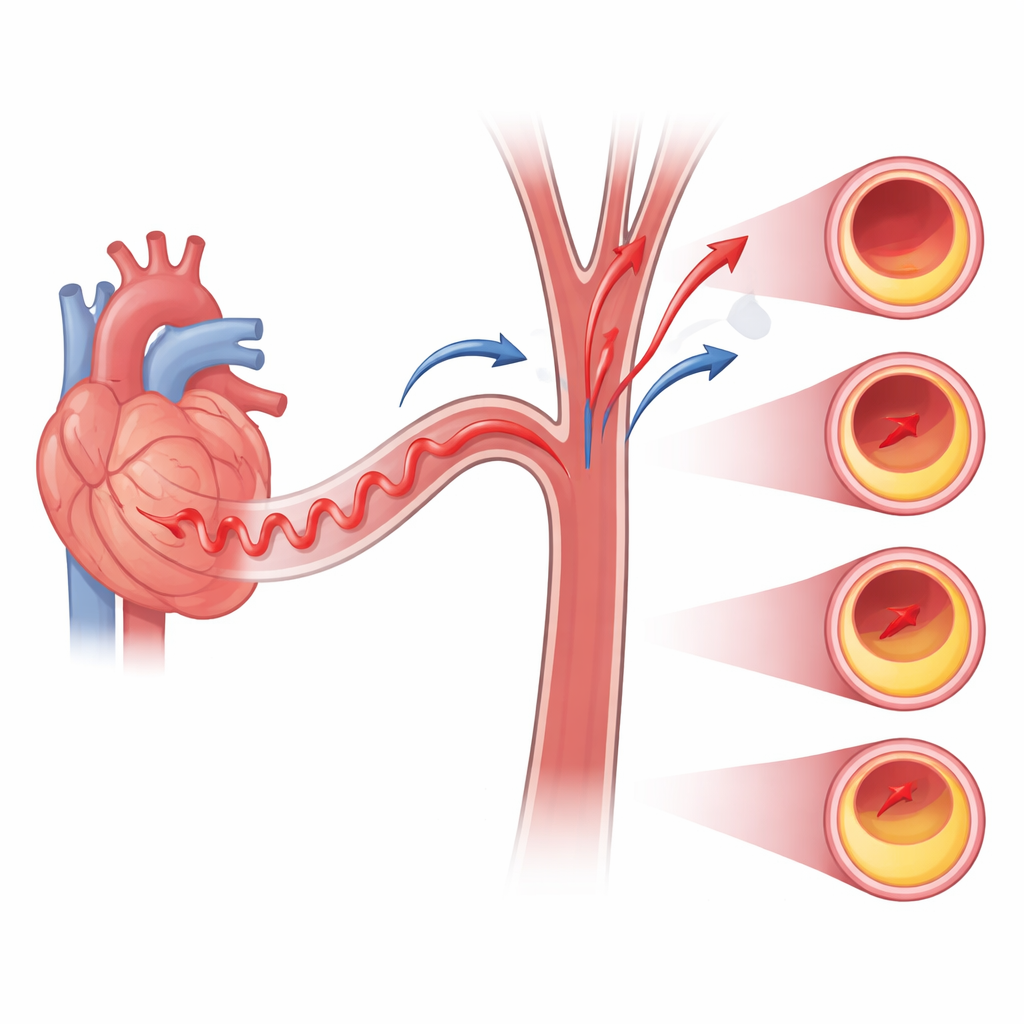
At first glance, many traditional risk factors seemed linked to IMT. Older age, higher body weight, raised blood pressure, and some blood test results all showed simple associations. But when the researchers used more advanced statistics to account for age, sex, body size, diabetes, blood pressure treatment, and lifestyle, a clear pattern emerged. Across all age groups, cholesterol and other blood fat measures were not independently related to artery wall thickness. Instead, measures of how strongly blood pressure pulses strike the arteries—especially so‑called backward wave pressure, a reflection of pressure waves bouncing back from stiff vessels—were consistently tied to thicker carotid walls.
Different ages, different main drivers
The study revealed that what matters most for IMT shifts with age. In young adults, carotid IMT was chiefly linked to backward wave pressure and age; blood fats played no role. Among middle-aged adults, a higher body mass index, central (near‑heart) systolic blood pressure, heart rate, and backward wave pressure were important, but again lipids did not stand out. In older adults, backward wave pressure, male sex, and heart rate were the key factors, with age still influencing the chances of having an especially thick artery wall. Statistical tests showed that backward wave pressure improved the ability to identify young and older adults with unusually high IMT, while body mass index was most informative in middle age.
What this means for preventing early heart and brain disease
These findings suggest that in adults of African ancestry living in Sub-Saharan Africa, the main story behind early artery wall thickening is about how hard the blood hits the arteries, not about cholesterol levels. High central blood pressure and strong reflected pressure waves appear to stress the carotid wall from early adulthood onward, while excess body weight becomes especially important in midlife. Because IMT is already linked to stroke and other vascular events in African populations, focusing screening and treatment on blood pressure—and ensuring that hypertension is recognized and controlled—may be more effective than concentrating primarily on cholesterol in this setting.
A simple take-home message
For lay readers, the lesson is straightforward: in this South African community, it is the “pressure load” on artery walls, rather than “bad fats” in the blood, that best explains early thickening of the neck arteries across adulthood. Young adults are not protected just because they are young; if their blood pressure waves are high and their arteries stiff, silent damage may already be underway. Tackling high blood pressure early, keeping weight in check in midlife, and maintaining good overall heart health could meaningfully delay or prevent serious cardiovascular events for many people of African ancestry in Sub-Saharan Africa.
Citation: Malan, N., Norton, G.R., Peterson, V.R. et al. Hemodynamic factors primarily impact on carotid IMT in young adults of African Ancestry in Sub-Saharan Africa. J Hum Hypertens 40, 265–280 (2026). https://doi.org/10.1038/s41371-026-01119-8
Keywords: carotid artery, blood pressure, Sub-Saharan Africa, atherosclerosis, young adults