Clear Sky Science · en
Influence of on-road mobile monitoring design on ultrafine particle exposure models and cognitive health inferences
Why tiny traffic particles and brain health matter
Many of us spend time near busy roads, yet we rarely think about the invisible cloud of ultrafine particles from vehicle exhaust swirling around us. These tiny particles are hard to measure, and scientists rely on specialized “mobile monitoring” drives to understand how much people breathe over the long term. This study asks a deceptively simple question with big stakes: if we change how, when, and where we drive our monitoring vehicles, does it change what we conclude about whether these particles affect how well older adults think and remember?
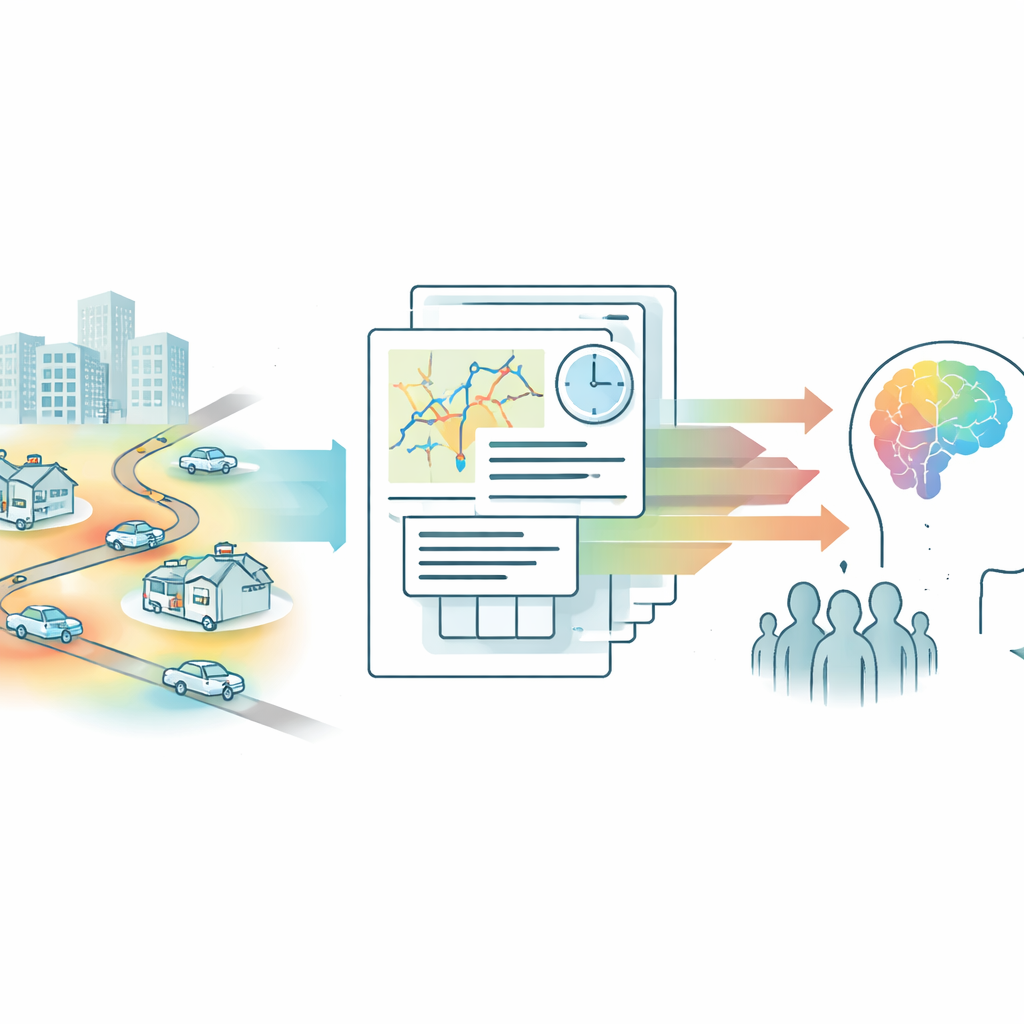
Following cars to follow the particles
The researchers drew on a year-long monitoring campaign across the Seattle area. Specially equipped cars drove about 600 kilometers of roads and also stopped briefly at 309 roadside spots, repeatedly measuring the number of ultrafine particles in the air. These readings were then turned into detailed maps of particle levels using statistical methods and information about the city landscape, such as nearby roads and buildings. At the same time, the team used data from thousands of older adults in the Adult Changes in Thought study, a long-running project that regularly tests memory, attention, and other thinking skills.
Designing different ways to “see” pollution
To test how monitoring choices matter, the scientists pretended they were running many different, smaller campaigns using the same underlying data. They varied how often each road segment was visited (only 4 times versus 12 or more), whether visits were spread evenly around the city or concentrated in certain areas, and whether measurements were taken all day or only during weekday business hours. They also tried analytical “fixes” that adjust for times and places that were sampled less often, and methods to tone down short, intense bursts of pollution from exhaust plumes that people are less likely to experience at home over the long term.
From road measurements to brain scores
For each of these many designs, the team built an air pollution map and used it to estimate the typical ultrafine particle levels at each participant’s home over the previous five years. They then compared these estimates with scores on a detailed thinking test that combines information from many questions into a single measure of cognitive performance. By repeating this process thousands of times across different monitoring designs and adjustment methods, they could see how sensitive the estimated pollution–cognition relationship was to the way data were collected on the road.
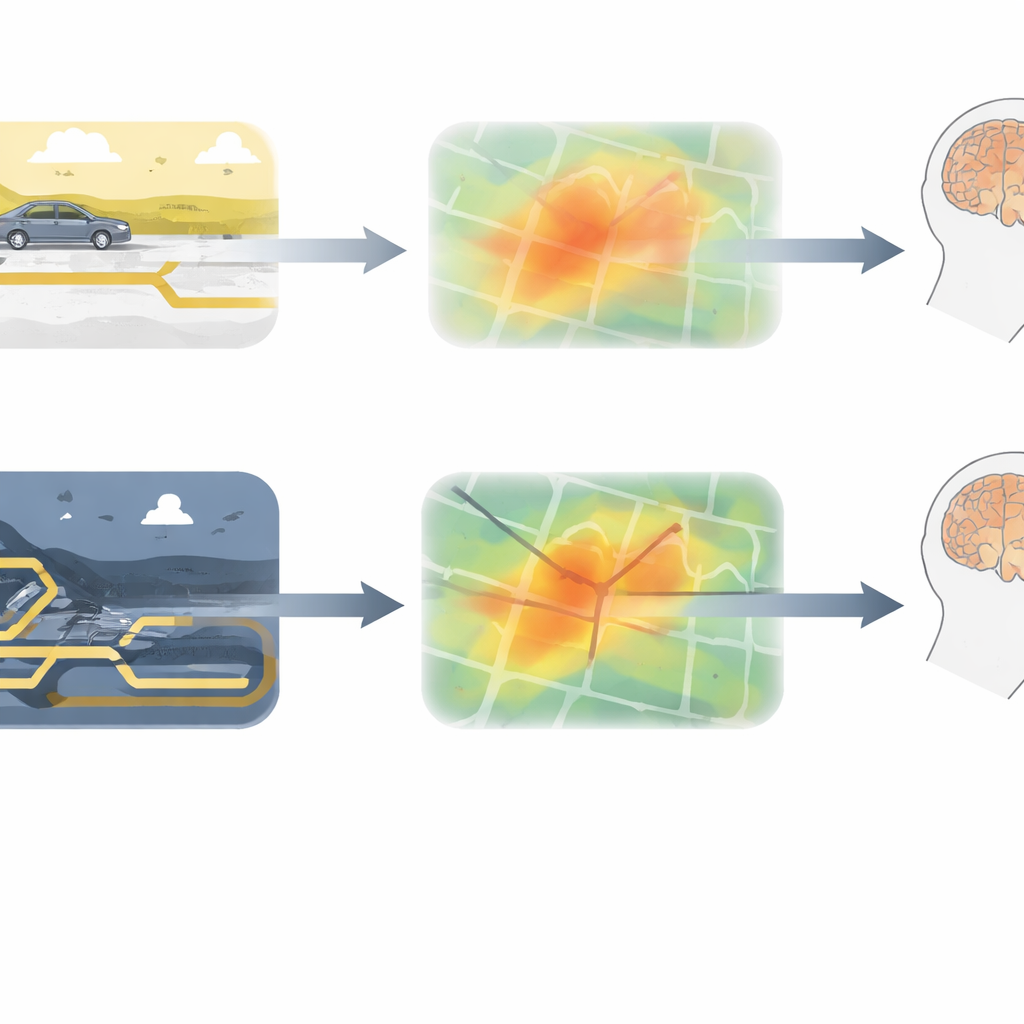
What the experiments revealed
When the researchers used their best “reference” model based on roadside measurements, they did not find clear evidence that higher ultrafine particle levels were linked to better or worse thinking ability once they carefully adjusted for age, education, and socioeconomic factors. When they switched to models built solely from on-road measurements, the estimated links tended to be slightly weaker and more variable, especially when monitoring routes were short, visits per location were few, or sampling was limited to weekday office hours. Designs that sampled across more hours of the day and used methods to reduce the influence of exhaust plumes produced air pollution maps that most closely matched the reference roadside data, but these improvements did not dramatically change the health conclusions.
What this means for future air and brain studies
For this particular group of older adults, the study suggests that ultrafine particles, as measured here, were not strongly tied to thinking performance, and that typical on-road monitoring designs do not overturn that conclusion. However, the work highlights which design choices matter most for building reliable exposure maps: collecting data across a broad range of days and hours, making enough repeat visits to each location, and recognizing that real-world driving routes limit how well we can spread measurements over time. These lessons are crucial for future studies that may investigate other pollutants or health outcomes where true effects are stronger. In those settings, a carefully planned mobile monitoring strategy could make the difference between detecting an important health risk and missing it.
Citation: Blanco, M.N., Doubleday, A., Szpiro, A.A. et al. Influence of on-road mobile monitoring design on ultrafine particle exposure models and cognitive health inferences. J Expo Sci Environ Epidemiol 36, 575–584 (2026). https://doi.org/10.1038/s41370-026-00845-y
Keywords: ultrafine particles, mobile monitoring, air pollution exposure, cognitive health, epidemiology